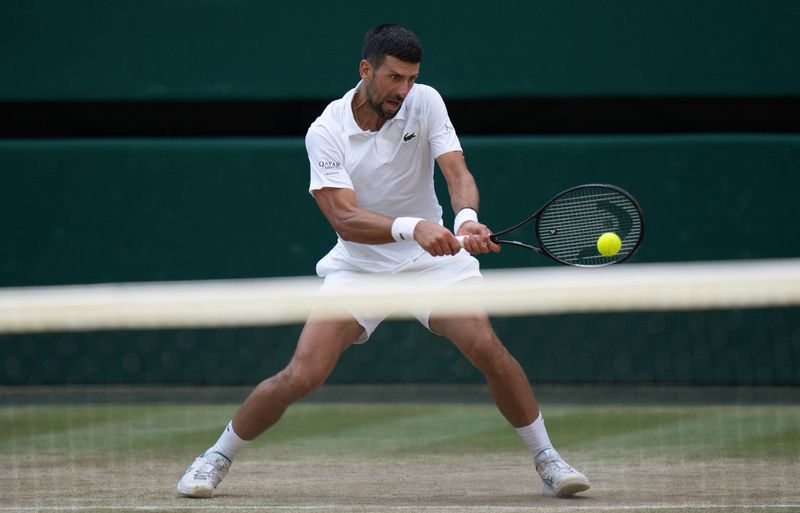
High-profile player withdrawals from the Canadian Open have reignited a long-simmering debate about the sustainability of professional tennis's punishing schedule, with the Professional Tennis Players Association warning that the sport's calendar expansion is creating a public health crisis at the elite level. World number one Jannik Sinner, Grand Slam champion Novak Djokovic, and rising star Carlos Alcaraz all pulled out of the Montreal men's event due to injury concerns, while the women's draw was similarly depleted by absences from defending champion Victoria Mboko, Wimbledon finalist Karolina Muchova, Emma Raducanu and Jasmine Paolini. These withdrawals represent far more than routine scheduling conflicts; they signal a systemic problem that threatens both current players and the long-term competitive integrity of professional tennis.
The PTPA's intervention carries particular weight because it is grounded in rigorous epidemiological research rather than anecdotal complaint. The players' advocacy organisation has compiled and analysed injury data spanning more than 30,000 professional matches across all competitive levels over an eight-year period, a project initiated three years ago in collaboration with medical director Dr. Robby Sikka. This dataset provides an unprecedented window into injury trends across professional tennis, revealing patterns that should alarm governing bodies and tournament organisers alike. The findings are stark: upper-body injuries have surged 42 percent in the first quarter of 2026 compared with the same period in 2025, while arm injuries have exploded by 112 percent year-over-year. These are not marginal increases that fall within normal statistical variation; they represent a fundamental deterioration in player health metrics coinciding precisely with structural changes to the professional calendar.
The timing of this injury spike is not coincidental but directly attributable to the ATP's OneVision strategic plan, which expanded seven of the nine Masters 1000 tournaments from ten-day to twelve-day formats beginning in the 2025 season. While those two additional days may seem trivial to casual observers, they have profound cascading effects on player recovery, training, and travel schedules. Professional tennis operates as an unrelenting succession of tournaments with minimal buffer time between events. When tournament organisers add two days to a tournament format, they do not simultaneously extend the calendar; instead, they compress the window available for players to physically recover from competition, undertake strength and conditioning work, manage injuries, and travel to the next venue. For elite players competing in multiple tournaments per month, this compression effect accumulates exponentially, pushing bodies beyond their physiological capacity for sustained recovery.
The PTPA's position reflects frustration born from years of unsuccessful advocacy on scheduling matters. Players have repeatedly raised concerns about the demands imposed by the contemporary calendar, yet their warnings have been largely dismissed by ATP and WTA leadership as self-interested complaints from wealthy athletes. The association's decision to release comprehensive injury epidemiology represents a strategic shift toward quantitative evidence-based advocacy that is harder to dismiss as special pleading. By demonstrating that injury rates spike dramatically when recovery time contracts, the PTPA has moved the debate from subjective grievance to objective medical fact. The 112 percent increase in arm injuries is particularly concerning because upper-body damage often has career-threatening consequences for tennis players, directly affecting their ability to generate power and spin—the fundamental technical requirements of competitive play.
For Malaysian and Southeast Asian readers, this controversy carries implications that extend beyond the professional game's elite tier. Tennis development pathways are globally interconnected; coaching methodologies, training regimens, and competitive structures at the professional level establish templates that filter down through age-group competitions, university tennis, and recreational play. When elite players begin withdrawing from major tournaments due to injury, younger players observing these patterns may internalise the message that playing through pain and accepting unsustainable schedules are prerequisites for competitive success. Additionally, as professional tennis organises more tournaments and expands event durations, the calendar becomes increasingly demanding even for lower-ranked players seeking ranking points and prize money, creating systemic pressure that eventually affects players from all regions competing on the professional circuit.
The fundamental tension underlying this conflict pits short-term commercial interest against long-term competitive sustainability. Tournament organisers and broadcasting partners view the twelve-day Masters format as commercially advantageous because it generates additional match days, media programming hours, and sponsorship activation opportunities. However, the PTPA argues persuasively that this commercial calculus ignores the downstream costs of elevated injury rates: diminished quality of play as competitors struggle with fatigue and pain, reduced tournament attractiveness when top players withdraw, and accelerated retirement of players whose careers are shortened by accumulated injuries. The economic logic of maximising near-term revenue proves self-defeating when it systematically degrades the product that generates that revenue.
The ATP has responded to these criticisms by noting that players retain autonomy over their tournament schedules and that the organisation is developing incentive structures encouraging appropriate seasonal workloads. This argument contains technical truth but obscures an important reality: players cannot truly exercise schedule autonomy when their livelihoods depend on earning ranking points and prize money from mandatory or quasi-mandatory events. Elite players face immense pressure to compete regardless of injury status, knowing that withdrawal risks losing ranking points to competitors and missing revenue opportunities that support their expensive professional infrastructure. The framing of player choice as a substitute for structural calendar reform represents a fundamental misunderstanding of how economic coercion operates in professional sport.
The PTPA has outlined a constructive alternative framework emphasising data-driven calendar restructuring with meaningful player input in scheduling decisions, coupled with reduced mandatory tournament commitments and genuine recovery time between events. The association has specifically urged the ATP to consider reversing the twelve-day Masters 1000 format, essentially requesting a return to the previous calendar structure that generated fewer injuries. This represents a moderate, evidence-based proposal rather than a radical demand for calendar contraction. The fact that even such measured recommendations remain contentious reveals the difficulty of achieving calendar reform when vested commercial interests resist change.
The Canadian Open withdrawals, while disappointing for tournament organisers and fans, serve an important function by making the calendar crisis visible at the sport's highest levels. When Jannik Sinner and Novak Djokovic simultaneously withdraw from a prestigious event, the story transcends insider sports policy debate and becomes a mainstream narrative about athlete welfare. This visibility creates pressure on governing bodies to demonstrate responsiveness to player health concerns. Without such high-profile withdrawals forcing public attention to the issue, the systemic injury patterns documented in PTPA research might continue accumulating without generating sufficient institutional will for meaningful reform.
The stakes of this debate ultimately transcend professional tennis itself. The sport faces a critical juncture where it must choose between maximising short-term commercial extraction from existing player populations or investing in sustainable structures that preserve long-term competitive excellence. Other professional sports have navigated similar transitions, generally concluding that player welfare and competitive quality are mutually reinforcing rather than opposed. Tennis has the epidemiological data, the clear problem definition, and the proposed solutions necessary for evidence-based reform. Whether the sport's leadership possesses the institutional will to implement that evidence remains the essential unanswered question.

