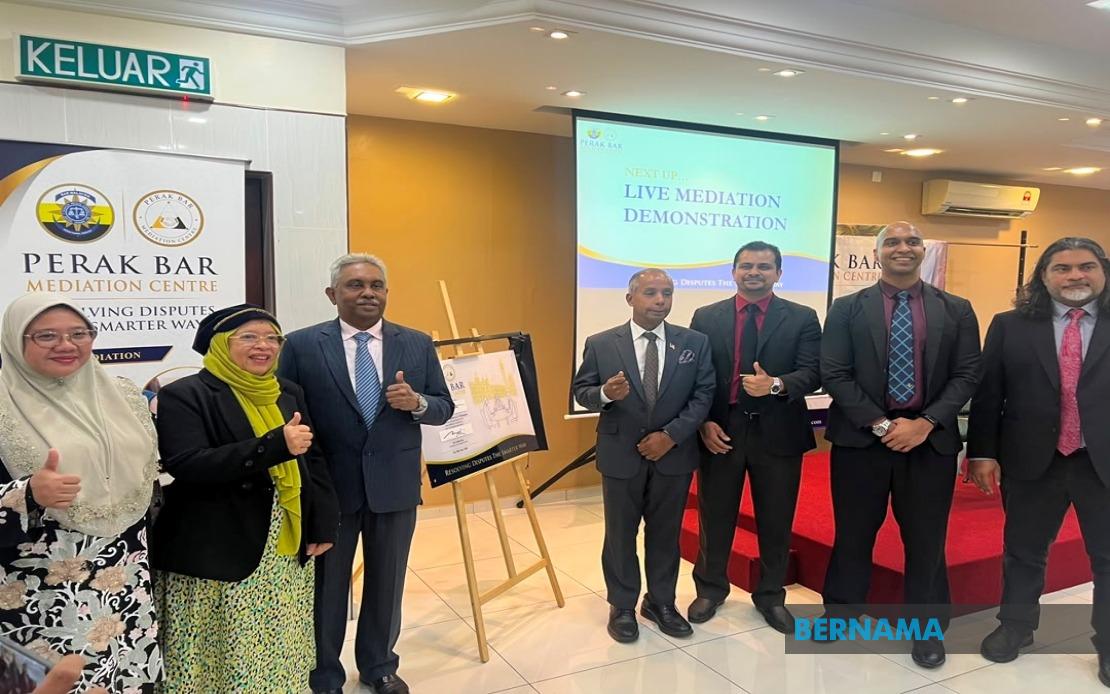
The legal profession in Malaysia is demonstrating substantial commitment to democratising access to dispute resolution, with 158 volunteer mediators now registered under the Asian International Arbitration Centre's Pro Bono Commercial Mediation Initiative. Deputy Minister M. Kulasegaran highlighted this development during the launch of the Perak Bar Mediation Centre in Ipoh, presenting the figure as evidence of strong backing from lawyers for expanding affordable alternatives to traditional court proceedings. The initiative, formally established under the MADANI Mediation Centre framework in May, represents a concerted effort to make structured dispute resolution available to those who might otherwise lack the financial means to pursue litigation.
The scope of the initiative is notably expansive, encompassing over 26 distinct categories of commercial disputes where the amount in question falls below RM250,000. This threshold positioning is strategically significant for Malaysia's small and medium enterprise sector, which frequently encounters commercial disagreements involving claims within this range. Rather than channelling these disputes through the formal court system, the initiative offers a pathway for rapid resolution through trained mediators willing to donate their professional services. The framework thus creates a practical safety valve for the lower end of the commercial dispute spectrum, potentially reducing pressure on Malaysia's already strained judicial infrastructure.
Since commencing operations in May, the AIAC has received approximately ten mediation cases and related enquiries. While this initial uptake may appear modest, it reflects the early stage of the programme's implementation and suggests growing awareness among business communities and individuals seeking alternatives to protracted litigation. Kulasegaran indicated plans to intensify outreach efforts, specifically intending to coordinate with the Malaysian Bar Council to enhance promotional activities and expand the initiative's reach into communities currently unfamiliar with mediation as a practical option. This collaborative approach between government bodies, the legal profession, and arbitration centres represents a coordinated strategy to shift cultural attitudes towards dispute resolution.
The case for mediation as a superior alternative to conventional court proceedings is compelling, particularly for Malaysian practitioners who have witnessed the extended timescales inherent in litigation. Kulasegaran drew on personal experience, noting that cases he had handled individually consumed between ten and fifteen years from initiation to final resolution. This extended duration encompasses not merely the initial trial but successive stages of appeal, generating substantial costs for all parties involved. Mediation fundamentally disrupts this timeline, enabling parties to reach negotiated settlements within weeks or months rather than years. The deputy minister characterised the approach as inherently advantageous to both disputing parties, representing a paradigm shift from litigation's zero-sum framework towards collaborative problem-solving.
The psychological and financial dimensions of this shift warrant careful consideration. When disputes proceed through courts, the adversarial nature of proceedings tends to entrench positions and escalate emotional investment in victory, frequently leading to outcomes where both parties incur disproportionate costs relative to the dispute's underlying value. Mediation reframes the objective from vanquishing an opponent to identifying mutually acceptable resolutions. For SMEs and individuals operating with constrained resources, the availability of free mediation services eliminates the barrier of mediator fees that might otherwise render professional dispute resolution inaccessible. This democratisation of access aligns with broader MADANI Government objectives regarding equity and inclusive economic participation.
The involvement of senior figures within Malaysia's legal establishment underscores the profession's institutional backing for this initiative. The launch ceremony attracted Malaysian Bar president Anand Raj and vice-president Murshidah Mustafa, whose attendance signalled formal endorsement from the profession's peak body. Murshidah's dual role as chairperson of the Malaysian International Mediation Centre further illustrates the interconnection between formal legal institutions and alternative dispute resolution mechanisms. This consolidation of support creates favourable conditions for the initiative's expansion, as lawyers at all career stages encounter institutional encouragement to contribute pro bono mediation services.
The initiative also addresses a perception that persists among segments of the Malaysian public regarding the necessity of formal court proceedings for legitimate dispute resolution. Many individuals and small business operators believe that only court judgments carry sufficient weight and enforceability to justify the investment in dispute resolution. Kulasegaran's commentary at the Ipoh launch directly challenged this assumption, emphasising that skilled mediators can navigate disputants toward settlements that prove more durable and satisfactory than judicially imposed outcomes. This educational function—systematically altering public understanding of what constitutes legitimate dispute resolution—may prove as valuable as the immediate provision of free mediation services.
The mediation initiative also intersects with Southeast Asia's broader regulatory evolution. As regional economies increasingly integrate through trade agreements and cross-border commercial relationships, dispute resolution mechanisms that operate efficiently across jurisdictional boundaries become economically significant. The AIAC's positioning as an international arbitration centre means its pro bono mediation initiative can serve not merely domestic Malaysian disputes but also intra-Asian commercial disagreements. This regional dimension enhances the initiative's strategic value, positioning Malaysia as a jurisdiction genuinely committed to accessible, efficient dispute resolution infrastructure.
Kulasegaran's reference to forthcoming coordination with the Bar Council suggests that the government recognises the need for sustained momentum rather than treating the initiative as a finished institutional arrangement. The instruction to invite Bar Council representatives for strategic discussions indicates willingness to refine implementation based on feedback from legal professionals encountering the programme in practice. Such adaptive management reflects lessons learned from previous alternative dispute resolution initiatives across Asia, many of which failed due to insufficient coordination between government promoters and the professional legal community.
The initiative's emphasis on commercial disputes involving claims below RM250,000 deliberately targets a market segment where litigation costs frequently exceed the disputed amount's value, rendering formal court proceedings economically irrational. This calibration suggests the programme's architects have carefully analysed dispute patterns and cost structures affecting Malaysia's business community. By making mediation genuinely free at this threshold, the initiative eliminates the primary economic barrier preventing access to professional dispute resolution, potentially reshaping Malaysian business culture's conflict management practices.
Expansion of the pro bono mediation initiative also carries implications for Malaysia's court system workload. As experienced observers note, many cases clogging civil dockets involve claims of the scale addressed by this programme. If even modest percentages of these disputes resolve through mediation instead of litigation, the resulting capacity freed within the High Courts and subordinate courts could enable accelerated processing of more complex matters requiring genuine judicial determination. This systemic benefit provides justification for government investment in promoting alternative resolution mechanisms, extending beyond immediate justice access concerns to broader judicial efficiency.
The pathway forward, as outlined by Kulasegaran, emphasises sustained engagement with professional bodies and expanded public communication regarding mediation's availability and efficacy. Government commitment to provide substantial backing, combined with the legal profession's demonstrated willingness to volunteer expertise, creates conditions potentially enabling the initiative to achieve meaningful scale. Whether the programme succeeds in fundamentally reshaping Malaysian approaches to commercial dispute resolution will depend substantially on sustained coordination between these institutional partners and their collective capacity to shift cultural perceptions regarding what constitutes appropriate dispute resolution conduct.

