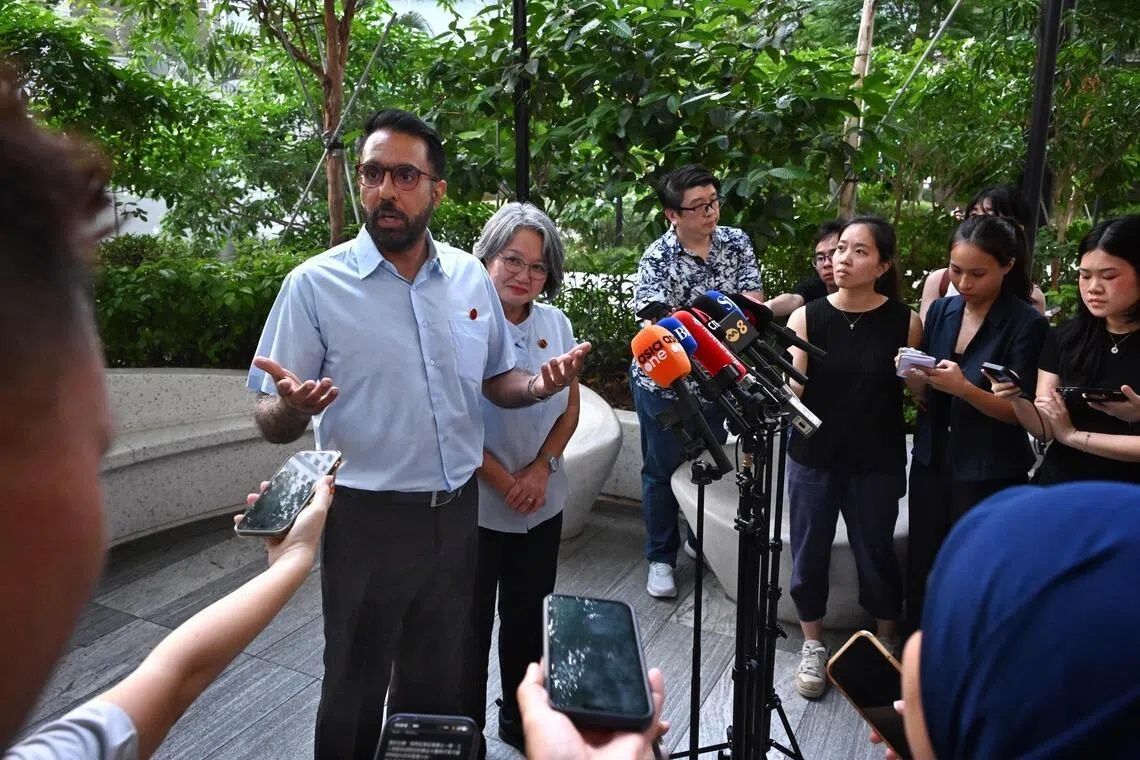
Pritam Singh has consolidated his grip on Singapore's largest opposition party following an internal ballot held on June 28 that saw him retain his position with commanding support. The Workers' Party chief faced down a challenge from dissatisfied members seeking his removal, but emerged with approximately 80 per cent backing from the party's inner circle of slightly over 100 cadres, effectively ending months of speculation about his future leadership.
The decisive outcome follows years of reputational damage stemming from the 2021 parliamentary lying scandal involving former Sengkang GRC MP Raeesah Khan. That episode had cast doubt on Singh's ability to maintain party unity and public credibility, prompting observers to question whether he could survive a formal accountability process. The strong vote margin now appears to have provided the breathing room needed to stabilise the party and move beyond the divisive controversy that triggered the leadership challenge.
The day's events unfolded in two distinct phases. An emergency cadres conference convened in the morning addressed three agenda items: Singh's accountability for his role in the Khan affair, calls for his resignation, and a secret ballot on his continued leadership should he refuse to step down. Gerald Giam, the Aljunied GRC MP chairing the session, characterised the discussions as robust yet orderly, with cadres afforded genuine opportunity to voice concerns before Singh responded directly to their questions. The single round of voting demonstrated sufficient party consensus that no further rounds were necessary.
The meeting had been triggered by a December 2025 letter signed by 25 unhappy cadres expressing loss of confidence in Singh's stewardship. Their concerns encompassed not only his handling of the Khan matter but also his subsequent legal troubles, culminating in a High Court conviction for misleading a parliamentary committee about his involvement in her deception. That judicial finding represented a watershed moment for the party, forcing a reckoning with Singh's fitness to lead an institution built on principles of transparency and accountability.
Singh's legal troubles have been substantial. Parliament's Committee of Privileges and Singapore's courts established that he had guided Khan in sustaining her parliamentary falsehoods for several months before her eventual confession. His subsequent conviction by the High Court in December 2025 led Parliament to declare him unsuitable for the position of Leader of the Opposition in January 2026, a title he was stripped of shortly thereafter by Prime Minister Lawrence Wong. The government subsequently invited the Workers' Party to nominate an alternative MP for the role, but the party declined, insisting that the opposition leader should be drawn from the largest opposition party's own leadership.
Before the ballot, considerable uncertainty surrounded Low Thia Khiang's position on Singh's future. The former Workers' Party chief had not publicly committed to supporting his successor's reelection bid, and speculation mounted that dissident cadres might be searching for Low himself or another senior figure to challenge Singh. That political uncertainty evaporated on the morning of June 28 when Low appeared before media gatherings and explicitly reaffirmed his backing for Singh, effectively closing off any realistic alternative to his continued leadership.
Following the special conference, the party proceeded with its regularly scheduled biennial internal elections at 3pm, through which it selected its central executive committee. Sylvia Lim retained her position as party chair, an office she has occupied since 2003. The election also returned most previous CEC members while introducing some new elements to the leadership structure. Notably, four of the twelve elected members are not sitting Members of Parliament: Low, former Aljunied GRC MP Faisal Manap, long-serving cadre Tan Kong Soon, and newly elected senior counsel Harpreet Singh, who had contested the May 2025 general election as part of the party's unsuccessful Punggol GRC team.
Harpreet Singh's election as the sole fresh addition to the senior ranks carried particular significance given his subsequent commentary on the leadership vote. Writing on LinkedIn, he contended that the cadres had demonstrated sophisticated judgment rather than blind party loyalty in returning Singh to office. He argued that Singh's performance record, encompassing sustained dedication to parliamentary duty and steady leadership that had delivered landmark achievements in Singapore's opposition politics, justified their confidence in his continued tenure. Singh's capacity to maintain composure under intense political pressure was cited as evidence of fitness for leadership, while Harpreet Singh emphasised that the court judgment against Pritam Singh remained valid and deserving of respect despite cadre support for his political leadership.
The internal process itself represented the latest chapter in the Workers' Party's reckoning with its leadership's mishandling of Khan's deception. Some months earlier, in April 2026, the party's CEC had formally reprimanded Singh through a letter responding to findings from a disciplinary panel comprising Jamus Lim and He Ting Ru, both Sengkang GRC MPs, alongside former Hougang MP Png Eng Huat. That panel had determined that Singh's actions regarding Khan's lies violated two provisions of the party's Constitution, establishing internal findings of wrongdoing even as Singh maintained his political leadership.
For Malaysian observers tracking regional opposition politics, Singh's survival carries broader implications about how established opposition parties manage internal crises and leadership transitions. The Workers' Party's decision to retain Singh despite his legal conviction and parliamentary censure suggests that institutional continuity and external political pressures may outweigh individual accountability concerns within opposition movements. The party's emphasis on Singh's demonstrated competence and measured leadership style, rather than on absolving him of responsibility for past failures, attempts to thread a difficult needle between accountability and stability.
Speaking after his reelection, Singh appealed for party unity, emphasising that the Workers' Party's primary obligation was to behave rationally and responsibly in representing Singaporean interests faithfully. He characterised the upcoming period as one requiring the party to maintain solidarity and present a coherent front, framing closure of internal divisions as a prerequisite for effective parliamentary opposition. His language reflected awareness that extended factional discord could damage the party's public standing and capacity to challenge the government effectively in coming parliamentary sessions.
The outcome confirms Singh's authority to guide the party through its transition beyond the Khan scandal and his own legal aftermath. The 80 per cent vote share provides him with a clear mandate from party cadres while simultaneously validating the concerns of the 20 per cent dissenting minority, suggesting that the internal process, while decisive, was neither designed to eliminate critique nor to silence legitimate questions about leadership judgment. As the Workers' Party looks ahead to rebuilding its public credibility and preparing for eventual electoral contests, Singh's reinforced position as chief provides institutional clarity even as the broader question of opposition effectiveness in Singapore's political system remains contested.

