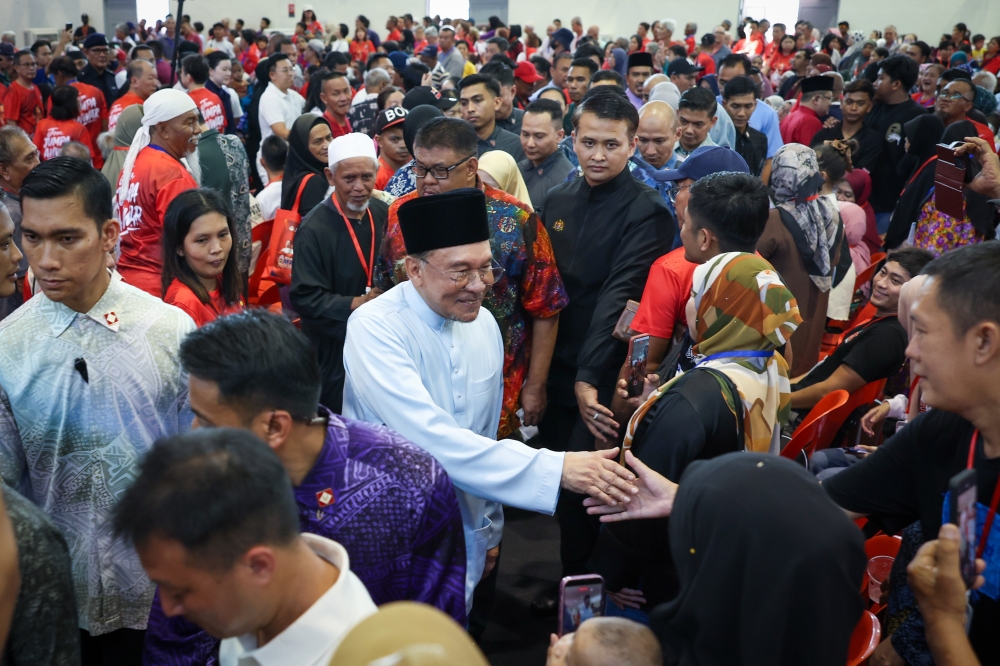
Prime Minister Datuk Seri Anwar Ibrahim is currently undergoing a series of medical examinations and procedures during a two-day specialist observation period, according to an official confirmation from the Prime Minister's Office. The decision to conduct these comprehensive health assessments reflects standard practice for leaders in high-level executive positions, ensuring optimal fitness for the demanding responsibilities that accompany the office. The PMO's public acknowledgment of the medical checks demonstrates transparency regarding the Prime Minister's health status, a matter of legitimate national interest given the constitutional significance of the office.
The timing of the medical evaluation, while routine in nature, comes during a period of sustained political engagement for the Prime Minister. Malaysia's leadership has been navigating complex economic conditions, regional diplomatic relations, and domestic policy priorities that demand sustained focus and energy. The scheduling of comprehensive medical procedures represents a pragmatic approach to maintaining the standards of health and fitness expected of the nation's chief executive, particularly given the rigorous schedule that occupies most days of the Prime Minister's calendar.
For Malaysian observers, the transparency exhibited by the PMO in confirming these medical examinations stands in contrast to historical patterns where official health matters were often shrouded in ambiguity or speculation. The direct communication about the two-day observation period and specialist procedures reflects contemporary standards of governance communication, reducing the space for unfounded rumour or political speculation that can arise when official silence surrounds such matters. This approach aligns with evolving expectations for institutional openness in Southeast Asian democracies.
The specialist centre conducting the observation maintains the confidentiality appropriate to medical care, with the PMO providing factual information about the duration and general scope of the assessment without disclosing sensitive clinical details. This balance between public accountability and personal privacy represents a reasonable middle ground, permitting citizens reasonable assurance regarding their Prime Minister's health without unnecessarily intruding into matters that are inherently medical and private in nature.
Routine medical evaluations for national leaders serve several practical functions beyond personal health maintenance. Such assessments help identify any emerging health concerns at early stages, when intervention tends to be most effective. For a leader whose responsibilities encompass both ceremonial and executive functions—including international travel, bilateral meetings, and extended parliamentary sessions—ensuring physical readiness through preventive medicine represents sound governance practice. The two-day timeframe suggests a comprehensive approach covering cardiovascular, metabolic, neurological, and other systems that require regular monitoring as part of preventive care.
The broader context of political leadership in Malaysia suggests that such medical transparency may gradually become normalised, particularly as generational shifts introduce leaders accustomed to greater institutional openness. The PMO's straightforward announcement represents a departure from the opacity that occasionally characterised official health disclosures in previous administrations, when political considerations sometimes influenced the release of information about leaders' medical status. This evolution reflects both changing media expectations and the political costs associated with perceived concealment.
For regional observers, Malaysia's handling of this matter offers insights into how ASEAN democracies are increasingly managing the intersection of executive privacy and public accountability. The question of a national leader's health status remains delicate across the region, touching on constitutional succession planning, electoral implications, and legitimate public interest. Malaysia's approach of confirming the medical assessment while respecting clinical confidentiality charts a course between these competing considerations.
The designation of "specialist observation" rather than emergency medical treatment carries reassuring implications, suggesting that the assessment forms part of planned preventive medicine rather than response to acute health concerns. Nonetheless, the comprehensive nature of the procedures—encompassing what PMO descriptions indicate is a full spectrum of specialist examinations—reflects prudent medical practice for individuals in positions requiring sustained mental acuity and physical resilience. The two-day duration indicates thoroughness, likely incorporating both initial examinations and follow-up testing to ensure complete evaluation.
For Malaysian business and investor confidence, the public confirmation of the Prime Minister's medical assessment and the routine nature of such checks may provide reassurance regarding governmental continuity and stability. Capital markets and international partners often factor political risk assessments into decisions regarding engagement with Malaysia, and transparent health management by leadership can influence such calculations positively. The absence of mystery or speculation around the Prime Minister's health status eliminates a potential source of political uncertainty.
Governance specialists have increasingly emphasised the importance of succession planning and contingency arrangements within executive offices, particularly in developing democracies where institutional resilience remains under development. The routine nature of these medical assessments—and their public acknowledgment—reinforces broader institutional health, demonstrating that constitutional frameworks and succession arrangements are taken seriously. Should any unforeseen circumstance arise, the nation benefits from having previously established medical assessments and continuity plans in place.
As Malaysia continues navigating complex regional challenges—from economic management during global uncertainty to maintaining bilateral relationships across a contested geopolitical landscape—ensuring that the office of Prime Minister is occupied by someone at full physical and mental capacity remains a legitimate public concern. The PMO's confirmation of these medical checks represents a mature approach to balancing this concern with respect for personal medical privacy, establishing a standard that may influence how future Malaysian administrations handle similar matters.

