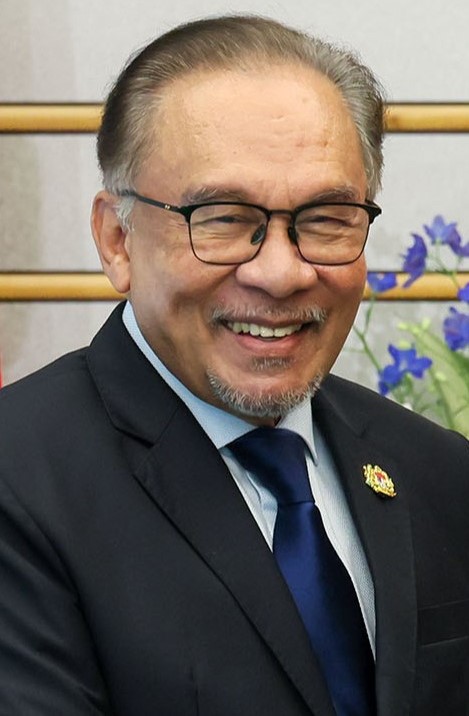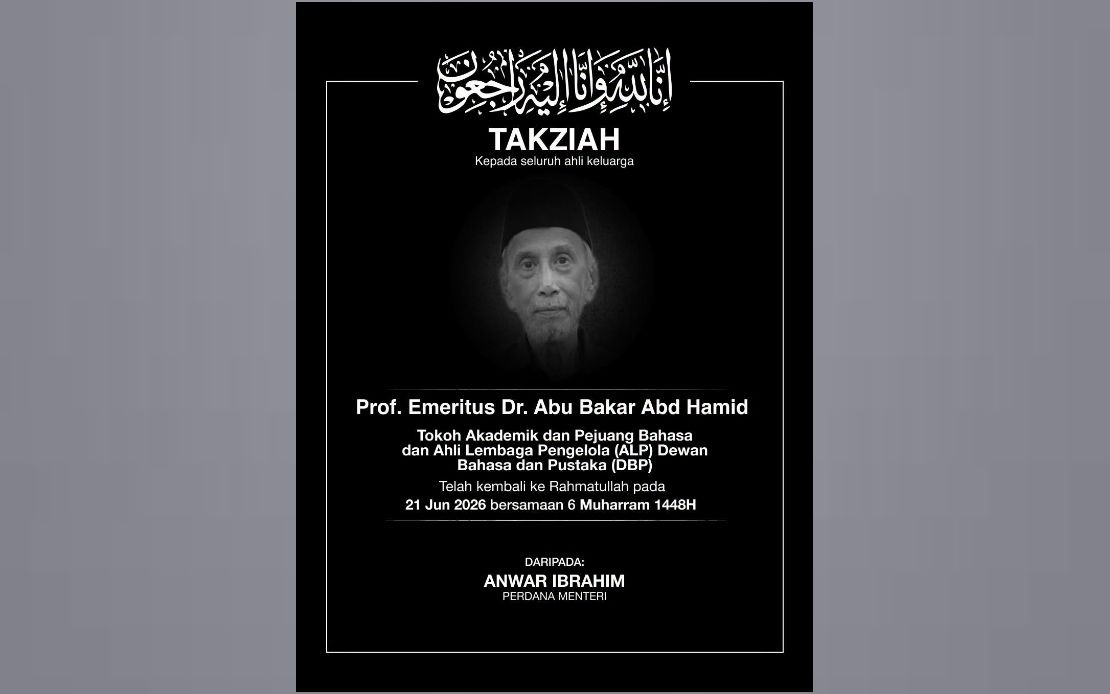
Prime Minister Datuk Seri Anwar Ibrahim has paid tribute to Professor Emeritus Datuk Abu Bakar Abd Hamid, the renowned Malay literature scholar who passed away on June 21 at his home in Petaling Jaya, Selangor. In a Facebook statement released on June 24, Anwar described his former mentor's death as a profound loss to Malaysian intellectual circles, reflecting on a relationship that had endured across decades of academic partnership and personal mentorship.
Abu Bakar, a native of Johor, died suddenly from respiratory complications at approximately 10.30pm on the evening of June 21. The academic's sudden passing marks the end of an era for Malaysian higher education, where his influence extended across multiple institutions and generations of students. His contributions shaped the trajectory of Malay literary studies in the region, establishing frameworks and methodologies that continue to inform scholarly discourse today.
Anwar's personal connection to Abu Bakar ran deep, having studied under his guidance during formative years at Universiti Malaya. In his statement, the Prime Minister acknowledged this debt, describing Abu Bakar not merely as a classroom instructor but as an intellectual exemplar whose passion for knowledge creation and dissemination extended beyond academic boundaries. This characterisation speaks to the transformative influence certain scholars exercise over their protégés—molding not just professional trajectories but philosophical orientations toward learning and public service.
Professor Emeritus Abu Bakar's institutional legacy reflects decades of dedicated service to Malaysia's higher education expansion. He served as deputy vice-chancellor at Universiti Malaya in 1987, a position from which he influenced institutional policy and academic directions. His role proved particularly significant during Malaysia's critical phase of university system development in the late 1980s, when the country was consolidating its approach to tertiary education and establishing new research priorities.
Abу Bakar's fingerprints are evident on Malaysia's higher education infrastructure in ways that extend beyond his direct administrative roles. As joint secretary of the committee that established Universiti Kebangsaan Malaysia in 1968, he participated in foundational decisions that shaped one of the nation's premier research institutions. UKM's subsequent development as a leading centre for Malay language and literature studies reflects, in part, the vision and groundwork laid by scholars like Abu Bakar during its inception phase.
Beyond the university sector, Abu Bakar held significant responsibility as chairman of the Board of Governors of the Malaysian National News Agency (Bernama) from 1996 to 2000. This cross-sector involvement demonstrates how leading academics in Malaysia have traditionally bridged institutional domains, contributing governance expertise to national bodies while maintaining scholarly pursuits. His stewardship of Bernama coincided with Malaysia's evolving media landscape and the agency's efforts to maintain editorial standards during a period of technological and institutional transformation.
Throughout his professional journey, Abu Bakar accumulated recognition and accolades befitting his scholarly contributions. Multiple prestigious awards acknowledged his impact on Malay literary studies and his role in advancing academic discourse within Southeast Asia. These honours reflected both domestic recognition and the regional significance accorded to his work by peers across the ASEAN region, particularly among institutions focused on the Malay language and cultural studies.
Anwar's tribute underscores how Malaysian leadership acknowledges intellectual contributions beyond their immediate political or economic dimensions. By publicly mourning Abu Bakar's death and reflecting on his mentorship, the Prime Minister signals the value placed on educators and scholars who shape institutional and intellectual frameworks. This recognition carries particular resonance in Malaysian society, where respect for knowledge keepers and spiritual guides runs deeply through cultural traditions.
The funeral proceedings concluded quickly, with Abu Bakar laid to rest at Bukit Kiara Muslim Cemetery on June 22, allowing family and colleagues to observe Islamic funeral protocols swiftly. His passing leaves vacant a distinctive intellectual space—that of the scholar-administrator who navigated both academic rigour and institutional governance with equal facility, a combination increasingly rare in contemporary higher education systems where specialisation dominates.
For Malaysian academic institutions and particularly for those focused on Malay literature and language studies, Abu Bakar's death represents the loss of a bridge to earlier scholarly traditions and institutional founding moments. Scholars he mentored and institutions he shaped will carry forward his intellectual legacy, though his direct guidance is now confined to historical record and the memories of those fortunate enough to study under his tutelage. Anwar's public mourning ensures that this legacy receives recognition beyond academic circles, affirming the nation's collective indebtedness to figures who invested their careers in knowledge advancement and institutional development.