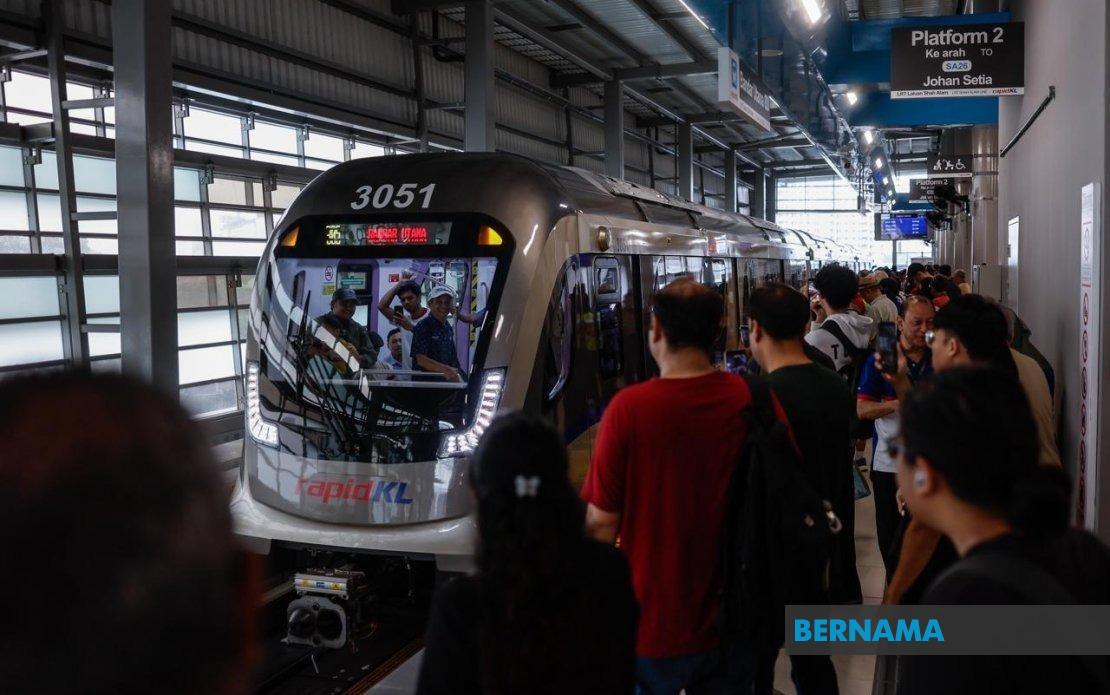
The Light Rail Transit 3 (LRT3) Shah Alam Line commenced operations on June 29, marking a significant expansion of the Klang Valley's public transport network. Prasarana Malaysia Berhad, the operator, anticipates between 5,000 and 10,000 passengers will board the new service during its inaugural day, a figure that reflects cautious optimism about public adoption of the corridor running through the Shah Alam region.
According to Prasarana president and chief executive officer Amir Hamdan, the initial ridership estimate follows typical patterns observed when new transit lines open. Rather than immediately approaching full capacity, the company expects demand to build gradually as commuters become familiar with the service and integrate it into their travel routines. The organization has set an ambitious target of 67,000 daily passengers within the first operational year, contingent upon how quickly residents and office workers transition from private vehicles to rail-based commuting.
The opening day witnessed encouraging uptake, with Amir noting substantial enthusiasm among early adopters who shared positive experiences on social media. Commuters expressed satisfaction with the added convenience and comfort of rail travel, particularly those seeking alternatives to the congested road network that characterises the Klang Valley during peak hours. This sentiment underscores a broader trend across Malaysia's metropolitan areas, where congestion concerns increasingly drive acceptance of public transit infrastructure investments.
Operationally, the LRT3 Shah Alam Line maintained a disciplined service schedule from its 6 am start, with train frequencies set at approximately eight-minute intervals during peak periods. Prasarana confirmed that all station facilities and ticketing systems functioned without significant disruptions, providing a stable foundation for scaling operations as ridership grows. The company's careful management of initial service delivery reflects lessons learned from previous rail line launches and demonstrates commitment to operational reliability as a prerequisite for building passenger confidence.
The strategic positioning of interchange stations has emerged as a critical component of the line's integration within the broader Klang Valley transport ecosystem. Glenmarie 2 station connects the LRT3 Shah Alam Line to the existing Kelana Jaya Line, while the Bandar Utama station provides access to the Kajang Line. These connection points are essential for creating seamless multi-modal journeys and expanding the effective reach of the system. Prasarana has identified these interchanges as focal points for monitoring ridership patterns and user behaviour, recognizing their importance in shaping the line's long-term viability.
In its initial phase, Prasarana is prioritizing passenger experience and operational learning. The company is conducting assessments of automatic gate systems, ticketing machine performance, and passenger flow dynamics at stations. This data-driven approach positions the operator to make informed decisions about service adjustments as the line matures. Should demand patterns suggest the need, Prasarana has committed to increasing train frequency or deploying additional rolling stock, including positioning standby trains along congested sections during peak hours.
The question of women-only coaches, a feature implemented on several other Malaysian rail services, remains under review for the LRT3 Shah Alam Line. Rather than imposing such facilities immediately, Prasarana intends to gather comprehensive ridership data and solicit user feedback before deciding whether gender-segregated carriages are warranted. This measured approach acknowledges that ridership composition and user preferences may justify or render unnecessary such amenities, making evidence-based decision-making preferable to assumptions.
Prime Minister Datuk Seri Anwar Ibrahim's announcement of complimentary fares for the LRT3 Shah Alam Line and associated feeder bus services through July 31 represents a significant policy intervention designed to incentivize trial usage. The one-month free-ride promotion removes the financial barrier to sampling the service, potentially accelerating the accumulation of regular commuters. This subsidy strategy reflects recognition that establishing ridership momentum during launch phases is critical for transforming public perception and commuting habits in a car-dependent metropolis.
The LRT3 Shah Alam Line's opening arrives at a pivotal moment for Malaysia's public transport evolution. As congestion worsens and environmental concerns mount, rail infrastructure investments carry symbolic and practical importance. Successful adoption of the new line would validate continued investment in transit expansion and signal to residents that government-backed alternatives to private motoring are genuinely viable. Conversely, disappointing ridership would invite questions about service design, pricing structures, and connectivity gaps that might inhibit broader uptake.
For Malaysian commuters, particularly those in the Shah Alam corridor, the LRT3 launch offers tangible relief from transportation constraints that have plagued the region for years. Office workers and students gain the prospect of reliable, uncongested commutes, potentially reclaiming time previously consumed by traffic delays. Businesses in Shah Alam may benefit from improved workforce accessibility, while reduced vehicular traffic could ease pressure on local road networks during peak periods.
The line's success metrics extend beyond simple passenger counts. Prasarana and transport planners will monitor whether the new corridor generates induced demand, encouraging relocation decisions or commercial development that reinforces the line's role in the regional economy. The availability of rapid transit typically catalyzes urban intensification, potentially reshaping demographic and employment patterns in the Shah Alam area over the medium term.
As Prasarana enters the critical first weeks of operation, the organization's ability to deliver consistent, reliable service while remaining responsive to user needs will significantly influence whether the LRT3 Shah Alam Line achieves its ambitious ridership targets. The convergence of free fares, infrastructure investment, and congestion pressures creates a favourable window for establishing the line as a cornerstone of the Klang Valley's transport future. The coming months will reveal whether commuter behaviour in Malaysia's second-largest metropolitan region is beginning to shift toward public transit dependence.

