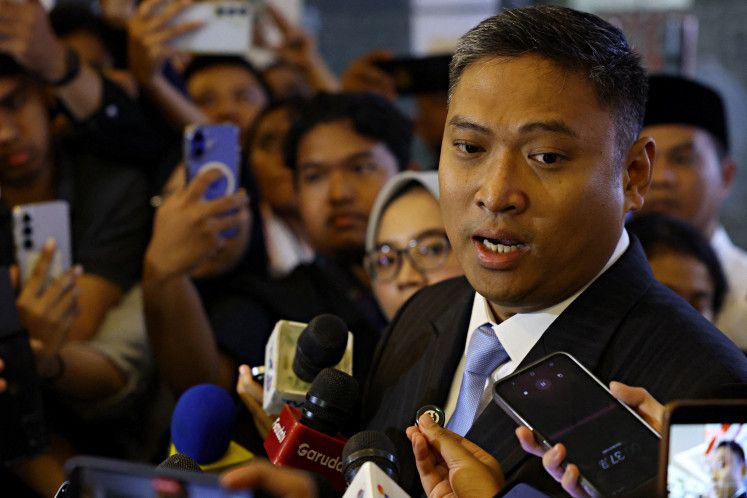
Indonesia's embattled free meals initiative encountered another destabilising blow when National Nutrition Agency (BGN) chief Nanik Sudaryati Deyang announced her resignation on Wednesday, departing from the role she had held for barely two months. The announcement marked yet another chapter in a deepening governance crisis that has shadowed President Prabowo Subianto's flagship welfare programme since its expansion earlier this year. Nanik cited pressing health matters, revealing that physicians had discovered a blockage in one of her coronary arteries, a condition she linked directly to the overwhelming stress of managing the agency's sprawling operations and astronomical budget.
The timing of her departure underscores the mounting pressure within the BGN, an organisation tasked with overseeing what has become one of Indonesia's most ambitious and contentious policy initiatives. Nanik articulated the psychological toll with striking candour in her resignation statements, describing the responsibility for safeguarding public funds as equivalent to standing precariously on a cliff edge, where any miscalculation could prove catastrophic. She disclosed that anxiety about her stewardship had driven her to question every administrative decision repeatedly and to refuse independent budget authorisation without extensive consultation. The emotional and physical exhaustion emanating from these experiences, she suggested, had accumulated into a medical emergency that demanded immediate overseas treatment.
Nanik's exit represents a particularly jarring development given that she assumed leadership specifically to restore institutional credibility following the agency's most damaging scandal to date. Her predecessor, Dadan Hindayana, had been dismissed by Prabowo in early June and subsequently arrested alongside two senior deputies as prosecutors launched a corruption enquiry focussing on alleged procurement misconduct and financial irregularities embedded throughout the multitrillion-rupiah food distribution system. Nanik, who had previously served as Dadan's deputy, was elevated to the top position partly because her continuation was intended to signal continuity whilst demonstrating that the administration was taking corrective measures seriously. Her precipitous departure suggests that the institutional and psychological wounds inflicted by prior scandals run deeper than public statements had acknowledged.
Without pausing to allow an extended period of institutional reflection, Prabowo swiftly appointed Deputy Agriculture Minister Sudaryono as Nanik's successor the very same day at a formal ceremony held within the State Palace grounds. Sudaryono brings longstanding connections to the President, having served as a Prabowo aide during the preceding decade and maintaining membership within the Gerindra Party, the administration's political foundation. His appointment appears designed to insert more direct political oversight into the troubled agency, a move that State Secretary Prasetyo Hadi implicitly justified by emphasising that Sudaryono had contributed substantially to designing the free meals framework during its developmental phase. Yet this reliance on party loyalty and historical involvement raises uncomfortable questions about whether technical expertise and independence of judgment have been subordinated to considerations of political reliability.
Sudaryono's inaugural remarks attempted to pivot toward technocratic solutions, pledging comprehensive transparency enhancements and digitalisation initiatives intended to eliminate opaque administrative processes. He committed specifically to transforming manual systems into digitised platforms where transactions and decisions would be permanently recorded, rendering concealment theoretically impossible. These commitments, however credible, arrived after months of operational dysfunction that had already damaged public confidence in the programme's integrity. For Malaysian observers and policymakers studying Indonesia's struggles with large-scale social schemes, Sudaryono's administrative remedies underscore a common governance challenge: technology and transparency protocols cannot repair institutional cultures already corroded by corruption and mismanagement.
The scale of operational disruption that prompted these leadership convulsions extends well beyond administrative shuffling. The free meals programme, launched in early 2025 as a signature presidential commitment, has endured repeated mass food poisoning incidents scattered across Indonesia, alongside persistent complaints regarding nutritional quality and meal consistency. These public health episodes generated mounting political pressure, prompting Nanik to implement a moratorium on establishing new kitchen facilities whilst triggering comprehensive audits of approximately 28,000 existing sites nationwide. The suspension created acute financial hardship for thousands of prospective operators who had invested heavily in facility construction, generating large-scale protests and further eroding programme legitimacy amongst implementation partners.
Recognising that expansion at its previous pace had become untenable, the BGN announced substantial downward revisions to its operational trajectory during the final days before Nanik's resignation. Budget projections for 2026 were reduced from an initial Rp268 trillion allocation to Rp229 trillion, representing a compression of approximately 15 per cent in resource availability. Simultaneously, the target beneficiary population was narrowed from an originally projected 82.9 million individuals to 62.7 million, acknowledging that the earlier expansion ambitions had exceeded institutional capacity. This retrenchment represents a notable retreat from campaign rhetoric that had positioned the meals initiative as a comprehensive poverty alleviation instrument reaching virtually all vulnerable demographic segments, including schoolchildren, young children, and expectant mothers.
The BGN's deputy chief, Agustina Arumsari, attempted to frame this contraction as a strategic recalibration prioritising service quality over numerical expansion, a narrative that glosses over the reality that these adjustments were undertaken under duress following operational failures and governance scandals. Her assertion that the agency no longer maintains fixed beneficiary targets at this transitional juncture may reflect prudent acknowledgment of existing constraints, yet it simultaneously represents a stark departure from the programme's original scope and administrative promises. For Southeast Asian governments contemplating similar universal or near-universal food provision schemes, Indonesia's experience demonstrates the formidable implementation challenges inherent in simultaneously achieving scale, quality assurance, and financial accountability across fragmented territorial administration.
Political analysts have offered diagnoses of the underlying pathologies afflicting the programme that extend beyond individual leadership failures. Wasisto Raharjo Jati, examining the pattern of recurring crises, concluded that the free meals initiative exemplifies a broader institutional phenomenon where political determination and public pledges have outpaced technical preparation and administrative readiness. Despite the priority status commanded by association with presidential support, the programme has functioned as an instrument driven principally by electoral commitments and political symbolism rather than by methodical administrative design, adequate staffing preparation, and realistic resource allocation. This gap between political aspiration and bureaucratic capacity has manifested repeatedly through corruption, operational failures, and now through the psychological breakdown of leadership figures attempting to navigate impossible institutional circumstances.
The cascading crises within Indonesia's free meals apparatus carry implications extending beyond Jakarta's immediate political arena. Southeast Asian governments pursuing comparable ambitious social programmes must confront the difficult reality that executive commitment and budgetary allocation, whilst necessary, prove insufficient absent robust institutional design, transparent procurement systems, and realistic implementation timelines. Malaysia's own experience with large-scale welfare expansion initiatives provides cautionary context: programmes that prioritise rapid rollout and beneficiary maximisation often encounter quality degradation, financial management difficulties, and ultimately political damage that exceeds any short-term popularity gains. Indonesia's struggles suggest that sustainable social policy advancement demands resisting pressures for grandiose expansion in favour of methodical, evidence-based programme development.
Sudaryono's appointment arrives as the administration attempts to salvage both institutional viability and public legitimacy for a flagship initiative that has become administratively troubled and politically fraught. Whether his technocratic pledges around transparency and digitisation can genuinely arrest the pattern of governance failure remains uncertain, particularly given the underlying reality that each leadership transition has occurred under duress and scandal rather than as planned institutional evolution. The fundamental challenge confronting the BGN transcends personnel replacement: it involves reconstructing institutional capacity, rebuilding beneficiary trust, and creating administrative conditions where dedicated public servants can execute their responsibilities without the acute psychological trauma that drove Nanik's withdrawal from office. Until these foundational institutional matters receive sustained attention, the free meals programme will likely remain vulnerable to recurring operational disruptions and public credibility setbacks.

