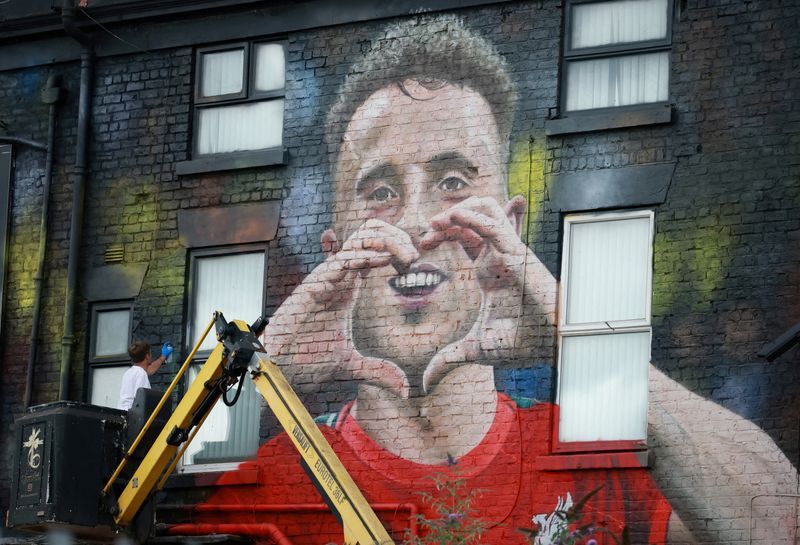
The Portuguese national football team will take the pitch against Croatia in the World Cup round of 32 on Thursday in Toronto, but the timing carries profound significance beyond the sporting contest. While the match will kick off on July 2 in Canada, back in Portugal the date will already be July 3—marking exactly one year since the tragic death of Diogo Jota, the Liverpool forward and one of the nation's most cherished football talents.
Jota, 28, and his brother André Silva died in a car accident in northwestern Spain when their Lamborghini veered off the road and caught fire. The incident shocked Portugal and reverberated through the global football community, particularly among his teammates and close associates at club and international level. His passing represented not merely the loss of a skilled athlete but the death of a personality who had become integral to Portugal's football identity during a generation when the country maintained its standing among European elite.
Throughout this World Cup campaign, Portugal's delegation has deliberately woven Jota's memory into their tournament journey, ensuring his presence remains visible and felt among players, supporters and staff. Manager Roberto Martinez has spoken of Jota as "our light" and made the unusual decision to name him an honorary member of the squad. This symbolic inclusion reflects the depth of emotional connection the team maintains with their fallen colleague, transforming grief into a collective motivational force.
The most visible tribute comes through Ruben Neves, Jota's close friend and midfield anchor for Portugal, who has chosen to wear the number 21 jersey in his honour throughout the competition. Beyond the pitch, Prime Minister Luís Montenegro presented the squad with wristbands bearing Jota's name, a gesture that elevated the commemoration to a national level and underscored how deeply the loss resonated across Portuguese society. His parents, Isabel and Joaquim Silva, were present in Houston to witness an emotional tribute during Portugal's opening match against DR Congo, their tears visible testament to the enduring pain.
The emotional weight of this particular fixture extends beyond Portugal's squad. Scotland's captain Andy Robertson, Jota's Liverpool teammate and personal friend, felt the loss acutely when his nation qualified for the tournament in November. Jota's widow, Rute Cardoso, reached out to Robertson with a deeply moving message when the World Cup began. "When you step on to the pitch, Diogo will be with you in your thoughts, in your steps, in your heart," she wrote, asking Robertson to carry Jota's memory into the competition. Such gestures illuminate how the football community transcends national boundaries in moments of grief, transforming personal loss into shared purpose.
Jota's career trajectory underscores what Portugal lost in his death. Over 49 appearances for the national team, he scored 14 goals and became known as a player who delivered in crucial moments, combining technical excellence with an unwavering commitment to his country. Having missed the 2018 World Cup due to injury, he would almost certainly have been selected for this tournament, representing a significant component of Portugal's attacking threat. His absence from the squad, therefore, carries a poignancy that extends beyond emotional remembrance into genuine sporting consequence.
Defender Vitinha articulated the feelings permeating the squad in the lead-up to the Croatia match, acknowledging the multiple layers of motivation driving the team. "So many motivations to win the match, and there's yet this additional factor, this special day, we have all the motivation, for our families, for Diogo Jota, for the whole country, for the whole of Portugal," he reflected. This statement captures how the team has channelled grief into a positive force, transforming the anniversary of loss into an occasion for demonstrating resilience and honouring Jota's legacy through performance.
The timing of Thursday's match creates a poignant geographical and temporal intersection. As the match unfolds in Toronto, the clock will simultaneously tick past midnight in Portugal, marking the transition to July 3 and the full arrival of the anniversary date. This moment of connection across continents symbolizes how Jota's significance transcended the boundaries of Portuguese football, resonating with supporters and fellow players worldwide who recognized his talent and character.
For many in Portugal's current squad, Jota represented more than a teammate or rival for selection. He embodied a generation of Portuguese players who had elevated the national team to consistent competitive standing in European football, providing leadership in the dressing room and delivering match-winning moments when the pressure mounted. His generation helped sustain Portugal's position among football's serious contenders, making his unexpected absence all the more keenly felt.
The broader Portuguese community in Canada, particularly concentrated in Toronto's Little Portugal neighbourhood, has similarly embraced the emotional significance of this fixture. Miguel De Silva, owner of Amigos da Dundas Sports Bar, recognized that Jota's memory would provide additional impetus for the Portuguese players. "Diogo Jota was a player that was very loved by the Portuguese people," he observed. "I think it's going to be something else that he's going to give to the Portuguese players. One more reason for them to win the game."
While football, as an institution, necessarily moves forward and competitions continue regardless of individual tragedies, the sport simultaneously preserves the capacity to honor and remember those lost. For Portugal, the Croatia match represents far more than a round-of-32 fixture with qualification implications. It stands as a moment when the nation's collective grief, channelled through athletic endeavor, can be transformed into something generative and meaningful. The question hanging over Toronto on Thursday is whether Portugal can harness this emotional reservoir into the kind of performance that would have made Jota proud, turning the pain of his absence into the strength that his widow asked Robertson to help create.

