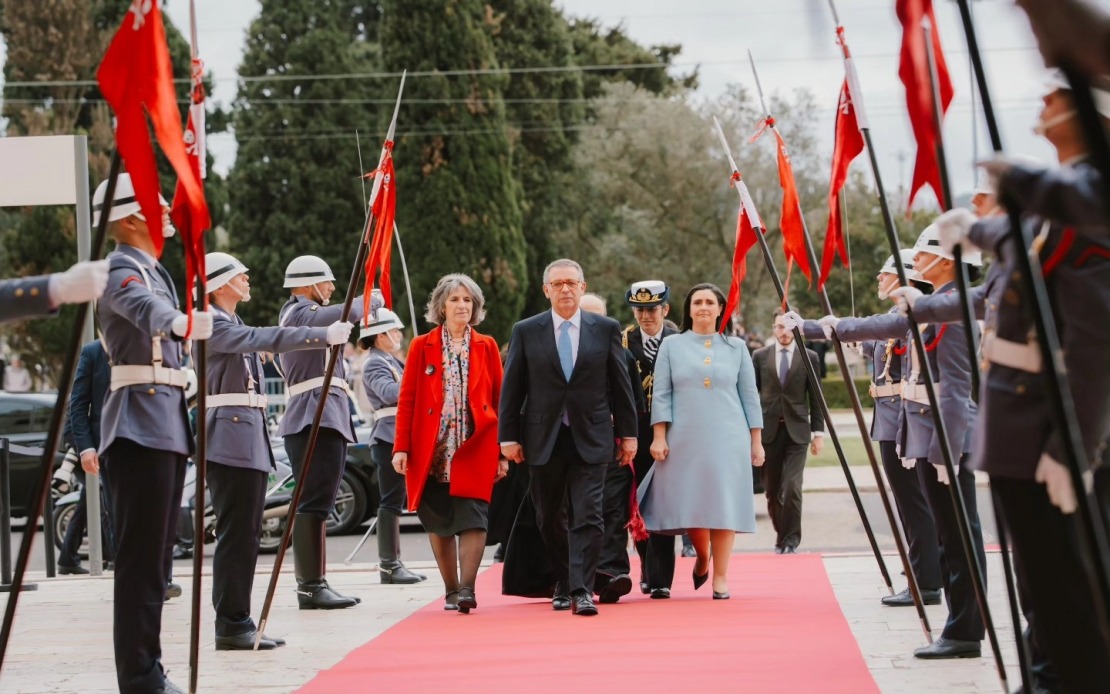
Portugal has formally prohibited the wearing of face coverings in public spaces following President Antonio Jose Seguro's approval of controversial legislation on Tuesday. The law, which originated from a proposal by the right-wing Chega party, represents a significant shift in Portuguese civil liberties policy and places the nation among a growing list of European democracies with similar restrictions. The presidential decision came after parliamentary amendments to the original bill persuaded Seguro that the measure aligned with constitutional safeguards and European legal standards.
In statements released through Belem Palace, Lisbon's presidential residence, Seguro articulated the government's position that unveiled faces constitute a fundamental element of social cohesion within Portuguese society. The administration framed the restriction around three pillars: strengthening social integration, maintaining non-discrimination standards, and enhancing public security measures. These justifications draw support from precedent established by the European Court of Human Rights, which has previously examined the legality of face-covering restrictions across member states. The president's office emphasized that the ability to recognize one another directly forms the foundation of interpersonal trust and civic participation.
The presidential statement further addressed gender equality dimensions of the debate, asserting that requiring only women to conceal their entire faces creates an incompatible asymmetry within a framework committed to parity and equal dignity. This framing positions the ban as protective of women's rights rather than restrictive, though this interpretation remains contested. The administration contended that within a functioning free society, individuals should express their identity and hold their beliefs while operating within shared civic norms that establish common experience—a balance the European Court of Human Rights has deemed permissible under democratic governance.
However, Amnesty International Portugal has mounted strong criticism of the law, characterizing it as discriminatory and warning that it disproportionately threatens the fundamental rights of Muslim women who deliberately choose to cover their faces as part of their faith practice and personal identity. The human rights organization's position reflects broader international concern that ostensibly neutral public order measures can function as disguised restrictions targeting specific religious and ethnic communities. This disagreement highlights the tension between assertions of cultural integration and protections for religious freedom and bodily autonomy.
Portugal's adoption of this ban situates it within a broader European pattern. France implemented comprehensive restrictions on full-face coverings in 2011, establishing a template that other nations have since followed. Belgium, Austria, Denmark, and the Netherlands have each enacted their own versions of face-covering prohibitions, ranging from complete bans in public spaces to partial restrictions in specific contexts such as government buildings or educational institutions. This convergence reflects broader European political currents emphasizing cultural cohesion and security, though it has remained contentious across the continent.
For Southeast Asian observers, Portugal's decision offers relevant perspectives on how democracies negotiate religious expression, cultural integration, and public order. Malaysia, as a Muslim-majority nation with significant religious diversity, maintains different constitutional frameworks protecting religious freedom, particularly through Article 10 of the Federal Constitution. The contrast between European approaches and Malaysia's own constitutional balance illustrates how divergent legal traditions address similar tensions between community integration and individual liberty. Portugal's experience demonstrates how secular democracies increasingly wrestle with defining public space in ways that balance multiple competing values.
The timing and political origins of Portugal's ban merit attention. That legislation originated from Chega, a right-wing party, signals the intersection of immigration anxieties, cultural nationalism, and security concerns that have animated similar measures across Europe. These political currents typically emphasize perceived threats to social cohesion from immigration and religious pluralism. Understanding these motivations illuminates broader European political movements that have gained traction during periods of demographic change and migration debates.
The parliamentary amendments that Seguro cited as instrumental to his decision remain inadequately detailed in public statements, leaving questions about what specific modifications addressed his constitutional concerns. These amendments likely included refinements to enforcement mechanisms, exceptions for medical or professional contexts, and clarifications regarding penalties. Such details substantially affect how the law functions in practice and whether it genuinely balances stated objectives with rights protections.
The law's practical implementation will require careful attention from courts and enforcement agencies. Defining precisely what constitutes prohibited face covering, determining legitimate exceptions, and ensuring consistent application across public spaces present administrative challenges. Portugal's enforcement experience will likely inform other European nations considering or refining similar restrictions. Early litigation will probably address whether the law withstands constitutional challenge and whether enforcement disproportionately affects particular communities, generating case law that shapes European jurisprudence on religious expression.
For Portuguese Muslim communities and immigrant populations, this development creates legal uncertainty and symbolic concerns about belonging and acceptance. While Seguro framed the measure as advancing integration and equality, affected communities may experience it as exclusionary. This divergence between governmental intention and community perception represents a fundamental challenge to the law's legitimacy and social cohesion objectives. Public trust requires that protective measures not generate feelings of targeted discrimination among significant population segments.
Regional observers should note that this Portuguese precedent reflects international legal and political trends that may influence Southeast Asian policy discussions. As European democracies incrementally restrict visible religious expression, questions arise globally about how societies balance integration with pluralism. For Malaysia and other Southeast Asian nations, Portugal's approach contrasts with constitutional frameworks emphasizing religious freedom protections. Comparative study of these different models illuminates how democracies resolve competing values without privileging security or cultural conformity at religion's expense.
The longer-term implications for European society remain uncertain. Whether face-covering restrictions effectively enhance security or social integration, or whether they entrench divisions between communities and state institutions, will emerge through sustained observation. Early indicators from nations with longer-standing restrictions suggest complex outcomes, with security gains difficult to document while community alienation registers clearly. Portugal's decision commits the nation to this experiment, with both symbolic and practical consequences for religious minorities and the broader European project of pluralistic democracy.

