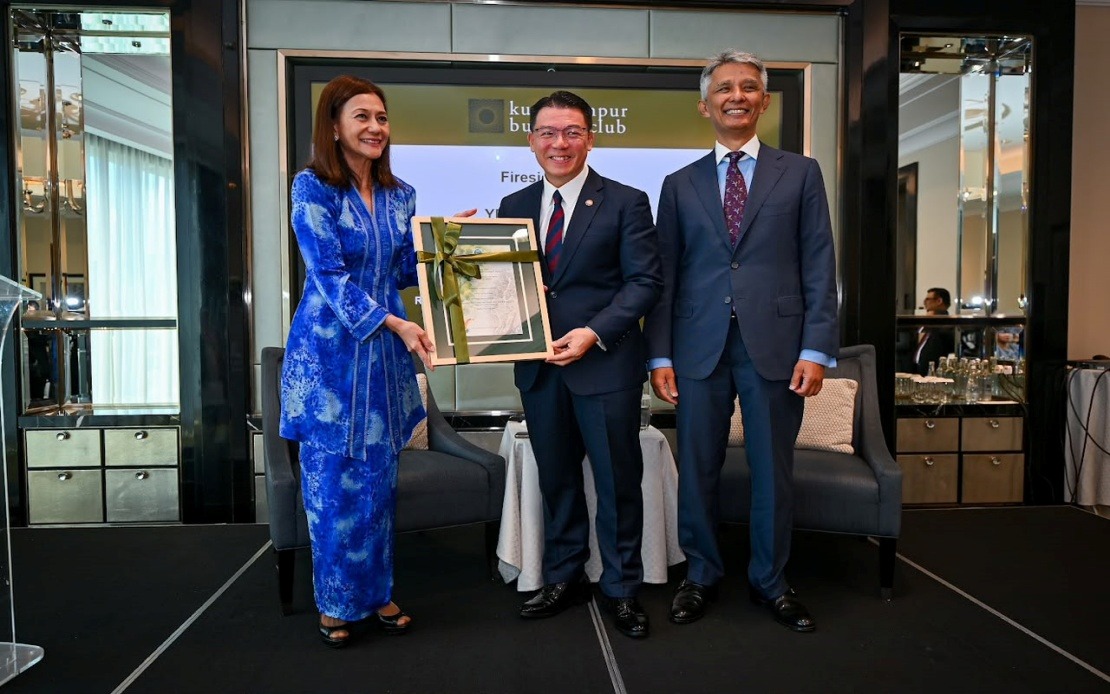
Housing and Local Government Minister Nga Kor Ming has underscored the importance of sustained policy continuity within the MADANI framework to ensure that ongoing economic reforms translate into tangible, long-term gains for Malaysia. Speaking after a fireside chat organised by the Kuala Lumpur Business Club, Nga stressed that maintaining a consistent governance approach and reform trajectory is fundamental to upholding investor confidence while preserving the nation's competitive edge in an increasingly volatile global economic landscape.
Nga outlined how stability in policy direction directly correlates with Malaysia's ability to attract foreign investment and maintain resilience amid external economic shocks. The minister noted that without consistent governance frameworks, businesses struggle to make long-term investment decisions, particularly given the complex regulatory environments across Southeast Asia. He emphasised that Malaysia's current trajectory under Prime Minister Datuk Seri Anwar Ibrahim demonstrates what can be achieved when government maintains a clear, unwavering commitment to structural reforms across multiple sectors.
The discussion at the Kuala Lumpur Business Club centred on urban economic transformation under the theme "Future Cities, Future Growth: How MADANI Reforms Are Reshaping Malaysia's Urban Economy", bringing together prominent business leaders and development stakeholders. This forum provided a platform for examining how Malaysia's policy framework is reshaping urban centres and creating opportunities for sustained economic growth, particularly in real estate, infrastructure, and service sectors that are critical to the nation's development agenda.
Nga highlighted that a continued government mandate would provide the institutional stability necessary to deepen structural reforms and strengthen Malaysia's capacity to execute ambitious long-term economic transformation plans already in motion. The minister pointed out that many significant economic initiatives require multi-year implementation cycles to yield meaningful results, and premature policy shifts can derail progress and waste substantial investments. He emphasised that investor markets respond positively to governments that demonstrate commitment to clearly articulated strategic directions.
The MADANI government has achieved measurable progress across governance reforms, economic management frameworks, and international diplomatic engagement, according to Nga's assessment. These developments have collectively enhanced Malaysia's reputation as a stable investment destination and strengthened its standing within global financial markets. The improvements extend beyond domestic governance into areas such as combating corruption and establishing credible fiscal management practices that appeal to institutional investors concerned with environmental, social, and governance standards.
Malaysia's Corruption Perceptions Index ranking has improved substantially under the current administration, reflecting genuine efforts to strengthen institutional integrity and reduce systemic corruption that historically deterred foreign investors. Simultaneously, international credit rating agencies have upgraded their assessments of Malaysia's fiscal credibility, suggesting that bond markets and institutional investors view the government's economic management favourably. These external validations carry significant weight in determining borrowing costs and investment flows into Malaysia, directly affecting the cost of capital for both government projects and private sector expansion.
Beyond domestic reform, Nga highlighted Malaysia's emerging role in strategic international partnerships that unlock new economic opportunities. The RM52.73 billion strategic partnership with Turkmenistan represents a substantial commitment to bilateral economic collaboration, while long-term energy collaboration frameworks with Russia position Malaysia as a key player in regional energy security arrangements. These partnerships extend Malaysia's economic network beyond traditional ASEAN relationships and create diversified revenue streams that reduce dependence on any single trading partner or sector.
The minister's emphasis on diplomatic engagement reflects a sophisticated understanding that modern economic growth depends heavily on geopolitical positioning and bilateral relationship management. Malaysia's ability to negotiate advantageous partnerships depends on demonstrating institutional reliability and policy predictability to foreign governments and their state-owned enterprises. Sudden policy reversals or governance instability can undermine years of diplomatic groundwork and cause partners to redirect investments toward more stable destinations.
For Malaysian readers and businesses, the implications of sustained policy continuity extend to employment creation, infrastructure development, and sectoral growth opportunities across urban and regional economies. When government maintains consistent policy direction, businesses can more confidently commit to long-term expansion plans, workforce development, and capital investment. The manufacturing, technology, financial services, and tourism sectors particularly benefit from predictable policy environments that allow for multi-year strategic planning.
Nga's remarks reflect broader consensus among Malaysian policymakers and business community leaders that institutional stability remains Malaysia's competitive advantage in attracting foreign direct investment within Southeast Asia. Regional competitors including Vietnam, Thailand, and Indonesia actively promote their own investment packages, and Malaysia's differentiation rests significantly on demonstrating superior institutional governance and policy consistency. In this competitive landscape, any perception of policy instability can rapidly redirect investment flows to rival destinations.
The economic transformation underway through MADANI represents an attempt to restructure Malaysia's economy toward higher value-added activities, greater technological sophistication, and more sustainable urban development patterns. Achieving this transition requires sustained commitment across multiple government agencies, consistent regulatory implementation, and patient capital from both public and private sectors. Short-term policy reversals can fragment these efforts and reduce their cumulative impact.
Looking forward, the challenge for Malaysia lies in demonstrating that policy continuity can coexist with democratic renewal and periodic electoral competition. Investors require assurance that regardless of which coalition governs, fundamental economic structures and reform trajectories will remain intact. This demands that major economic policies achieve cross-partisan consensus or at least recognition as national development imperatives transcending short-term partisan advantage. The degree to which Malaysian political parties can institutionalise such commitments will significantly influence the nation's ability to execute transformational economic reforms and compete effectively with regional neighbours for investment, talent, and market share.