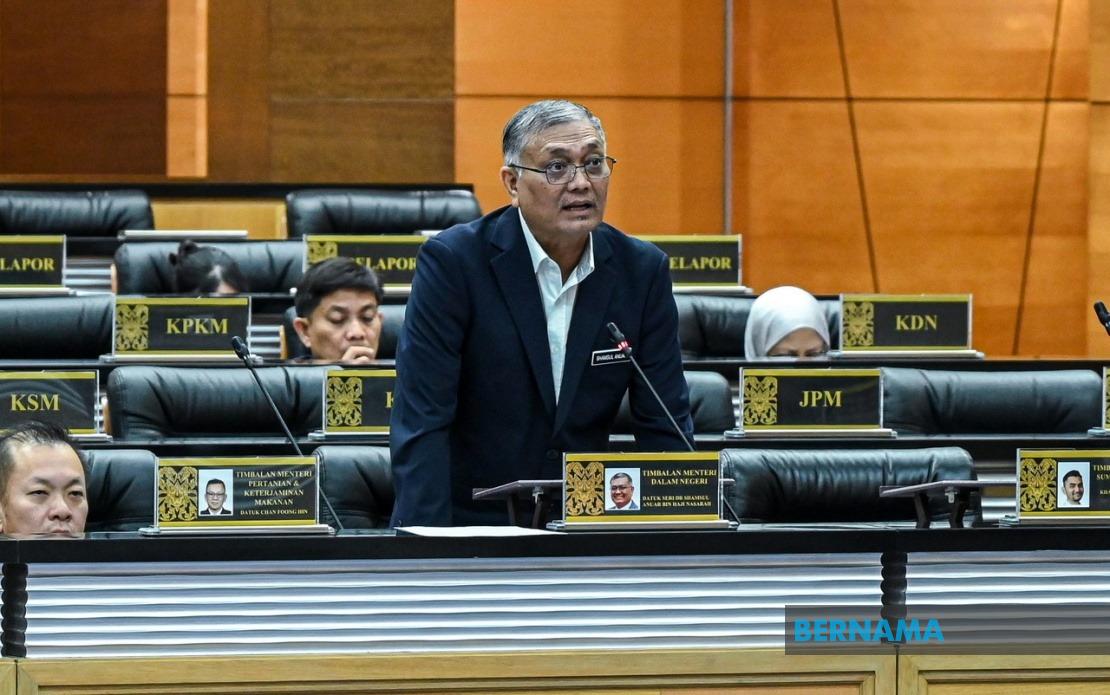
Deputy Home Minister Datuk Seri Dr Shamsul Anuar Nasarah has given categorical assurance that the Royal Malaysian Police (PDRM) will not offer special protection to any suspect during investigations into high-profile cases, addressing concerns about impartiality in the handling of sensitive matters involving prominent figures. His declaration came during proceedings in the Dewan Rakyat on July 15, responding to parliamentary queries about several ongoing investigations that have captured public attention and raised questions about equal treatment before the law.
The statement represents an important reaffirmation of police commitment to procedural fairness, particularly given the elevated public interest surrounding cases involving former government officials and their associates. Shamsul Anuar stressed that the PDRM's approach to investigations remains rooted in professional standards, operating transparently and applying the same legal standards irrespective of whether a suspect holds high office, maintains political connections, or belongs to any particular coalition or party. This emphasis on institutional independence carries significance for public confidence in Malaysia's law enforcement apparatus, which has faced scrutiny over the years regarding potential political influence in major inquiries.
Among the cases drawing ongoing attention is the investigation into a sexually explicit video that surfaced in 2019 and was reportedly connected to a former Cabinet member. Authorities continue their efforts to locate the original recording and identify all devices and equipment involved in its creation and distribution. The investigation proceeds under multiple legal provisions, including Section 292, Section 377B, and Section 504 of the Penal Code, as well as Section 233 of the Communications and Multimedia Act 1998. This multi-statute approach reflects the complexity of contemporary cases involving digital content and the intersection of privacy, obscenity, and public order concerns that such incidents generate.
The 2019 video incident had sparked considerable debate about privacy rights, the vulnerability of public figures to targeted campaigns, and the broader question of how authorities should balance investigation with protecting individuals from harassment and invasion of privacy. The persistence of this investigation underscores the challenges law enforcement faces in addressing crimes committed through digital platforms, where evidence can be dispersed globally and devices may be beyond Malaysian jurisdiction.
In a related matter, authorities have been examining allegations involving the son-in-law of former Prime Minister Tan Sri Muhyiddin Yassin. This case has been assigned to the Malaysian Anti-Corruption Commission (MACC), which has already secured an arrest warrant against the individual in question. Shamsul Anuar declined to elaborate further, citing the ongoing nature of the MACC investigation and the need to preserve investigative integrity. The decision to involve the anti-corruption body rather than the police directly indicates that the allegations centre on financial impropriety or abuse of power rather than ordinary criminal conduct.
These interconnected investigations illustrate the complexity of Malaysia's law enforcement landscape, where different agencies hold jurisdiction over distinct categories of offence and must coordinate while maintaining investigative autonomy. The involvement of the MACC in the matter relating to the former Prime Minister's family member demonstrates the institutional mechanisms designed to prevent conflicts of interest and ensure that investigations remain insulated from political pressure or favouritism.
Beyond domestic investigations, Shamsul Anuar addressed extradition procedures and Malaysia's international cooperation frameworks for pursuing suspects who flee abroad. The government currently maintains extradition treaties with eleven countries and has become party to the ASEAN Extradition Treaty, establishing a regional mechanism for pursuing justice across borders. These international agreements have become increasingly essential in an era of high-speed travel and digital communication, where individuals under investigation can readily relocate to avoid prosecution. Shamsul Anuar indicated Malaysia's willingness to negotiate additional extradition treaties with countries not yet bound by formal agreements, reflecting recognition that gaps in such arrangements can hinder pursuit of fugitive suspects.
The extradition framework operates under the Extradition Act 1992, which sets out procedural requirements and protections for individuals facing cross-border prosecution. The legal process is deliberately deliberative, requiring judicial review and assessment of whether surrendering an accused person to another jurisdiction would violate fundamental rights or contradict Malaysian law. This careful approach, while sometimes frustrating to those seeking swift justice, reflects international standards designed to prevent misuse of extradition for political persecution.
Shamsul Anuar's remarks gain relevance against the backdrop of Malaysia's efforts to strengthen institutional integrity and demonstrate that no individual, regardless of past office or political connections, remains above the law. The statements serve multiple audiences simultaneously: they reassure the public that investigations proceed fairly; they signal to suspects that high office provides no shield; and they project to the international community that Malaysia's law enforcement institutions operate according to established principles. Such declarations become particularly important when high-profile figures face investigation, as the political nature of some accusations inevitably invites scepticism about investigative motives.
For Malaysia and Southeast Asia more broadly, maintaining public confidence in impartial law enforcement represents a foundational requirement for democratic governance and institutional legitimacy. When citizens perceive that investigations are manipulated for partisan advantage or that wealthy and connected individuals escape accountability, faith in the justice system erodes and cynicism about institutional fairness intensifies. The Deputy Home Minister's commitment to rigorous, non-discriminatory investigation reflects understanding of these dynamics.
The convergence of these multiple high-profile cases—the viral video incident, the allegations involving the former Prime Minister's family connection, and international extradition considerations—will test the credibility of this commitment to impartiality. Media reporting and public perception of whether investigations proceed swiftly and equitably against all suspects, regardless of status, will substantially shape public assessment of whether the PDRM's professed standards translate into actual practice. The coming months will reveal whether Malaysia's law enforcement institutions can credibly demonstrate that equal justice under law transcends political considerations and social hierarchies.

