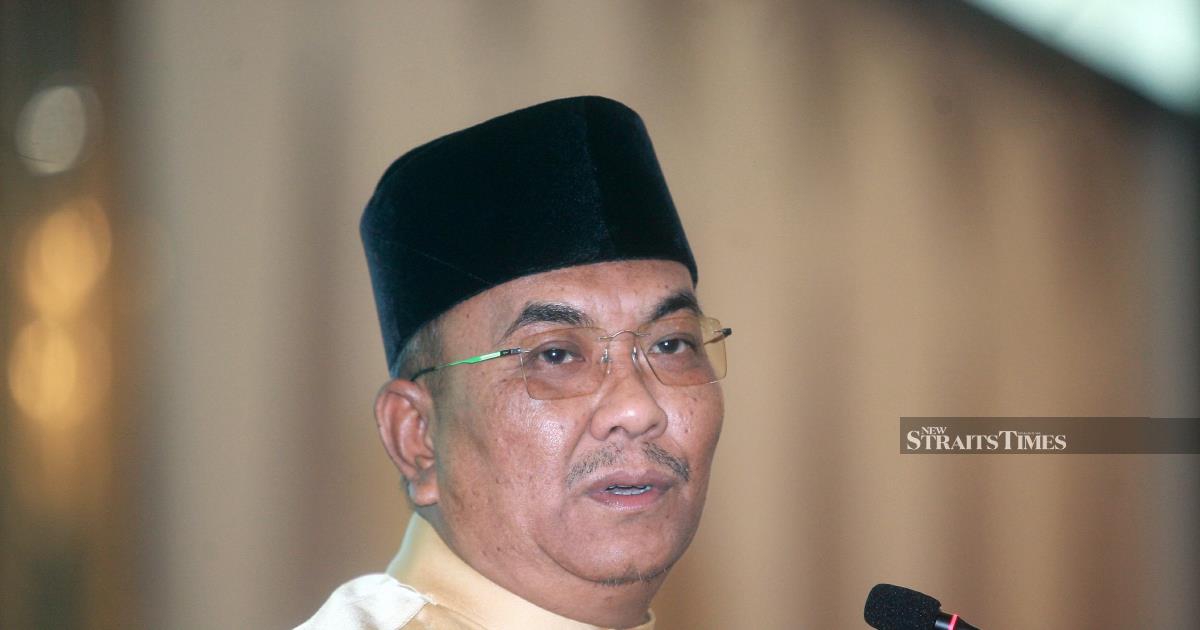
Police authorities have moved to scrutinise campaign utterances from the Negri Sembilan state election by announcing plans to summon Kedah Menteri Besar Datuk Seri Muhammad Sanusi Md Nor and a senior Umno official from the Rembau constituency. The action signals heightened official attention to political speech during state-level electoral contests in Malaysia, where regulations around campaign conduct have grown increasingly stringent.
The decision to investigate remarks from both figures follows the closely watched Negri Sembilan election campaign, during which numerous politicians traversed the state delivering speeches and engaging voters. Sanusi, as head of Kedah's state government and a prominent Umno voice at the national level, had been an active participant in mobilising support for party candidates. His involvement in neighbouring state campaigns reflects the typical pattern of inter-state political cooperation that characterises Malaysian electoral processes, where senior leaders from governing parties campaign across state lines to energise their base.
The Rembau Umno leader's inclusion in the investigation suggests that concerns about campaign language were not confined to statements by top-tier political figures but extended to remarks by constituency-level organisers. This indicates that authorities are applying consistent scrutiny across different strata of political leadership. The identification of specific individuals for questioning rather than broader investigation into campaign conduct suggests the police have targeted particular utterances deemed problematic under electoral or general law.
The nature of the remarks that prompted the police action remains a significant unknown factor. Malaysian election law and general statutes covering public speech contain various provisions that can be invoked against politicians, ranging from regulations on electoral conduct to broader provisions on sedition, defamation, or incitement. The specificity of what officials believe violated these frameworks will be crucial in determining whether the matter represents routine enforcement or signals a broader political message about permissible campaign discourse.
For Malaysian voters and political observers, such police interventions during or immediately after elections raise persistent questions about the balance between maintaining orderly democratic conduct and protecting space for robust political expression. The invocation of investigative authority by law enforcement agencies following campaigns often becomes itself a subject of scrutiny, with assessments varying about whether enforcement represents neutral adherence to law or selective application reflecting political considerations.
The implications extend beyond the immediate figures involved. Political leaders across the opposition-government divide monitor how enforcement agencies handle campaign speech, using such precedents to calibrate their own rhetoric in future contests. Statements by prominent figures like Sanusi, who straddles roles as both a state leader and national political actor, attract particular attention because they can be interpreted as signalling boundaries of acceptable discourse within the broader governing coalition.
For Southeast Asian observers, Malaysia's approach to managing campaign speech sits somewhere between more permissive systems that protect wide latitude for political expression and more restrictive frameworks that actively police electoral rhetoric. The recurring pattern of investigating specific individuals over campaign remarks reflects tension between electoral regulations conceived as necessary guardrails against abuse and concerns from civil liberties perspectives that such enforcement can become instrumentalised.
The Rembau constituency dimension adds a layer of geographic interest, as the area has historically been competitive terrain in Negri Sembilan politics. Campaign intensity in such constituencies often rises, with politicians deploying more pointed rhetoric to mobilise supporters. If remarks from the Rembau Umno figure were particularly forceful or cutting, they may have crossed thresholds that authorities consider inappropriate, contributing to the decision to investigate.
The summoning process itself, once initiated, typically involves police questioning aimed at establishing whether statements violated applicable provisions. For Sanusi, his status as a menteri besar means the investigation will attract substantial media coverage and political commentary, potentially affecting his standing within Umno and his political calculations heading into future contests. The process also implicitly shapes how other state leaders approach campaign involvement in neighbouring electoral contests, potentially making them more circumspect in language and fewer in number of campaign appearances.
The timing of such investigations—emerging in the immediate aftermath of campaigns—reflects standard police procedure but also creates political dynamics. Opposition figures and civil society actors often scrutinise whether investigations are applied evenly across political parties or whether enforcement targets specific groupings more intensively. Comparative analysis of campaign-period investigations across electoral cycles and different states provides one measure through which observers assess whether enforcement regimes maintain consistency.
Moving forward, the investigation outcomes and any statements officials make about why these particular remarks warranted police action will offer signals about what constitutes acceptable boundaries for 2024 and beyond. Political parties will adjust their campaign guidance to candidates and surrogates based on learning from such cases, potentially leading to more careful scripting of campaign messages to avoid providing authorities with grounds for investigation. This creates subtle but significant effects on electoral discourse patterns across the country.
Ultimately, the decision to summon Sanusi and the Rembau Umno leader reflects Malaysian authorities' ongoing efforts to mediate between competing imperatives: maintaining electoral conduct standards while operating within a system where political actors maintain different views about what those standards should properly encompass. How enforcement unfolds in this instance will likely influence similar situations in upcoming state and federal electoral contests throughout the region.

