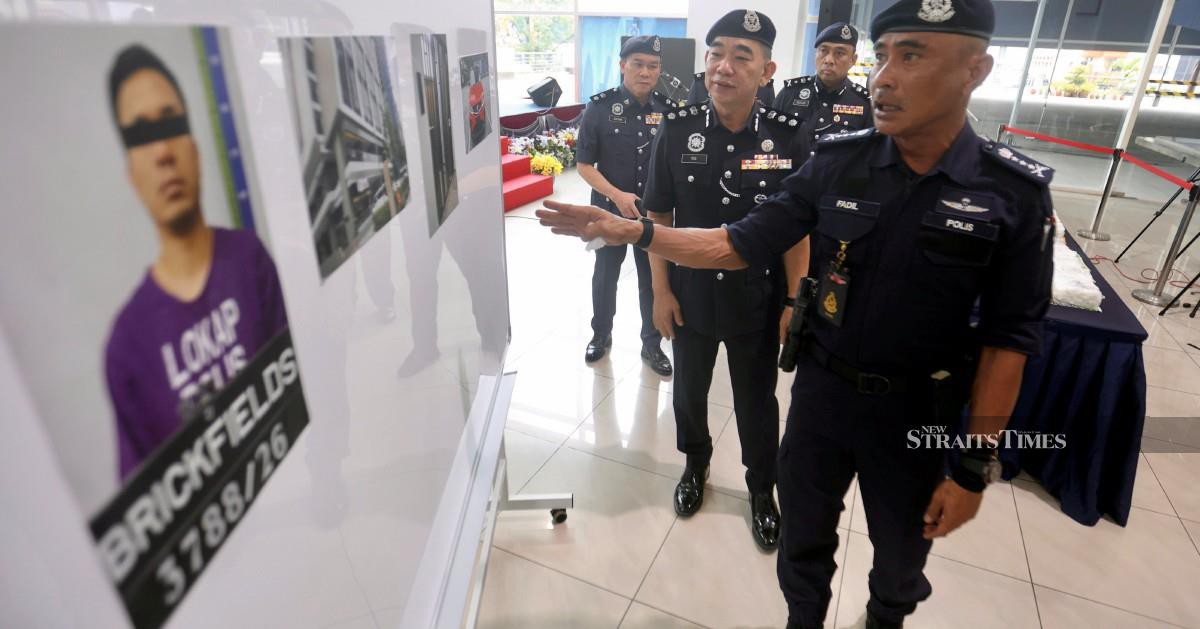
Kuala Lumpur police have dismantled a significant drug trafficking operation in the Brickfields district, recovering a combined haul of approximately 110kg of controlled substances with street value contributing to a total asset seizure worth RM8.3 million. The operation represents one of the larger interdiction efforts in the federal capital in recent months, with officers successfully apprehending a foreigner implicated in the distribution network.
The seized cache comprises nearly 80kg of methamphetamine and 30kg of ecstasy, both substances commonly found in Southeast Asian drug markets. The scale of the recovery underscores the persistent challenge posed by amphetamine-type stimulants throughout Malaysia, which have become increasingly prevalent among recreational users and remain a significant enforcement priority for the Royal Malaysia Police narcotics division. The presence of ecstasy alongside methamphetamine suggests a diversified supply operation catering to different market segments and user demographics.
The arrest of a foreign national points to the transnational dimension of Malaysia's drug problem. The country has long served as a transit hub and distribution centre for narcotics originating from major production regions in Southeast Asia, particularly the Golden Triangle and clandestine laboratories across the region. Involvement of foreign suspects in domestic trafficking operations is increasingly common, reflecting networks that exploit Malaysia's geographic position and port infrastructure to move substances throughout the region and beyond.
The Brickfields location of this operation carries particular significance given the area's status as a mixed-use district spanning commercial, residential and entertainment zones in central Kuala Lumpur. The neighbourhood's density and transient population have historically made it vulnerable to various forms of illicit activity, and its proximity to major transportation networks facilitates the movement of contraband. Police operations in such urban centres require heightened coordination and intelligence work to prevent tipping off targets.
The valuation of seized assets at RM8.3 million reflects both the quantity recovered and the estimated street value of the substances involved. In Malaysia's illicit drug market, wholesale methamphetamine typically commands prices substantially lower than retail rates, with final consumer prices varying dramatically depending on purity, location and distribution level. The inclusion of asset valuations in police announcements serves multiple purposes, demonstrating the financial magnitude of enforcement efforts and the resources now removed from criminal circulation.
This seizure arrives amid broader concerns about methamphetamine proliferation across Malaysia and the wider Southeast Asian region. The substance remains the most commonly seized drug in Malaysia by volume, driven by regional production capacity and the relatively low cost of clandestine manufacture compared to other synthetic drugs. Law enforcement agencies across the region continue to grapple with methamphetamine supply chains that operate across multiple borders, making unilateral enforcement increasingly challenging.
The apprehension of the foreign suspect raises questions about immigration oversight and cross-border movement controls. Malaysia's porous borders and established smuggling routes have enabled foreign criminals to establish themselves in the country, often exploiting visa exemptions or extended tourist permits to conduct illicit business. Collaboration between immigration authorities and narcotics police has improved in recent years but remains an area where intelligence sharing and coordinated operations could be further enhanced.
The Brickfields operation also highlights the ongoing importance of community intelligence in narcotics enforcement. Many significant drug cases result from tip-offs from local residents who recognize suspicious patterns of activity or unusual traffic to specific premises. Sustaining public engagement with law enforcement agencies through hotlines and anonymous reporting mechanisms remains crucial for identifying trafficking operations before they expand their networks.
Police have indicated that investigations into the foreigner's background and potential connections to larger trafficking organisations are continuing. Such operations rarely represent isolated incidents but rather nodes within more extensive supply networks. Tracking upstream connections to larger distributors and downstream connections to street-level dealers requires sustained investigative effort and often involves collaboration with intelligence agencies and neighbouring law enforcement bodies.
The timing of this seizure reflects continued intensity in Malaysia's drug war, which has taken on renewed urgency as new synthetic substances and production methods emerge across the region. Organised criminal groups have demonstrated adaptability in responding to enforcement pressures, diversifying their supply sources and distribution methods to maintain market access. The combination of interdiction efforts like the Brickfields operation with demand reduction initiatives and targeted community programmes remains essential for addressing Malaysia's drug challenge comprehensively.
Looking forward, this case underscores the necessity for sustained investment in intelligence capabilities, inter-agency coordination, and international cooperation in combating drug trafficking. The involvement of a foreign national highlights how Malaysian law enforcement cannot address drug problems unilaterally but must work within regional and global frameworks. Enhanced border security, improved information sharing with neighbouring countries, and targeted operations against known trafficking routes remain priorities for police as they work to disrupt the supply chains feeding Malaysia's illicit drug market.

