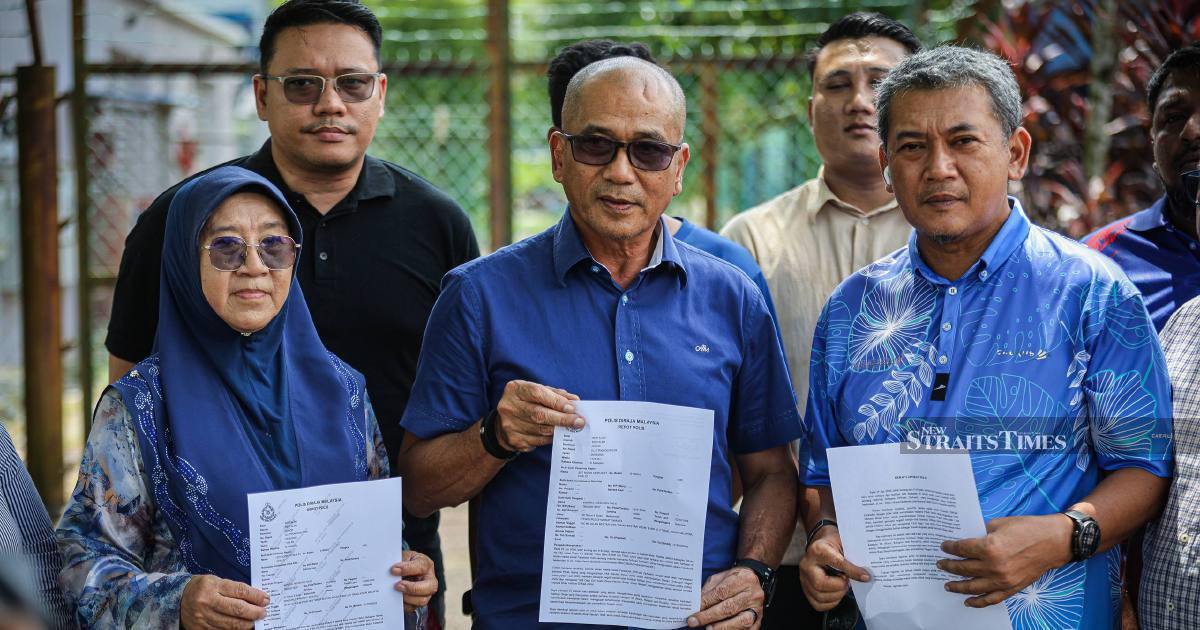
Tensions within Johor's political establishment have intensified following a series of police reports lodged by Barisan Nasional members against Datuk Dr Mohd Puad Zarkashi, a former member of Umno's supreme council. The reports emerged in response to controversial allegations the veteran politician made regarding what he characterised as palace "involvement" or "interference" in the state's political machinery and internal Umno dynamics.
The escalation represents a significant rift within the coalition machinery at state level, signalling deep frustrations over governance and institutional boundaries. The coordinated filing of complaints by multiple Johor BN figures suggests an organised effort to challenge Puad's public statements, underscoring the sensitivity surrounding any references to the role of traditional rulers in partisan political affairs. Such moves typically indicate factional tensions bubbling beneath the surface of Barisan unity.
Puad's allegations touch upon a longstanding but delicate subject in Malaysian politics: the extent to which palace institutions should be involved in executive decision-making and party management. While constitutional monarchies across Asia frequently navigate similar questions, Malaysia's system grants sultans considerable reserve powers, particularly in states where they hold significant authority. The Johor palace, one of the country's most influential royal institutions, maintains substantial political capital and involvement in state governance.
The filing of police reports effectively transforms what might have remained internal party criticism into a criminal matter, a strategy that escalates the dispute dramatically. By invoking law enforcement, the complainants have signalled they view Puad's remarks as sufficiently serious or defamatory to warrant formal investigation. This approach raises questions about the boundaries of legitimate political discourse in Malaysia, where criticism of royal institutions has traditionally been circumscribed by both formal legal restrictions and unwritten social conventions.
For Malaysian observers, the incident illustrates persistent fault lines within Umno and the broader coalition structure. The party has long grappled with balancing respect for traditional monarchies with democratic party processes. State-level dynamics in Johor, where the palace commands particular reverence and political influence, amplify these tensions. Leadership struggles, succession planning, and resource distribution frequently become entangled with perceptions of palace favour or disfavour.
Puad's background as a former supreme council member grants him credibility within party circles, making his allegations particularly consequential. Veteran politicians who have served in senior party roles typically possess detailed knowledge of internal machinations and decision-making processes. Their public criticism therefore carries more weight than casual commentary, which may explain why the response has been swift and forceful.
The situation reflects broader questions about institutional accountability in Malaysia's political system. When allegations emerge regarding palace involvement in party matters, they implicate fundamental questions about the proper division between traditional authority and democratic governance. Ruling institutions generally resist public scrutiny of their political roles, viewing such discussions as encroachments upon their dignity and constitutional prerogatives. This defensive posture, while understandable from an institutional perspective, can obscure legitimate questions about governance and transparency.
For Southeast Asian observers, Johor's political tensions are particularly noteworthy given the state's economic importance and status as a principal Umno stronghold. The stability of politics in Johor has ramifications extending beyond state boundaries, influencing national coalition cohesion and government formation at the federal level. Any significant factional conflict in Johor's Barisan ranks sends ripples through the broader political ecosystem.
The resort to police reports also reflects a preference within Malaysia's political culture for formal institutional responses to inter-party disputes. Rather than resolving disagreements through internal party mechanisms or public debate, aggrieved parties frequently invoke state institutions—police investigations, electoral commission proceedings, or judicial processes—to settle scores. This approach can either clarify contested facts or intensify polarisation, depending upon investigation outcomes and how various factions interpret findings.
The specific allegations Puad levelled against the Johor palace and state Umno leadership remain subjects of significant interest. Understanding precisely what claims triggered the police reports would illuminate the nature of the underlying dispute. Whether Puad accused the palace of direct interference in party elections, policy decisions, or personnel matters carries different implications for evaluating the legitimacy of his concerns.
Moving forward, the investigation's direction and conclusions may substantially influence Johor's political landscape. Should authorities determine that Puad's allegations lack merit, the episode could serve to reinforce palace authority and discourage future public criticism. Conversely, if investigations uncover evidence supporting aspects of his claims, the affair could precipitate broader discussions about institutional reform and governance boundaries.
This incident underscores the complex relationship between traditional institutions and modern democratic governance in Malaysia. While the country's constitutional framework technically separates royal prerogatives from party management, practical reality often proves more ambiguous. The Johor episode demonstrates how friction arises when these boundaries become contested, and how political elites employ state institutions to manage disputes involving revered institutions like the palace.

