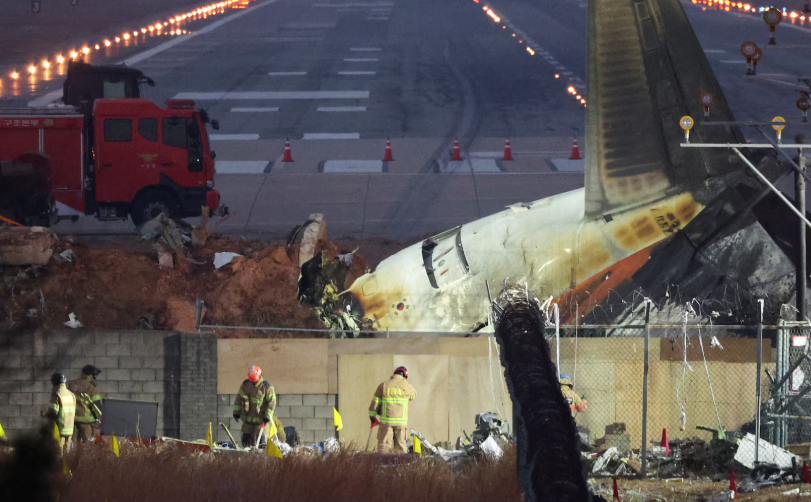
South Korean authorities have stepped up their criminal investigation into the Jeju Air disaster, conducting coordinated raids on multiple government agencies and aviation bodies as they pursue evidence against dozens of suspects. The Korea Airports Corp, the transport ministry, and the Busan Regional Office of Aviation were searched on Tuesday, August 11, marking an escalation in the probe into the catastrophic accident that occurred on December 29, 2024.
The December incident at Muan International Airport resulted in 179 deaths when Jeju Air Flight 2216 crashed during landing. The tragedy ranks among South Korea's deadliest aviation accidents in recent decades, prompting intensive official scrutiny into how it happened and whether negligence by government bodies or airport operators contributed to the loss of life. The identity of those ultimately held responsible carries significant implications for aviation safety standards and regulatory oversight across the region.
Investigators from the special task force handling the case executed the search warrants to collect additional materials relevant to their allegations of professional negligence resulting in death or serious injury. This charge framework represents a serious criminal matter in South Korea's legal system, suggesting prosecutors believe individuals or organisations failed in their duty of care with fatal consequences. The Korea Airports Corp oversees most of the country's major airports with the notable exception of Incheon International Airport, making it a central figure in routine operations at the facility where the crash occurred.
The transport ministry has now been subjected to three separate searches during this investigation, indicating that authorities suspect involvement or knowledge gaps at the ministerial level. This repeated targeting suggests investigators believe documentary evidence, communications, or procedural records held by the ministry may prove crucial in establishing whether proper oversight mechanisms existed and functioned correctly. The ministry's role in approving airport operations, safety protocols, and emergency response procedures puts it under intense scrutiny.
So far, investigators have identified 74 suspects in connection with the crash. The breadth of this suspect pool suggests the inquiry is examining responsibility across multiple levels of the aviation industry and government structure, from individual airport workers to senior officials. South Korean law enforcement has indicated that additional charges relating to causing a serious public disaster may also be brought against some suspects, a designation that carries enhanced penalties and reflects the severity of the incident.
The investigation's primary focus remains determining the technical and operational factors that led to the accident at Muan International Airport. Parallel to this technical analysis, authorities are examining whether responsible agencies—whether airport authorities, the transport ministry, maintenance contractors, or airline operators—fulfilled their legal obligations in safety management, maintenance scheduling, and emergency procedures. This dual-track approach seeks to establish both the mechanical cause and any human or organisational failures that may have compounded the disaster.
For Malaysian readers and the broader Southeast Asian aviation community, the Jeju Air investigation carries significant implications. Regional airports operate under similar international safety frameworks, and the findings may influence how neighbouring countries audit their own aviation authorities and airport operators. If the South Korean investigation reveals systemic gaps in oversight or enforcement of safety protocols, it could prompt Malaysian and other regional aviation regulators to review their own inspection schedules and institutional accountability mechanisms.
The scale of police resources devoted to this case reflects South Korean society's demand for accountability when disasters occur. The involvement of multiple government agencies in the raids underscores that responsibility for aviation safety is distributed across several institutions rather than concentrated in a single body. This fragmented structure, while common internationally, can sometimes create gaps in accountability if communication between agencies breaks down or if no single entity has clear oversight authority.
The search of the Busan Regional Office of Aviation specifically may indicate that investigators are examining whether local airport management had knowledge of maintenance issues, weather-related concerns, or operational problems that may have been relevant to the crash. Regional offices often maintain detailed records of daily operations, maintenance logs, and safety inspections that could provide a timeline of events leading to the disaster.
The professional negligence charges being pursued represent a middle ground in culpability—more serious than administrative violations but not reaching the level of intentional wrongdoing. Prosecutors must demonstrate that defendants owed a legal duty of care, that they breached that duty through either action or omission, and that this breach directly caused deaths. This evidentiary burden explains why authorities are conducting extensive searches for documentary proof of negligence rather than relying solely on technical evidence.
As the investigation progresses through evidence-gathering toward potential prosecutions, the case will likely set precedents for how South Korean courts handle corporate and governmental accountability in aviation disasters. The verdicts and sentences ultimately delivered may influence regulatory approaches throughout Northeast and Southeast Asia, where aviation authorities reference each other's enforcement practices and legal outcomes when developing their own safety policies and disciplinary frameworks.

