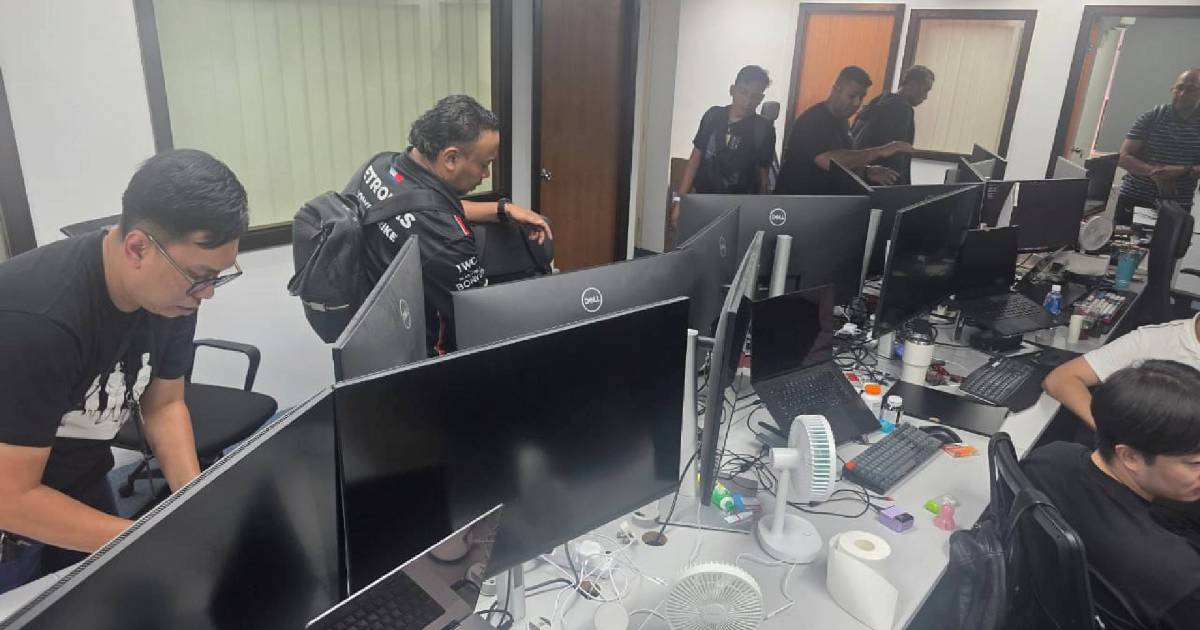
Malaysian authorities have moved decisively against an illegal gambling network after police raided a clandestine World Cup betting operation housed within a commercial office building in Taman Desa, Brickfields, Kuala Lumpur. The enforcement action, conducted yesterday, resulted in the arrest of 11 individuals implicated in running what investigators describe as a sophisticated call centre designed to facilitate unlicensed sports wagering related to the World Cup tournament. Among those detained were six South Korean nationals, underscoring the international dimension of such illicit gambling enterprises that have increasingly targeted Southeast Asian markets as distribution hubs.
The discovery of this betting operation highlights a persistent challenge facing Malaysian law enforcement as major sporting events like the World Cup generate enormous underground gambling activity. These unregulated betting rings operate with minimal oversight, creating environments where operators can exploit customers through inflated odds, withheld winnings, and lack of consumer protection mechanisms. The choice of location—a seemingly innocuous office building in an established Kuala Lumpur commercial district—reflects the deliberate attempts by such networks to operate beneath regulatory radar by blending into legitimate business landscapes.
The presence of South Korean nationals as key figures in this syndicate reflects broader patterns in transnational organised crime affecting Southeast Asia. Criminal networks have increasingly recognised the region as a strategic base for gambling operations owing to its geographical proximity to high-volume betting markets in East Asia, established telecommunications infrastructure, and in some cases perceived regulatory gaps compared to their home countries. South Korean organised gambling groups have become particularly active in Malaysia and Thailand, bringing with them expertise in coordinating large-scale operations that can service customers across multiple time zones and jurisdictions.
World Cup tournaments represent peak activity periods for illegal betting organisations globally. The calendar concentration of matches, the global appetite for wagering on football, and the relatively short duration of the tournament create ideal conditions for syndicates to maximise revenue within a compressed timeframe. These operations typically target diaspora communities, established gamblers, and individuals in jurisdictions where legal betting options are restricted or heavily taxed, making unlicensed alternatives economically attractive despite their inherent risks.
The call centre model identified in this raid demonstrates the operational sophistication that contemporary illegal gambling networks have achieved. Such centres employ multiple staff members who manage customer accounts, process bets, handle payments, and maintain records using encrypted communication systems and digital platforms. The hierarchical structure typically includes foreign management overseeing local operational staff, enabling the exercise of quality control and central strategic direction while maintaining some insulation from direct law enforcement exposure.
Malaysia's regulatory framework, overseen by the Ministry of Finance and the Royal Malaysia Police's Commercial Crime Investigation Department, officially prohibits unlicensed gambling activities, though enforcement intensity fluctuates based on resource allocation and political priorities. Authorised betting in Malaysia is limited to specific channels including Sports Toto and Magnum 4, both of which are licensed operators operating under strict government supervision. The gap between legal and illegal betting markets remains substantial, with unregulated operators claiming they can offer superior returns and more flexible betting options that licensed operators cannot match due to regulatory constraints.
The investigation that led to yesterday's raid likely involved cooperation between multiple law enforcement agencies, possibly including the Malaysian Communications and Multimedia Authority if internet-based betting systems were involved, or the Ministry of Home Affairs if regulatory coordination was required. Financial intelligence units may have also contributed by tracking suspicious money movements through banking channels, a standard methodology for identifying betting syndicates that necessarily generate large cash flows and international fund transfers.
For consumers, the dismantling of such operations serves as a cautionary reminder of the legal and financial dangers inherent in patronising unlicensed gambling services. Individuals who place bets with illegal operators have no legal recourse if disputes arise, no guarantee that winning bets will be honoured, and no protection against personal data misuse. Additionally, participation in illegal gambling exposes customers to potential criminal liability, as Malaysian law criminalises not only the operation but also the participation in unlicensed betting activities.
The arrest of six foreign nationals raises questions about the international coordination capabilities that Malaysian authorities can muster in investigating complex transnational crimes. While the current raid demonstrates successful domestic enforcement, addressing the root supply chains that channel betting infrastructure, personnel, and capital into the region requires deeper bilateral and multilateral cooperation with source countries like South Korea, intelligence sharing on emerging criminal networks, and harmonised regulatory approaches across Southeast Asia.
This incident occurs within a broader context of tightening scrutiny on financial crimes and money laundering across the region. Illegal gambling syndicates frequently serve as conduits for layering illicit funds and generating apparent legitimate income streams, making their investigation relevant not only to gambling enforcement but to counter-money laundering objectives. Malaysian authorities have increasingly prioritised disrupting these networks as part of broader financial crime prevention strategies.
The prosecution and sentencing of those arrested will provide important precedent for future cases while potentially deterring would-be operators. However, enforcement officials acknowledge that eliminating illegal betting requires not merely periodic raids but sustained, intelligence-driven operations that can disrupt criminal networks faster than they can reconstitute, combined with demand-reduction initiatives and expansion of legal betting options that might redirect some revenue from illicit to regulated channels.

