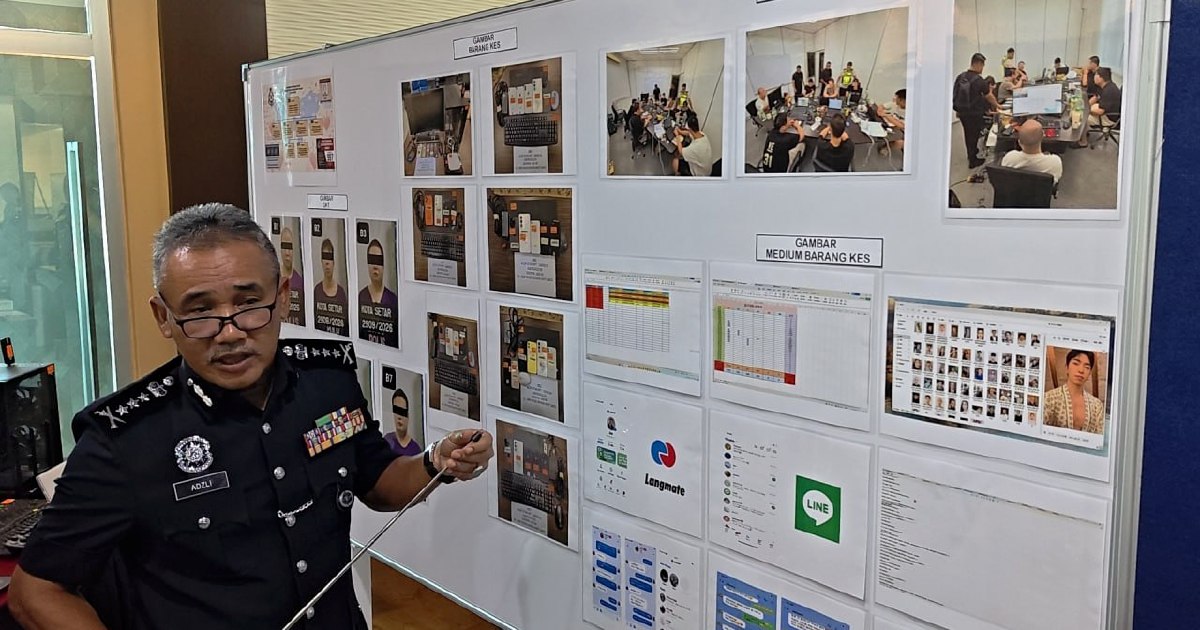
In a significant operation against cybercrime, the Royal Malaysia Police have successfully disrupted an organised love scam network that systematically defrauded Japanese nationals through fraudulent online relationships. The takedown occurred following an enforcement action at a commercial unit in the Kristal Light Industrial Park in Alor Star last Sunday, which culminated in the arrest of seven Chinese nationals suspected of coordinating the scheme.
Romance scams represent one of the most emotionally damaging forms of cybercrime, targeting lonely individuals by building fabricated relationships over weeks or months before soliciting money under false pretexts. The victims are typically convinced that their online paramours face genuine emergencies or financial difficulties, creating a sense of urgency that clouds judgment. Japanese nationals have increasingly become targets for such operations due to perceived financial capacity and willingness to send remittances, making them attractive prey for criminal syndicates operating across Southeast Asia.
The Alor Star operation appears to have been running as a sophisticated enterprise, likely employing a division of labour common to organised scam networks. Typically, such operations involve individuals tasked with creating and managing fake profiles, others responsible for engaging victims through messaging platforms and social media, and specialists handling financial logistics. The seven individuals arrested would have occupied various roles within this hierarchical structure, though police are still unravelling the complete operational details of the network.
The choice of Kristal Light Industrial Park as the operational base reveals how scammers exploit Malaysia's business-friendly environment and relatively unmonitored commercial zones. Industrial parks, with their high turnover of small tenants and minimal scrutiny, provide ideal cover for criminal operations requiring office space, telecommunications infrastructure, and the anonymity of blending in with legitimate business activity. This location strategy has become increasingly common among regional cybercrime networks seeking to maintain professional-looking operations while evading detection.
Japan has emerged as a significant source market for romance scammers across Southeast Asia, reflecting both the economic capacity of Japanese individuals and cultural factors that may make them more susceptible to emotional manipulation. Japanese society places considerable emphasis on formal introduction networks, which has created a demographic of individuals seeking romantic connections through digital means, inadvertently expanding the pool of vulnerable targets. Scammers exploit this reality by tailoring their approaches to appeal to Japanese cultural values and relationship expectations.
The investigation into this syndicate will likely uncover not only the mechanics of their deception but also the money trails and payment intermediaries utilised to launder stolen funds. These networks typically employ multiple bank accounts, cryptocurrency transfers, and remittance services to obscure the flow of money, making financial investigation as critical as the cyber forensics component. Malaysian authorities' growing sophistication in tracing digital money flows has made such operations riskier, though the financial incentives remain substantial enough to attract criminal elements.
Beyond the immediate arrests, this operation highlights vulnerabilities in cross-border law enforcement cooperation. Japanese victims may be spread across multiple prefectures, with each local police jurisdiction handling complaints separately, making it difficult to establish the criminal network's full scope. Coordinating with Japanese authorities to identify all victims and assess the total financial damage will be essential for both prosecution and public awareness purposes. The Regional Forum on Law Enforcement Cooperation mechanism across ASEAN states could prove valuable in such multi-victim, multi-national cases.
The bust underscores why digital literacy and scepticism form critical defensive measures for online dating participants, particularly for older and more isolated individuals. Education campaigns encouraging verification through video calls, meetings in public spaces, and extreme caution before any financial transactions could reduce victimisation rates significantly. Malaysian authorities may use this case to launch public awareness initiatives warning both domestic and regional populations about romance scam tactics.
For Malaysian businesses operating in Kristal Light Industrial Park and similar commercial zones, this incident raises questions about tenant vetting procedures and landlord responsibility. While police have no obligation to conduct background investigations, commercial property managers increasingly implement screening mechanisms to protect their reputation and reduce security risks. The reputational damage to legitimate businesses operating in facilities where criminal enterprises have been discovered often extends far beyond the directly implicated parties.
The case reflects broader trends in Southeast Asian organised crime, where technology-enabled fraud has become increasingly attractive to criminal syndicates previously focused on drug trafficking or physical smuggling. The lower risk profile, significant profit margins, and difficulty in prosecution across jurisdictions make cybercrime networks particularly resilient. However, successful operations like the Alor Star bust demonstrate that determined law enforcement can still identify and dismantle these operations through conventional investigative work combined with digital forensics and surveillance.
As the investigation deepens, authorities will examine whether this syndicate maintained connections with other scam operations in the region or internationally. Many such networks share technical infrastructure, victim databases, or money laundering channels, creating opportunities for investigators to broaden their understanding of the broader ecosystem. The intelligence gathered from seven arrested individuals could ultimately help authorities identify and disrupt related criminal enterprises across Malaysia and neighbouring countries.

