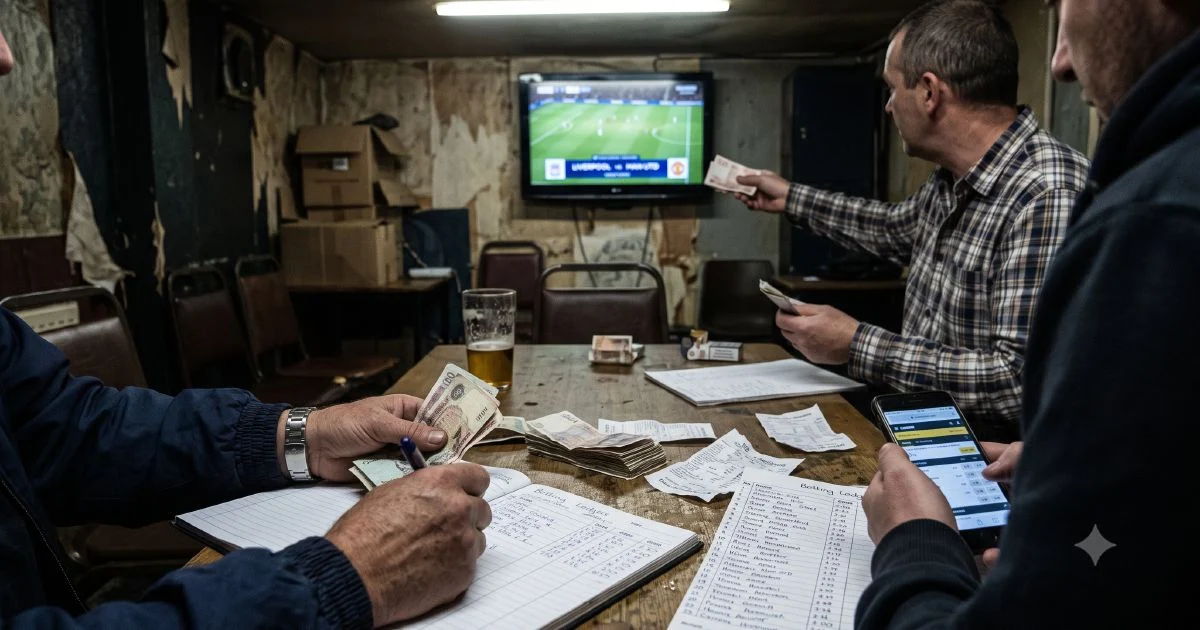
Malaysian police have launched a decisive offensive against organised illegal betting networks, apprehending 331 suspects and seizing evidence of over RM2.63 million in wagered funds during Operation Soga XI. The enforcement drive, which targeted unlicensed sports betting and online gambling operations across the country, represents a significant escalation in authorities' attempts to stamp out underground gambling tied to the global football tournament scheduled for 2026.
The operation underscores a persistent challenge facing Malaysian law enforcement: the explosive growth of illegal betting markets that flourish around major sporting events. Rather than merely disrupting transactional networks, investigators focused on dismantling the infrastructure that enables large-scale unlicensed gambling operations to thrive in Malaysia's digital landscape.
Operation Soga XI reflects the country's broader regulatory approach to gaming activities. While Malaysia maintains strict licencing requirements for all legal sports betting through authorised operators like Magnum 4D and Toto, underground betting networks have proliferated by exploiting online platforms and underground banking channels. The sheer scale of this operation—spanning multiple states and involving hundreds of suspects—demonstrates how extensively illegal gambling has penetrated Malaysian society across income and demographic lines.
The arrested individuals face potential charges under relevant gaming and gambling legislation, though authorities have not yet detailed the specific legal provisions invoked against each suspect. Such prosecutions typically result in substantial fines and jail terms, creating deterrent effects that extend beyond individual cases to signal government intent to regulated bodies and the general public.
The RM2.63 million in identified betting transactions represents a substantial yet likely underestimated figure. Investigating authorities typically uncover only a portion of total illegal wagers, particularly when operations employ sophisticated money laundering techniques or utilise cryptocurrency and informal remittance systems. This hidden economy diverts resources from regulated channels and denies government revenue that might otherwise fund public services.
World Cup tournaments consistently attract heightened illegal betting activity worldwide, and Malaysia is no exception. The 2026 edition, being held across the United States, Mexico and Canada, will feature expanded participation and extended scheduling—factors that typically amplify wagering opportunities and criminal gambling activity. Organised syndicates begin establishing infrastructure well in advance, making preemptive enforcement operations like Soga XI strategically important in disrupting supply chains before major events commence.
For Malaysian citizens and residents, illegal betting presents significant personal financial risks beyond legal consequences. Underground operators lack regulatory oversight concerning odds fairness, fund safeguarding or dispute resolution. Punters have minimal recourse if they suspect manipulation or if operators refuse to honour winnings. Additionally, illegal betting frequently intersects with loan sharking and organised crime, creating cycles of debt and coercion that devastate household finances and occasionally trigger violence.
The operation also highlights evolving enforcement challenges in the digital age. Online betting platforms operate across jurisdictional boundaries, frequently hosted on servers beyond Malaysian territory and accessible through virtual private networks and cryptocurrency payment systems. Investigators must coordinate internationally and develop technical capabilities matching those of organised criminal networks—a resource-intensive endeavour that stretches enforcement agencies.
Singapore and Thailand have implemented comparable crackdowns in recent years, recognising that tackling illegal gambling requires sustained investment in intelligence gathering, cybercrime expertise and inter-agency coordination. Malaysia's Operation Soga XI suggests similar strategic thinking, though questions persist regarding whether periodic enforcement operations can meaningfully suppress markets buoyed by persistent demand and attractive profit margins for criminal operators.
The success metric for such operations extends beyond arrest and seizure statistics. Authorities measure impact through sustained reductions in illegal betting turnover, demonstrated through financial intelligence work tracking money flows through banking systems and informal channels. Whether Operation Soga XI disrupts betting markets through deterrence effects or merely displaces activity to more clandestine networks remains to be seen.
Looking forward, Malaysian authorities face a continuing struggle balancing enforcement intensity with demand management. The gambling industry generates substantial consumer appetite, particularly around international sporting events. Some experts argue that expanding legal betting options or regulating underground markets might reduce organised crime involvement, though such approaches remain politically contentious in Malaysia's conservative regulatory environment.
The individuals arrested during Operation Soga XI represent only the visible fraction of an underground economy that likely exceeds the detected RM2.63 million substantially. As the 2026 World Cup approaches, similar enforcement operations will likely intensify, but the underlying structural factors driving illegal betting—consumer demand, high profit margins and limited risk perception—will persist absent complementary policy reforms addressing supply and demand dynamics simultaneously.

