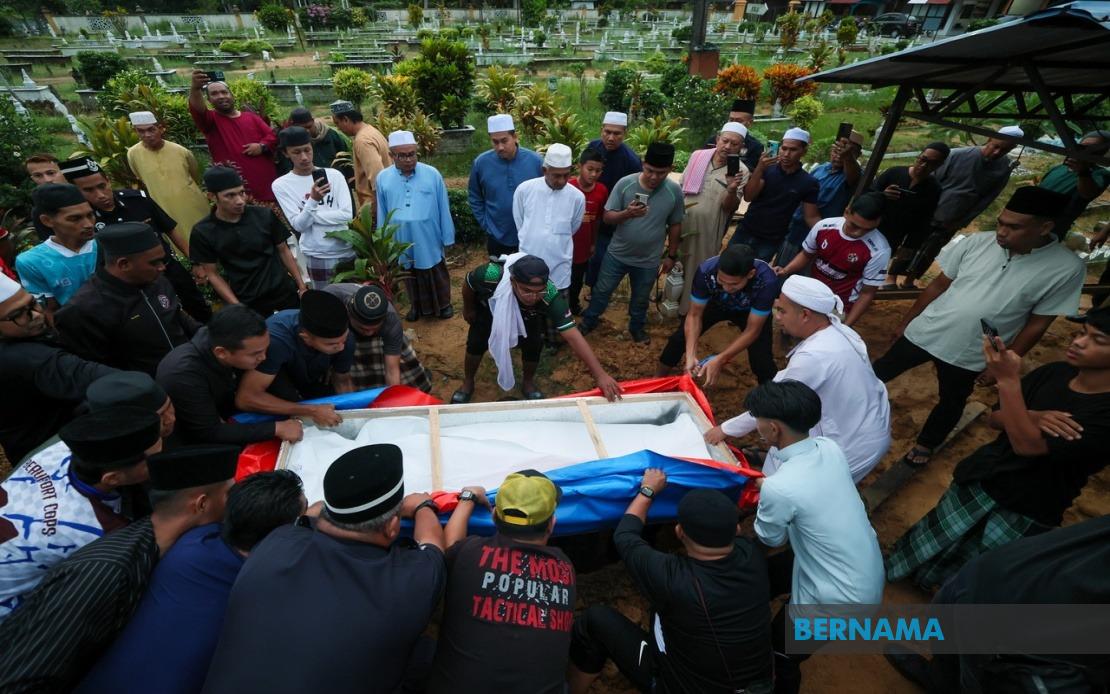
Corporal Mohamad Nur Hafiz Rahim, a 29-year-old officer with the Royal Malaysia Police, was laid to rest at Kampung Pangkal Kuang Muslim Cemetery in Ketereh, Kelantan, on Thursday morning following his death in an electric shock incident at the Weston Police Station in Beaufort, Sabah. The funeral prayers were conducted at his family home in Kampung Hutan Pasir before the burial took place, bringing to a close the tragic episode that claimed the lives of three serving police personnel during the execution of routine duties.
The electrocution occurred at 5.50 pm on Wednesday when Mohamad Nur Hafiz and two colleagues were attempting to relocate a 29-foot metal pole used for harvesting coconuts outside the police station, positioned near Sekolah Kebangsaan Weston. The pole came into contact with overhead electrical lines, resulting in a fatal current that struck all three officers. In addition to Mohamad Nur Hafiz, the incident claimed the lives of Corporal Chiu Teck Siong, a 40-year-old from Sarawak, and Constable Muhammad Raimi Ismarubee, a 26-year-old from Terengganu. The sudden loss of three dedicated police officers shocked the nation and prompted immediate calls for a comprehensive investigation.
Nurlella Rahim, the deceased's eldest sister at 34 years old, shared her family's profound sense of loss while expressing gratitude to the Royal Malaysia Police for their assistance in managing the logistics of bringing her brother's remains from Sabah to Kelantan. Speaking at the cemetery, Nurlella described how the family's remains arrived at their home at 4.45 am, having been transported through the coordinated efforts of police personnel who worked to facilitate the repatriation process during a time of immense grief.
The Rahim family was characterised by close bonds that transcended geographical distance. Nurlella revealed that the five siblings maintained almost daily contact despite living in different parts of Malaysia, with Mohamad Nur Hafiz stationed in Sabah while Nurlella herself resided in Ipoh, Perak. Their primary means of staying connected involved regular video calls and active engagement on social media platforms, where they would comment on each other's posts and participate in family group video calls through WhatsApp whenever their schedules permitted. This digital closeness had become integral to their family dynamic, allowing them to remain emotionally present in each other's lives despite the physical separation.
The last interaction between Mohamad Nur Hafiz and his family members came just days before the tragedy. His final video call with their mother occurred on Thursday afternoon, during which he appeared fatigued and somewhat withdrawn, though he managed to convey that he was managing and would continue their conversation later as his work duties required his immediate attention. Even during brief respites at work, he would find moments to connect with his siblings through video calls, a testament to how central family communication had become to his daily routine.
Nurlella's most recent personal exchange with her brother happened on Sunday, when he shared video footage of an outing with his wife, Fatimah Shahira, and their young child at the beach. These glimpses into his family life beyond his police duties painted a picture of a devoted family man who, despite the demands of his posting in Sabah, prioritised maintaining strong relationships with his parents and siblings back in Kelantan and other parts of the peninsula.
The incident has prompted significant attention at the highest levels of government. Prime Minister Datuk Seri Anwar Ibrahim issued a directive on Thursday ordering a thorough, transparent, and immediate investigation into the circumstances surrounding the electrocution. Through a statement posted on Facebook, Anwar emphasised that understanding the root cause of the tragedy was essential not only for providing closure to the bereaved families but also for identifying systemic weaknesses that could be remedied to prevent similar incidents from occurring in the future.
The investigation will need to examine multiple factors surrounding the incident, including whether adequate safety protocols were in place for handling the coconut-harvesting pole, whether the officers had received appropriate training for such operations, and whether there were sufficient safeguards to prevent contact with overhead electrical infrastructure. The proximity of the police station to Sekolah Kebangsaan Weston also raises questions about emergency preparedness and how quickly response teams could have intervened had warning systems been present.
For the Royal Malaysia Police as an institution, the tragedy represents a sobering reminder of the occupational hazards that extend beyond the traditionally recognised dangers associated with law enforcement work. While police officers face risks in confronting criminal elements, this incident demonstrates that routine administrative and maintenance tasks can prove equally lethal if proper safety measures are not rigorously implemented. The deaths of three young officers—the youngest only 26 years old—underscore the need for comprehensive workplace safety reviews across all police facilities nationwide.
The incident resonates beyond Sabah and Kelantan, carrying implications for workplace safety standards across Malaysia's federal institutions. The investigative findings may establish precedents for how government agencies address similar risks, potentially influencing safety protocols for police stations and other public facilities that maintain infrastructure requiring regular maintenance and adjustment. For the families left behind, the investigation offers the possibility of understanding exactly what transpired and whether systemic failures contributed to the tragedy.
The loss of these three officers reflects a broader challenge facing Malaysia's security forces: balancing operational demands with worker safety in environments where resources and oversight may be stretched thin. As the investigation proceeds under Prime Minister Anwar's directive, the nation watches to see what findings emerge and what preventive measures will be implemented to honour the memory of Mohamad Nur Hafiz, Chiu Teck Siong, and Muhammad Raimi Ismarubee.

