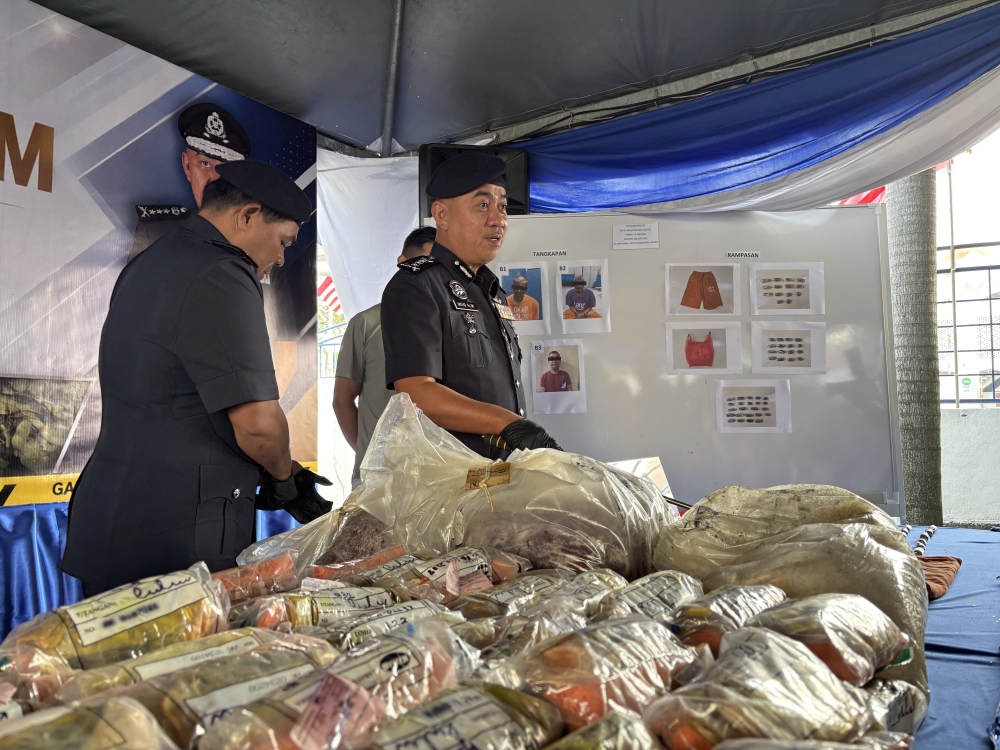
Authorities in Perak have launched investigations into a significant breach of security at Lumut police headquarters after narcotics worth RM18,534 were recovered from inside a police custody cell. The discovery has resulted in the arrest of three individuals, including an on-duty police constable, marking an embarrassing incident for the Royal Malaysia Police during an era of heightened scrutiny over internal discipline and institutional integrity.
The seizure, which took place at the Lumut police station in Perak, unveiled a troubling vulnerability within the force's detention facilities. The cache included methamphetamine, heroin, and cannabis—substances that are subject to strict controls under Malaysia's drug laws. The presence of these illegal drugs within a secure police facility raises serious questions about procedural compliance, supervision protocols, and the vetting of personnel with access to holding areas where suspects and detainees are housed.
The involvement of a police constable in the incident is particularly damaging to public confidence. Police officers are entrusted with law enforcement responsibilities and are expected to uphold the highest standards of conduct, especially within their own workplaces. When uniformed personnel become implicated in drug-related offences, it undermines the credibility of the entire institution and provides ammunition to critics who have long questioned the effectiveness of internal oversight mechanisms within the force.
This case unfolds against a broader backdrop of concern regarding drug trafficking and consumption in Malaysia. The country remains a significant transit point for narcotics destined for regional and international markets, with law enforcement agencies engaged in ongoing operations to dismantle smuggling networks. However, incidents such as this one highlight that threats to drug control efforts can originate from within enforcement agencies themselves, where insider participation can facilitate illicit activities.
The discovery at the Lumut facility underscores the vulnerability of police detention areas to infiltration and misuse. These spaces should represent the most secure environments within the criminal justice system, yet the presence of contraband demonstrates that physical security measures alone may be insufficient without complementary human resource management and regular integrity checks. Investigators will likely examine whether the drugs were brought into the facility by the constable in question or whether they were smuggled in by other means.
The three arrests signal that the matter is being treated seriously by police hierarchy. Depending on the findings of the investigation, charges could range from possession with intent to distribute to more serious allegations involving abuse of position. For the constable, conviction could result in dismissal from service in addition to criminal penalties, effectively ending a career in law enforcement. Such consequences serve as a deterrent to other officers who might consider engaging in similar conduct.
For the broader Malaysian public, including those in Perak and the wider Klang Valley region, this incident reinforces perceptions that drug problems persist at multiple levels of society and within institutions tasked with combating them. Citizens rely on the police force to maintain public order and enforce drug laws consistently and fairly. When officers themselves become ensnared in drug-related activities, public trust erodes, and the force's legitimacy to pursue cases against ordinary citizens becomes questionable.
The Lumut police station case also has implications for prison and detention facilities across Malaysia. If drugs can reach suspects held in police custody, concerns naturally arise about security in prisons and other holding facilities. Correctional authorities will likely review their own protocols to ensure that contraband interdiction measures are robust. The incident may trigger reviews of visitor policies, staff screening procedures, and the use of detection technology in secure facilities nationwide.
International observers and Malaysian civil society organizations monitoring human rights and institutional accountability will view this case as a test of whether the police force can conduct impartial investigations into its own members and pursue them through the criminal justice system with the same vigour applied to ordinary citizens. Transparent handling of the matter will be essential to maintaining public perception that the force is serious about rooting out internal corruption and criminal conduct.
The RM18,534 seizure, while significant in monetary terms, represents merely a fraction of the drug quantities intercepted across Malaysia in any given month. Yet its location within a police facility makes it symbolically important. It serves as a reminder that addressing Malaysia's drug problem requires not only operations against street-level traffickers and major smuggling networks but also vigilant internal security measures to prevent law enforcement personnel from becoming instruments of drug distribution.
As investigations proceed, the outcomes will likely shape future policies regarding personnel security clearances, periodic integrity testing, and the physical security infrastructure of custody facilities. The Lumut incident, though localized, carries lessons applicable to police headquarters and detention facilities across the country. It underscores that institutional integrity depends on constant vigilance and that no agency is immune to internal threats if proper safeguards are not maintained and consistently enforced.

