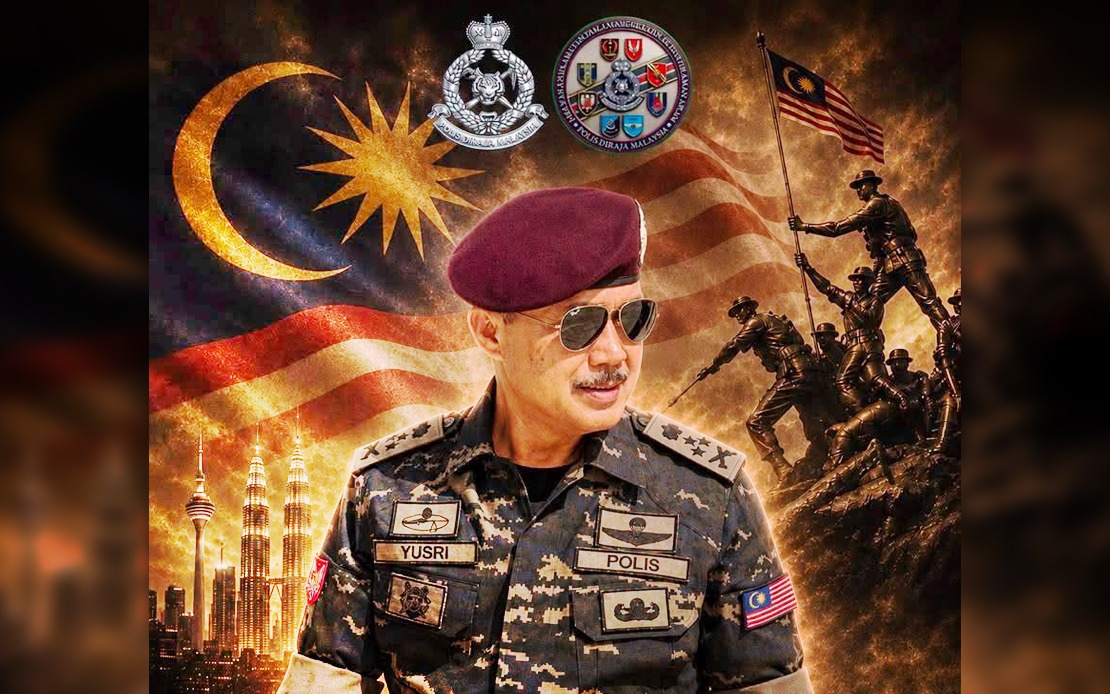
Datuk Seri Mohd Yusri Hassan Basri will exchange his high-powered motorcycle for a white horse named Al-Sakb when he leads the Royal Malaysia Police contingent at Monday's National Day Parade in Putrajaya. The transition marks a notable shift in ceremonial presentation as the newly appointed KDNKA director takes the helm of a 595-strong police detachment at the 69th National Day celebration, replacing last year's approach where he commanded officers from a BMW R 1250 RT motorcycle while serving in his previous role.
The change reflects both the symbolic evolution of Malaysia's institutional pageantry and a deliberate modernisation of how police capabilities are showcased to the public. The KDNKA director's decision to lead the Mounted Unit signals confidence in traditional ceremonial elements whilst simultaneously demonstrating that police leadership adapts across different operational and symbolic contexts. The Federal Reserve Unit's Mounted Unit, comprising 20 uniformed personnel and an equal number of horses, will form the vanguard of the entire contingent, establishing a visual centrepiece for the broader police presentation.
Mohd Yusri has undergone more than a month of intensive preparation to master horseback riding and ensure synchronised movements with the mounted officers and the wider contingent. Such training regimens are essential for ceremonial formations, where even minor deviations in pace or positioning can disrupt the overall visual impact. The director's emphasis on orderly, coordinated movements underscores how state parades function as carefully choreographed displays of institutional discipline and capability, projecting national cohesion to both domestic audiences and international observers.
The KDNKA contingent extends far beyond the mounted element, incorporating a diverse range of police operational units that collectively illustrate the breadth of Malaysia's security apparatus. The General Operations Force and Air Operations Force will participate, presenting a comprehensive picture of how policing capability spans multiple domains. This multi-platform approach allows citizens to witness firsthand the technological and tactical sophistication now embedded across Malaysia's law enforcement structures, moving beyond conventional street-level policing to encompass specialised operations and air capabilities.
Amongst the headline-grabbing assets making their debut parade appearance are ten All Terrain Tactical Assault E-Bikes, state-of-the-art electric motorcycles recently acquired by the General Operations Force. These vehicles represent Malaysia's commitment to incorporating sustainable technology into high-risk security operations, border patrol duties, and conflict management scenarios. The presence of these e-bikes alongside traditional mounted units creates a striking visual contrast, embodying how modern police forces must balance cutting-edge technology with proven operational methods.
An AW139 helicopter operated by the Royal Malaysia Police will conduct a flypast, adding an aerial dimension to the terrestrial display. This element allows viewers to appreciate the force's three-dimensional operational reach, extending from ground-level community policing through to airborne reconnaissance and rapid-response capabilities. The helicopter demonstration particularly resonates in Malaysia's security context, where aerial capabilities support border security, disaster response, and counter-terrorism operations across the nation's complex geography.
Canine units will also feature prominently, with sixteen dogs from the K9 Unit demonstrating the specialised training and integration of animal handlers within tactical operations. Malaysia's dog units perform critical functions in narcotics detection, explosives identification, and suspect apprehension, representing a specialised competency that requires extensive partnership between animal and handler. Their parade appearance celebrates both the operational effectiveness of these partnerships and the professional standards maintained in their training and deployment.
The combination of mounted heritage, elite tactical personnel, advanced electric vehicles, aerial assets, and canine units presents Malaysia's police force not as a monolithic institution but as an intricate ecosystem of specialised capabilities. This multifaceted presentation carries particular significance for Southeast Asian audiences, demonstrating how a regional police force has evolved to address contemporary security challenges whilst maintaining institutional traditions. The juxtaposition of old and new, ceremonial and tactical, conventional and technological, reflects broader tensions within modern policing globally.
Mohd Yusri's transition from motorcycle to horseback leadership mirrors broader shifts within Malaysia's security establishment as it adapts to emerging threats whilst respecting institutional heritage. His previous postings as Traffic Investigation and Enforcement Department director and head of the Bukit Aman Crime Prevention and Community Safety Department provided extensive operational experience across different policing domains. His appointment to the KDNKA directorship places him at the intersection of internal security policy and community engagement, roles increasingly central to effective governance in Southeast Asia.
The director has called upon Malaysians to attend the parade with their families, positioning the event beyond mere security force demonstration toward broader national participation. This appeal reflects recognition that National Day parades succeed when they generate genuine public engagement rather than serving as insular government spectacles. The integration of diverse police capabilities within this inclusive framework allows citizens to develop informed perspectives on the institutions charged with their safety and security, fostering greater public understanding of policing complexity.
Weather considerations remain a variable that authorities cannot control, with Mohd Yusri expressing hope that conditions will favour the proceedings. Tropical climate unpredictability represents a routine challenge for major outdoor events in Malaysia, requiring contingency planning and flexibility even as detailed preparations approach completion. The director's invocation of providence reflects both practical acknowledgment of environmental variables and the manner in which Malaysian officials traditionally frame public events.
The National Day Parade ultimately functions as a visible manifestation of state capacity and institutional coherence, communicating through carefully orchestrated symbolism what words cannot adequately convey. Datuk Seri Mohd Yusri Hassan Basri's equestrian leadership of the police contingent transforms him temporarily into a living symbol of institutional continuity and evolution, embodying Malaysia's navigation between tradition and modernity.

