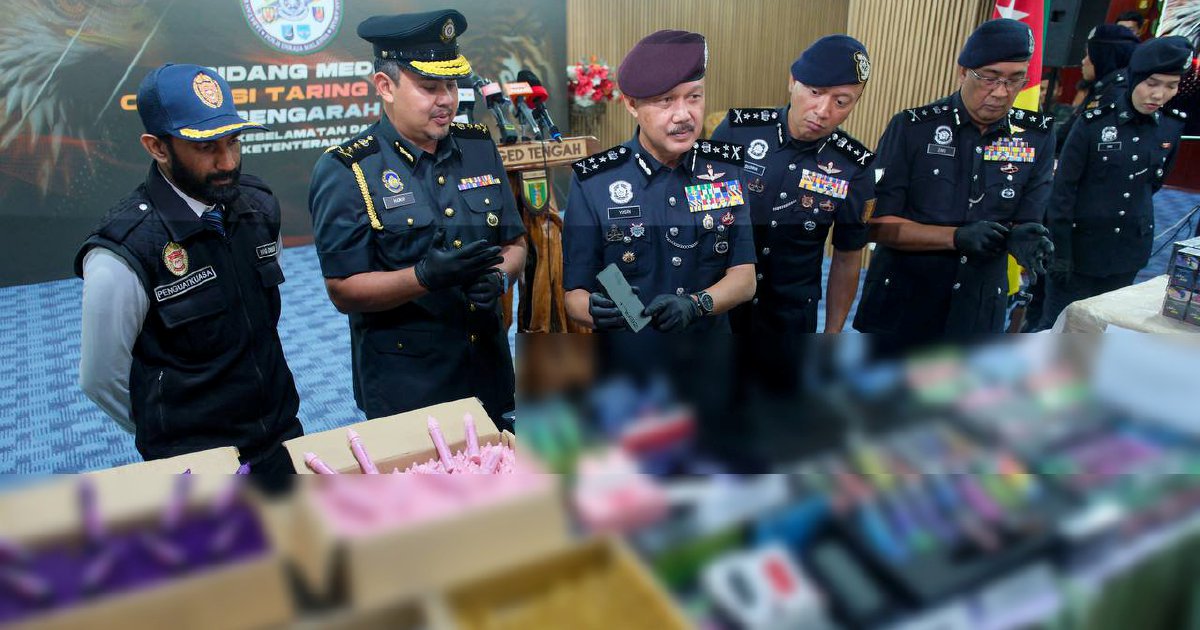
In a major crackdown on illicit tobacco and nicotine distribution networks, Malaysian police have confiscated contraband cigarettes and vaping devices valued at RM15.5 million during coordinated enforcement operations conducted across Selangor in recent weeks. The two-pronged operation represents one of the larger seizures in recent years and underscores growing police efforts to dismantle smuggling syndicates that have become increasingly sophisticated in evading detection and transporting banned products across state lines.
The contraband materials recovered during the raids demonstrate the substantial scale at which smuggling operations are functioning within Malaysia's commercial heartland. Selangor, as the nation's most densely populated state and a critical logistics hub, has emerged as a focal point for smuggling networks seeking to distribute illegal products throughout the Klang Valley and beyond. The proximity to major ports and trading routes makes the state an attractive distribution centre for criminal organizations involved in tobacco and vape trafficking.
The rise in vaping product seizures reflects a broader enforcement challenge facing Malaysian authorities. While traditional cigarette smuggling remains rampant, the proliferation of vaping devices—many of which contain nicotine and are banned under Malaysian law—has created a new dimension to contraband operations. These products, often lighter and more compact than bulk cigarettes, allow smugglers to transport higher-value goods with reduced detection risk, making them increasingly attractive to criminal networks.
Smuggling syndicates have adapted their methods considerably over the past several years, incorporating transnational supply chains that source products from multiple jurisdictions. Many contraband vapes and cigarettes originate from regional manufacturing hubs and are routed through various transit points before reaching Malaysian shores. The complexity of these operations means authorities must coordinate not only with domestic law enforcement agencies but also with regional partners to effectively intercept shipments at entry points.
The financial implications of such smuggling operations are substantial for Malaysia's exchequer. Every dollar's worth of contraband product that enters the market represents lost tax revenue and undercuts legitimate tobacco retailers operating within the regulatory framework. Tax revenues from legitimate cigarette and vaping product sales contribute significantly to government coffers, which means large-scale smuggling directly impacts public finance and reduces resources available for health and social programmes.
From a public health perspective, the availability of unregulated vaping products poses distinct challenges. Unlike legitimate products that must meet manufacturing and packaging standards, contraband vapes are typically unregulated and may contain dangerous additives or inconsistent nicotine concentrations. Their proliferation undermines government efforts to regulate nicotine product use and particularly complicates attempts to prevent youth access to vaping devices. The lower prices associated with smuggled products make them especially attractive to younger consumers with limited disposable income.
Police involvement in coordinated enforcement operations signals a strategic shift toward targeting supply-side rather than demand-side elements of the smuggling trade. By dismantling distribution networks and seizing large inventory caches, authorities can temporarily disrupt supply chains and increase operational costs for criminal organizations. However, such enforcement successes remain temporary unless coupled with sustained inter-agency cooperation and intelligence-led investigations targeting the financial flows and operational structures underlying these networks.
The investigation and enforcement operations also highlight the resource intensity required to combat sophisticated smuggling activities. Police must deploy specialized units capable of conducting surveillance, executing raids safely, and processing complex evidence involving multiple jurisdictions. International coordination becomes increasingly necessary as syndicates establish networks spanning multiple countries and exploit regulatory gaps across borders.
Moving forward, authorities may need to consider whether current enforcement approaches are sufficiently robust to address evolving smuggling tactics. The substantial black market for tobacco and vaping products indicates demand substantially exceeds what legitimate retailers can supply, suggesting that enforcement alone may prove insufficient without complementary measures. Some neighbouring jurisdictions have experimented with regulatory innovations, including simplified licensing frameworks or monitored retail environments, though adapting such approaches to the Malaysian context would require careful policy consideration.
The seized materials will be processed according to standard procedures, with estimated values calculated based on market rates. Such large-scale seizures are typically publicized to demonstrate enforcement capabilities and serve as deterrents to potential smugglers. However, the recurring nature of major bust announcements indicates that the underlying structural incentives driving smuggling—substantial price differentials between regulated and black market products, high profit margins, and porous border controls—remain largely unaddressed.
For Malaysian consumers, the continued prevalence of contraband products reinforces existing purchasing patterns and undermines government tobacco control objectives. Policymakers must balance enforcement with broader regulatory strategies that address root causes of smuggling demand. Without concerted efforts targeting both supply disruption and demand reduction, future operations are likely to uncover similar quantities of seized contraband, suggesting that the cycle of raids and smuggling may continue cycling indefinitely without fundamental structural changes.

