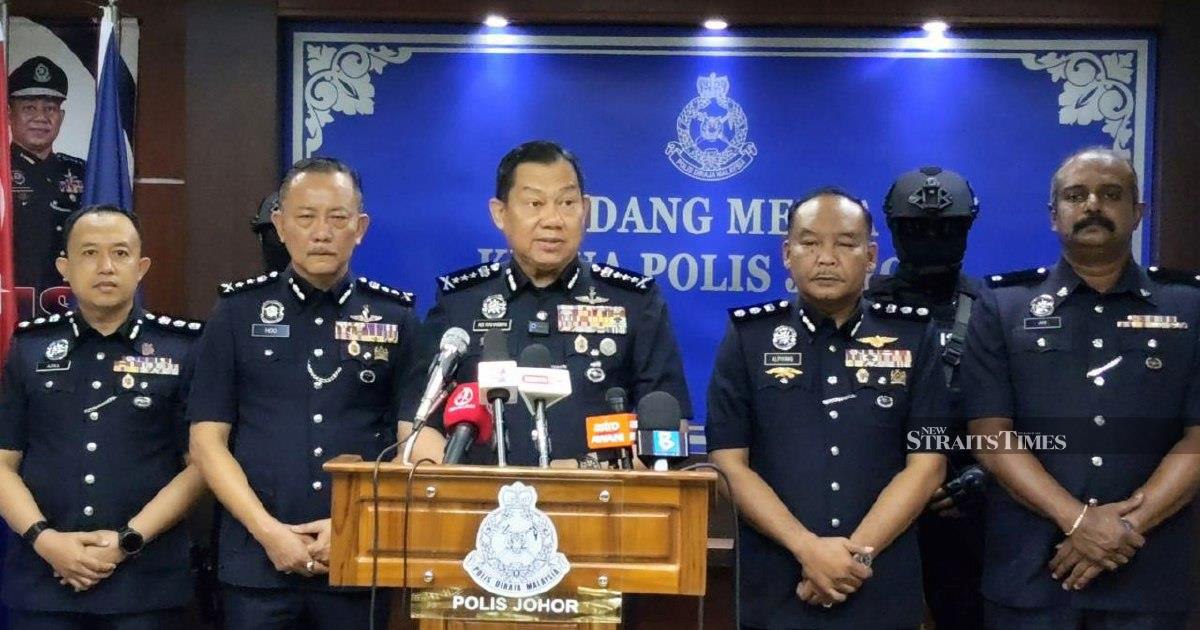
Johor Baru police successfully disrupted a major methamphetamine trafficking operation on Saturday, executing coordinated raids that yielded one of the more substantial drug seizures recorded in the state this year. The enforcement action netted 60.78kg of crystalline methamphetamine with an estimated street value of RM3.04 million, alongside the detention of eight suspects whose involvement in the distribution chain ranged from operational oversight to street-level transportation.
The operation's success underscores the critical work of narcotics units in dismantling supply networks that feed addiction across the region. The substantial weight of drugs recovered suggests the network was not merely servicing local consumption but likely operated as a wholesale distribution hub for a wider customer base across Johor and potentially neighbouring states. The street value assessment of RM3.04 million represents the economic scale of the illicit trade flowing through this single supply chain, a figure that illustrates why even seemingly modest increases in enforcement resources can yield significant disruptions to criminal enterprises.
Among those taken into custody was a school dropout serving the criminal organisation as a transporter. This arrest highlights a troubling recruitment pattern within drug syndicates, which increasingly target young people with limited employment prospects or educational engagement. The vulnerability of adolescents without formal schooling makes them attractive to criminal networks seeking disposable operatives willing to accept considerable legal risk for minimal compensation. Youth involvement in narcotics trafficking represents not merely a law enforcement challenge but a social integration failure, suggesting broader inadequacies in education access and economic opportunity for marginalised young Malaysians.
The transporter's role in the operation, while operationally junior, nonetheless places him at heightened legal jeopardy. Transportation offences under Malaysian narcotics legislation can attract penalties rivalling those imposed on mid-level distributors, a prosecutorial approach reflecting the judiciary's recognition that physical movement of contraband represents an essential operational function without which trafficking networks cannot function. For youth defendants, the intersection of severe sentencing guidelines with adolescent development and rehabilitation potential creates genuine tension within the criminal justice system.
The seven other detainees presumably occupied positions higher within the organisational hierarchy, though police statements typically release stratified arrest categorisations only following formal charge procedures. Preliminary detention for interrogation purposes allows investigators time to map the network's structure, identifying supply sources feeding into Johor and customer bases distributing onward. Intelligence gathered during this phase often proves as operationally valuable as the physical contraband itself, potentially enabling subsequent enforcement action against upstream suppliers or downstream retailers.
Methamphetamine remains the dominant synthetic drug threatening Malaysian communities, its addictive properties and relatively modest cost creating sustained demand across both urban and rural populations. The drug's production capacity in clandestine laboratories throughout Southeast Asia ensures consistent supply despite regular enforcement successes. Regional production centres, particularly in Myanmar and areas along the Thai-Lao border, manufacture methamphetamine in quantities exceeding local demand, creating powerful incentives to push product into Malaysian distribution networks where street values and profit margins exceed those in source jurisdictions.
Johor's geographic position as both a major transit corridor and consuming market makes the state perpetually vulnerable to trafficking. Its long maritime borders facilitate smuggling operations, while its land connections to Singapore—with its wealthy, addicted population and high street values—create economic incentives for organised crime groups to establish Johor-based distribution infrastructure. The state's port facilities and industrial zones provide operational cover for transshipment activities that move contraband between source and end markets.
Police raids targeting organised drug operations require substantial intelligence preparation and coordinated deployment of narcotics specialists. The Saturday enforcement action's success likely resulted from weeks or months of surveillance work, informant cultivation, and operational planning. Each subsequent raid in the series generates additional investigative leads and disrupts criminal logistics, though sophisticated networks typically maintain redundancy in supply routes and personnel to absorb losses from individual enforcement actions.
The methamphetamine market's structure ensures that removal of one distribution cell prompts competing organisations or surviving network members to expand operations and fill the temporary supply gap. While individual seizures provide essential public health interventions and disruption, sustained reduction in methamphetamine availability requires coordinated international enforcement against upstream production, systematic demand reduction through addiction treatment services, and community-level prevention programmes reaching at-risk populations. Malaysian authorities increasingly recognise that supply-side enforcement alone cannot resolve synthetic drug epidemics.
The Johor bust reflects ongoing police commitment to narcotics enforcement, yet also implicitly acknowledges that methamphetamine distribution persists despite regular interdiction efforts. Sustainable solutions require whole-of-society approaches integrating law enforcement, public health, education, and economic opportunity creation for vulnerable youth populations. Without such comprehensive responses, successful operations like Saturday's raid represent tactical victories within an enduring strategic challenge.

