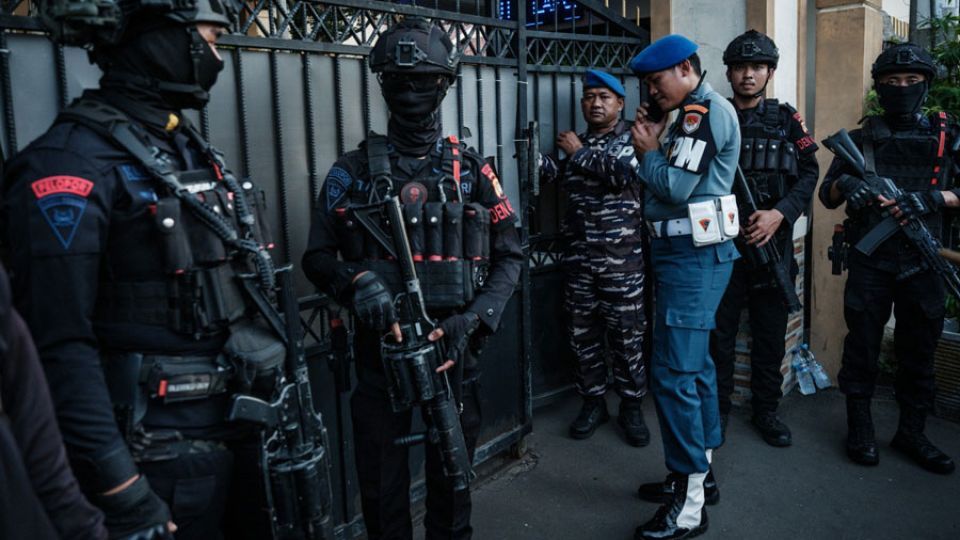
A 34-year-old man living near an elementary school in South Jakarta has been apprehended by police following allegations that he sent a bomb threat that forced the closure and evacuation of SD Srengseng Sawah 15 Pagi state elementary school in Jagakarsa on Monday. The suspect, identified only by initials MY, was detained hours after a WhatsApp message circulated among school staff claiming that explosives had been placed at eleven different locations throughout the school compound, throwing the institution's opening day into chaos.
The threatening message arrived during the school's flag-raising ceremony, when students were gathered in the assembly area. Teachers and administrative personnel who received the alarming communication immediately halted proceedings and notified authorities, setting off a chain of emergency response protocols. The rapid escalation from digital threat to physical evacuation underscores how seriously Indonesian security forces treat such incidents, particularly those targeting educational institutions where young children gather.
Police responded with considerable force, deploying specialist units to the scene within hours of the threat's detection. The Gegana bomb disposal unit, Indonesia's premier explosive ordnance disposal team, arrived to conduct a thorough search of the school complex. Densus 88, the National Police's elite counterterrorism special detachment, was also mobilised to the location. Despite the deployment of these highly trained units and their systematic examination of the school grounds, investigators found no actual bombs or explosive devices at any of the eleven purported locations mentioned in the threat.
Jakakarsa Police chief Comr. Nurma Dewi provided initial details about how the threat had been communicated and the timing of its discovery. The decision to immediately evacuate students and initiate a comprehensive bomb search reflected institutional protocols designed to prioritise public safety. While no explosives were ultimately located, the mere issuance of such a threat carries serious legal consequences under Indonesian law, which treats bomb threats with considerable gravity regardless of whether an actual device is present.
Following his arrest near the school premises, MY was transported to South Jakarta Police headquarters for formal questioning. Greater Jakarta Police spokesperson Sr. Comr. Budi Hermanto confirmed that investigators were actively pursuing enquiries into the suspect's motivations and the circumstances surrounding his actions. The neighbourhood residence of the detained man raises questions about whether his familiarity with the school and local area played any role in his alleged decision to target the institution.
The incident highlights broader security concerns affecting educational facilities across Indonesia's major urban centres. Schools have increasingly become targets for hoax bomb threats, creating significant disruption to the academic calendar and imposing psychological strain on students, parents, and staff members. Each threat, regardless of credibility, necessitates expensive emergency responses involving multiple specialist police units and security personnel who might otherwise be deployed elsewhere.
The timing of the threat on the first day of the school year adds an additional layer of disruption to the institution's academic planning. Students who had anticipated returning to normal classroom routines experienced instead an unexpected security lockdown and evacuation. For younger primary school pupils, such incidents can prove unsettling and may affect their perception of school safety, a concern that education authorities throughout Southeast Asia have grappled with in recent years.
Investigators are continuing their examination of MY's background and personal circumstances to determine what prompted him to compose and send such a message. Potential factors under investigation might include mental health issues, personal grievances with the school, or other motivations that will become clearer as questioning progresses. The police statement indicating that the investigation into his motive and purpose remains ongoing suggests that the initial interrogation has not yet yielded complete clarity about his reasoning.
Under Indonesian law, those convicted of sending bomb threats face serious criminal penalties. The charges typically fall under provisions addressing public intimidation, false reporting, and disturbing the peace. Even where no actual explosive device exists, courts have consistently treated such threats as serious offences deserving substantial sentences. This particular case will likely proceed through Jakarta's criminal justice system over the coming months, with prosecutors building their case based on the evidence gathered during the police investigation.
The successful rapid response by Jakarta police and the absence of any actual explosive device will likely be cited by authorities as evidence that security protocols are functioning effectively. However, the incident also demonstrates the vulnerability of educational institutions to disruption through anonymous digital communications. School administrators throughout South Jakarta and the broader Jakarta metropolitan region may find themselves revisiting their security procedures in response to this incident, considering how best to balance institutional access with enhanced threat detection measures.

