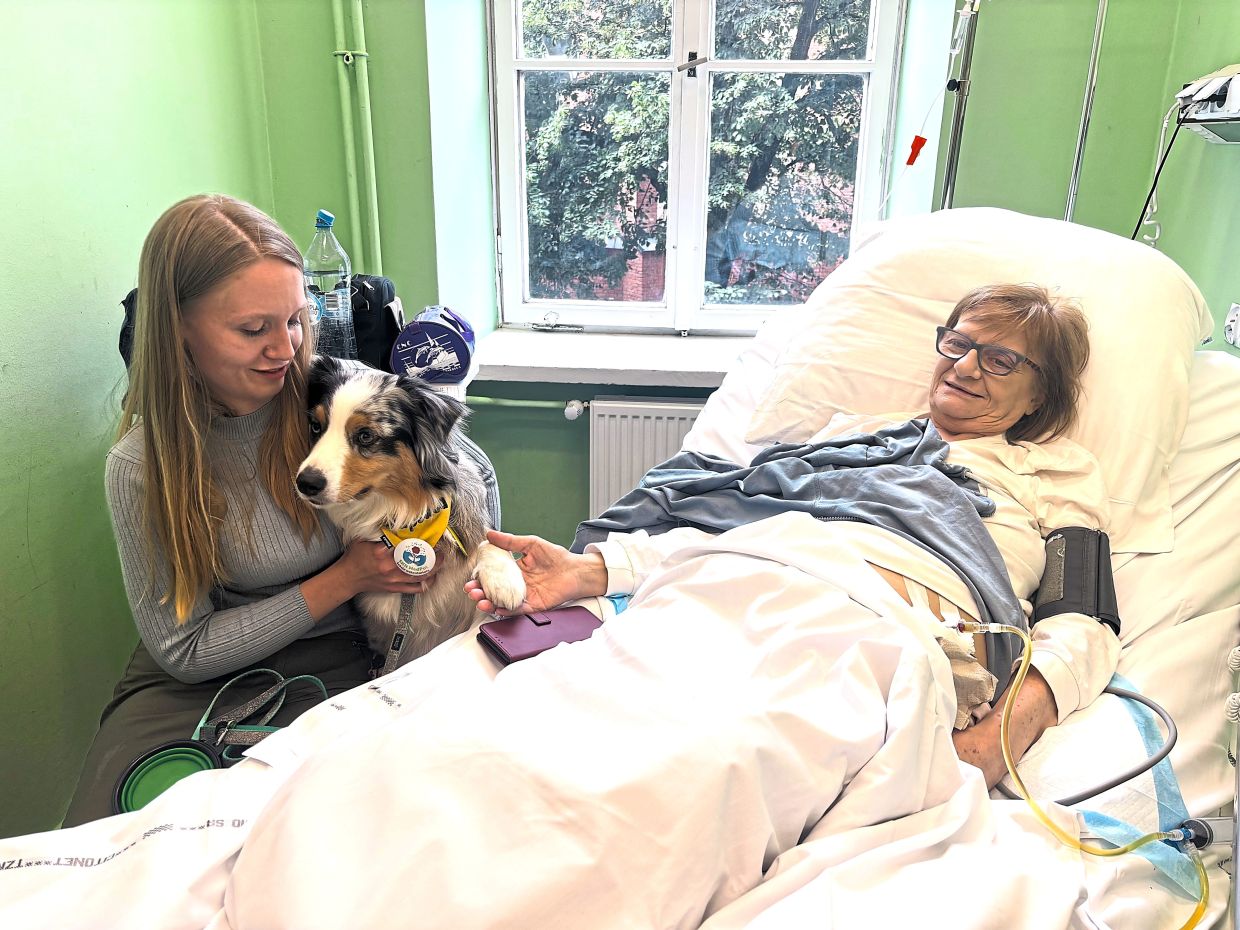
Poland's parliament is considering new legislation that would formally guarantee terminally ill patients the right to receive visits from their pets while in hospice and palliative care wards. Though such visits already occur informally in many Polish medical facilities, the proposed law would establish an explicit legal framework protecting this practice across all institutions. The bill has been introduced to the health committee by Katarzyna Piekarska, a legislator from Prime Minister Donald Tusk's centrist party, and represents a significant shift in how Poland's healthcare system addresses the emotional and spiritual needs of the dying.
The driving force behind this initiative is Dr Tomasz Dzierzanowski, director of the Palliative Medicine Clinic at the Medical University of Warsaw, whose clinical experience has convinced him that companion animals provide irreplaceable comfort during end-of-life care. Dzierzanowski's advocacy stems partly from witnessing the profound emotional impact on individual patients. One catalyst moment involved a cancer patient named Waldemar who faced his mortality with remarkable stoicism but harboured deep anxiety about the fate of his two beloved cats. When Dzierzanowski arranged for the animals to visit the ward, Waldemar's tears of joy and the visible emotional recognition between man and animals created a turning point in the doctor's thinking about institutional protocols.
The human cost of terminal illness extends far beyond physical suffering, and Dzierzanowski points to a troubling social phenomenon in contemporary Poland and across Europe: what he characterises as an epidemic of loneliness among the dying. Many palliative patients are elderly individuals who have outlived their friends and peer groups, leaving them isolated at life's most vulnerable moment. Simultaneously, younger terminal patients often find themselves without the deep social bonds that might sustain them, as modern life increasingly substitutes virtual connections and digital companionship for genuine human relationships. Dzierzanowski emphasises that while human presence ideally should comfort the dying, the reality for many patients is that no such presence exists.
Ewa Lutka-Krawczyk, a 70-year-old gallbladder cancer patient currently in Dzierzanowski's palliative ward, exemplifies the emotional stakes involved in pet separation during terminal illness. When she first received her devastating diagnosis, her immediate concern was not for herself but for Gaja, a shelter dog she had adopted three years earlier and with whom she had formed a profound attachment. She pleaded with her doctors for a prognosis that might allow her to live long enough to ensure Gaja would not be abandoned. Her grim diagnosis ended that hope. Since her admission to the hospital's palliative ward, Gaja has remained at home with Lutka-Krawczyk's husband, and the animal has responded to her absence by refusing to eat properly, visibly distressed by the disappearance of her longtime companion.
Under the proposed legislation, patients like Lutka-Krawczyk would have legal protection for regular pet visits during their final weeks or months. At Dzierzanowski's clinic, such visits already occur when conditions permit, providing a legal grey area that the new law would clarify and universalise. Lutka-Krawczyk expressed evident relief and joy when informed that Gaja would be permitted to visit her in the ward. The psychological shift in her demeanour at this news suggests how profoundly the prospect of reunion affects a dying patient's emotional state.
Therapy dogs already operate within Polish hospitals, though these visiting animals belong to volunteer handlers rather than patients themselves. Malgorzata Brzozowska, a medical student and volunteer handler of an Australian shepherd named Kluska (meaning "dumpling" in Polish), brings her dog regularly through the wards to provide comfort and distraction to terminal patients. During a recent visit, Lutka-Krawczyk cradled Kluska's paw and smiled genuinely, while another patient, 58-year-old Wojciech Zelik admitted with a tumour, rallied his strength to admire the dog and pet her soft fur. The impact on staff proved equally significant; nurses, cooks and other hospital workers gravitated toward Kluska in hallway moments, seeking respite through brief physical contact with the animal.
Brzozowska's observations reveal dimensions of animal-assisted comfort that extend beyond patients alone. Therapy dog visits demonstrably reduce stress among the nurses, kitchen staff and other hospital workers who bear the emotional burden of caring for dying patients day after day. The presence of animals creates brief moments of normalcy and gentleness in an environment dominated by suffering and loss. These moments appear to benefit the animals themselves as well; Brzozowska notes that therapy dogs remain calmer and less stressed during visits to familiar patient populations, suggesting the animals intuitively understand that something significant has changed in their regular human companions' circumstances.
The distinction between therapy dog visits and visits from a patient's own pet is significant. While professional therapy dogs provide valuable distraction and stress relief, the bond between a dying person and their longtime companion animal carries emotional weight that general therapy cannot replicate. Brzozowska emphasises that when patients are visited by their own pets, the calming effect extends to the animals themselves, who appear to comprehend that their owner's prolonged absence from home represents a fundamental shift in their shared life. This mutual recognition and reassurance addresses an often-overlooked dimension of terminal care: the emotional suffering of beloved pets separated from dying owners.
Piekarska, the legislator championing the proposal, notes that the practical reality already outpaces formal policy. "In reality, animals in hospitals are already there anyway," she observes, pointing out that ad hoc pet visitation occurs across Polish healthcare institutions without any explicit legal protection. The proposed law would simply formalise and standardise a practice that has been quietly gaining acceptance among forward-thinking palliative care specialists. By codifying pet visitation rights, the legislation would prevent individual doctors and hospital administrators from having discretion to deny such visits, ensuring that all terminal patients across Poland could maintain companionship with their animals during their final days.
The broader context for this legislation reflects evolving international perspectives on end-of-life care. Many developed healthcare systems increasingly recognise that palliative medicine encompasses not merely the alleviation of physical pain but the addressing of existential suffering, loneliness and the preservation of human dignity during the dying process. Poland's move to protect pet visitation rights positions the country alongside other nations reconsidering what truly constitutes compassionate terminal care. For a region like Southeast Asia, where many countries face similar challenges of aging populations, weakening traditional family structures and rising social isolation, Poland's legislative approach offers a potentially valuable model for how healthcare systems can acknowledge the role of companion animals in addressing the psychological dimensions of end-of-life experience.
Dzierzanowski's commitment to ensuring that "no patient dies alone" drives his vision beyond individual acts of kindness toward systemic change. By securing legal guarantees for pet visitation, he seeks to institutionalise compassion and recognise that isolation during terminal illness represents a form of suffering worthy of formal medical and legal attention. The proposed legislation transforms what might otherwise remain individual acts of mercy into a universal right, acknowledging that for many dying people in contemporary society, a companion animal represents the most significant emotional relationship available. For Lutka-Krawczyk and others like her, this legal framework offers something more precious than any pharmaceutical intervention: the assurance that they need not face their final journey separated from those who love them most.

