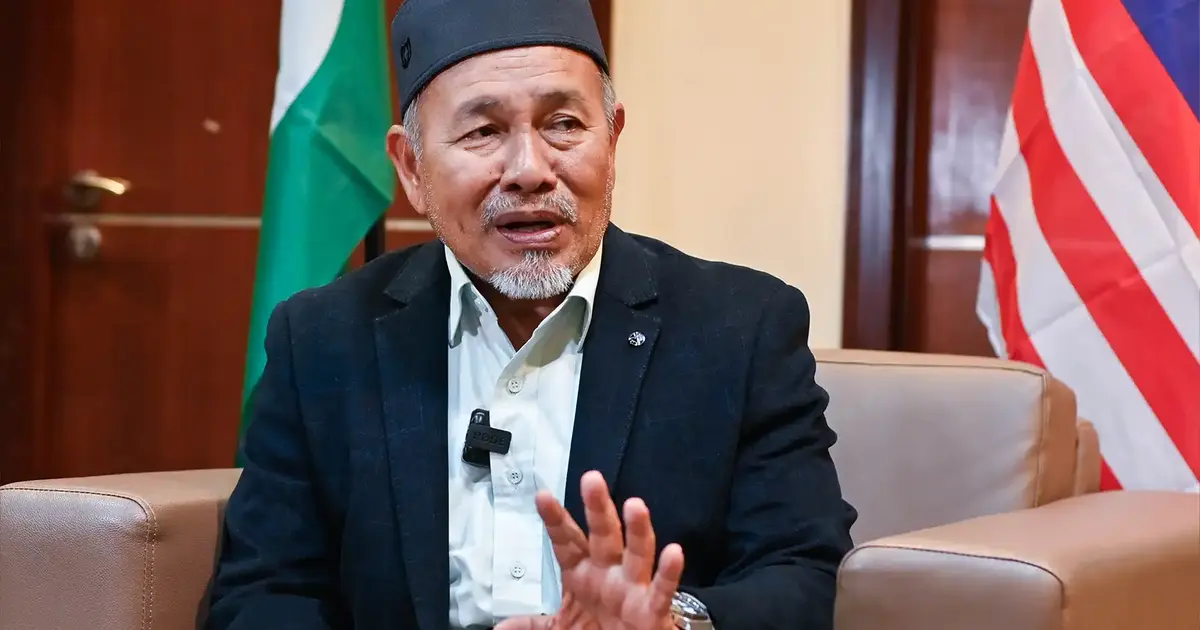
Perikatan Nasional appears unfazed by the prospect of wrangling with Barisan Nasional over electoral seat allocations in the upcoming Melaka state election, with PAS deputy president Tuan Ibrahim Tuan Man projecting calm assurance that coalition partners can navigate such disagreements through dialogue.
Despite formal talks between the two major Malay-Muslim political blocs not yet being scheduled, Tuan Ibrahim's public posture suggests confidence that PN views potential seat distribution conflicts as manageable obstacles rather than coalition-breaking crises. His remarks underscore a pattern of political pragmatism that has characterised recent state-level negotiations across Malaysia's peninsula, where electoral mathematics often force erstwhile rivals into temporary alliances.
The calculus facing both groupings in Melaka presents a familiar challenge: how to maximise combined parliamentary seats while accommodating party ambitions without appearing to sacrifice grassroots supporters' expectations. PN, comprising PAS, Bersatu, and their smaller allies, has emerged as a formidable electoral force in several states, yet state polls demand careful coalition management to translate national political currents into local legislative gains.
Melaka's political landscape has shifted considerably since 2018, with voters exhibiting less predictable allegiance patterns than in previous decades. The state's 36-seat assembly offers neither PN nor BN a comfortable majority alone, making seat-sharing mathematics critical for assembling a winning coalition. This structural reality creates both incentive and pressure for negotiating partners to find middle ground rather than deadlock.
Historically, seat allocation disputes have threatened coalitions at the state level, though rarely have such disagreements derailed entire electoral partnerships. The precedent set in other state elections suggests that party leadership typically resolves contentious seat claims through backroom negotiations, occasionally involving senior federal figures as arbiters. Tuan Ibrahim's implicit confidence in this process reflects institutional learning about how to manage intra-coalition tensions.
BN's position differs markedly from PN's in Melaka, with UMNO and its partners commanding institutional advantages from decades of administrative presence. Yet BN's aggregate electoral performance nationally has deteriorated since 2018, necessitating coalition flexibility to remain electorally competitive. The prospect of seat clashes may therefore prompt both sides toward compromise rather than confrontation, as either group stands to lose more from coalition rupture than from accepting marginally suboptimal seat distributions.
For Malaysian voters in Melaka, seat allocation negotiations between coalitions carry tangible implications for state governance. The configuration ultimately agreed upon will determine which parties exercise executive authority and departmental control, affecting service delivery, patronage networks, and policy direction across a diverse state portfolio. Additionally, Melaka election results traditionally carry symbolic significance beyond state boundaries, often interpreted as barometers of national political sentiment ahead of potential federal electoral cycles.
The broader Southeast Asian context adds another dimension: Malaysia's internal political stability increasingly influences regional perceptions of institutional reliability and democratic governance. Coalition management at the state level, while procedurally mundane, contributes to international assessments of whether the country's political system functions through institutionalised negotiation or descends into chaos. Successful resolution of PN-BN seat disputes would reinforce narratives of mature political competition bounded by unwritten norms.
Tuan Ibrahim's pronouncements also serve a tactical purpose within PN's internal dynamics. By publicly projecting confidence in coalition harmony, he potentially dampens dissent among grassroots party activists who might otherwise worry about seat disadvantages. Such leadership positioning becomes especially important for PAS, which relies heavily on member mobilisation for ground campaign intensity, a factor that correlates significantly with electoral performance in Malaysian state contests.
Looking ahead, the actual negotiation process may reveal whether Tuan Ibrahim's optimism reflects genuine confidence in conflict resolution mechanisms or represents strategic communication designed to project strength while negotiations remain preliminary. Melaka election timelines will ultimately determine how much negotiating space PN and BN possess before seat announcements must occur, with compressed timeframes potentially either accelerating agreement or generating last-minute disputes.
The political implications of successful or failed PN-BN seat negotiations extend beyond Melaka itself. Results and coalition dynamics in this state will inform both major political blocs' strategies heading into potential federal elections, where similar alliance considerations will determine which coalitions prove capable of forming stable governments. Tuan Ibrahim's remarks therefore merit interpretation as preliminary positioning in a longer negotiation that encompasses multiple electoral contests across different geographic and temporal scales.

