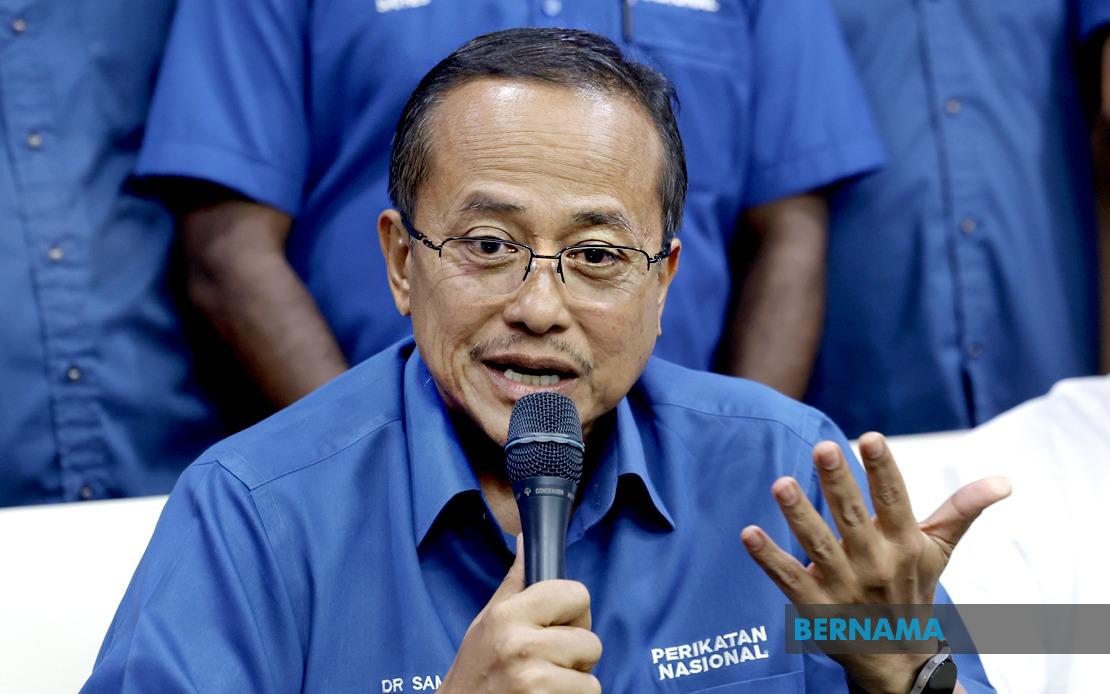
Perikatan Nasional has indicated it stands ready to enter into negotiations with Barisan Nasional should the larger coalition express interest in forging an alliance for the impending Melaka state election. The overture came from PN chairman Datuk Seri Dr Ahmad Samsuri Mokhtar during remarks made in Taiping on August 9, where he underscored that the timing remained opportune for such discussions given that the state assembly has not yet been dissolved.
While acknowledging that formal talks between the two major political blocs have not yet commenced, Ahmad Samsuri stressed that a window of opportunity exists before the dissolution takes place. He framed the readiness of PN as contingent on reciprocal interest from BN, suggesting that both sides would need to move swiftly once negotiations begin. The PN leader delivered his comments after presiding over the 23rd Perak PAS Convention at Hotel Perdana Taiping, an event that saw participation from Perak PAS Commissioner and PAS Vice-President Datuk Idris Ahmad, underscoring the central role of the Islamic party within the PN coalition structure.
The strategic calculus behind PN's openness lies in the potential electoral mathematics. Ahmad Samsuri outlined an internal assessment suggesting that a combined PN-BN coalition configuration could realistically command sufficient parliamentary support to form the next Melaka state government. According to his analysis, such an arrangement would carry approximately a 75 per cent likelihood of securing victory at the ballot box, a figure that reflects the complexity of peninsular Malaysian state-level politics where seat distributions and geographic spread remain critical variables.
This prospect represents a significant shift in positioning for PN, which currently operates from an opposition status in Melaka. The implicit narrative in Ahmad Samsuri's remarks hinges on the transformation from opposition to government as a tangible outcome of strategic cooperation. Such a transition would carry implications not merely for Melaka's governance but also for the broader federal balance, as successful state-level alliances frequently provide momentum and legitimacy for expanded national cooperation frameworks.
However, the PN chairman tempered optimism by acknowledging the substantial obstacles ahead. He employed the metaphor of a journey bereft of comfort, suggesting that the path toward coalition formation and eventual electoral success would demand considerable prudence, forbearance, and mutual tolerance from both the PN and BN leadership. This cautionary tone reflects the historical tensions and ideological divergences that have characterised relations between the two blocs, particularly concerning the role of Islam-centric governance and representation within respective party structures.
The articulation of these challenges carries significance for Malaysian political observers. PN emerged as a distinct coalition partly through UMNO's splintering, creating inherent tensions with BN's dominant component. Any cooperation would require both sides to navigate sensitivities around internal party interests, particularly regarding seat allocations and ministerial portfolios should the coalition succeed electorally. Ahmad Samsuri's acknowledgement of this complexity suggests a realistic rather than naive approach to coalition building.
The timing of such negotiations, should they occur, becomes strategically consequential. Ahmad Samsuri emphasised that discussions ought ideally to take place before formal dissolution of the Melaka State Legislative Assembly, implying that transparent engagement before campaign machinery fully activates would prove more politically palatable and organisationally feasible. This window-based approach reflects practical considerations around candidate nominations and campaign coordination that coalition partners would need to synchronise.
For Malaysian political dynamics more broadly, a PN-BN arrangement in Melaka would constitute a notable realignment. The federal government has been navigating increasingly complex coalition mathematics since the 2018 watershed election and subsequent political turbulence. State-level cooperation between these two major opposition-cum-governing coalitions could signal broader patterns of pragmatic coalition-building driven by electoral mathematics rather than rigid ideological boundaries. This represents a departure from earlier PN positioning when the coalition sought distinction through its Islamic governance credentials.
The Melaka context carries particular weight given the state's historical significance in Malaysian politics and its demonstrated propensity for electoral volatility. Previous state elections have witnessed substantial swings, and the incumbent administration faces various governance challenges that might render it vulnerable. For both PN and BN, Melaka represents both a testing ground for potential cooperation models and a prize of substantial symbolic and practical value that could reshape perceptions of political viability heading toward the next federal election cycle.
The remarks by Ahmad Samsuri ultimately position PN as the coalition extending an olive branch, establishing a narrative where PN appears collaborative and pragmatic rather than rigidly oppositional. Whether BN reciprocates with genuine negotiating momentum remains to be seen, but the public signalling suggests that Malaysian politics continues its evolution toward increasingly fluid coalition arrangements driven by electoral opportunity and structural incentives rather than historical alliances or ideological coherence.

