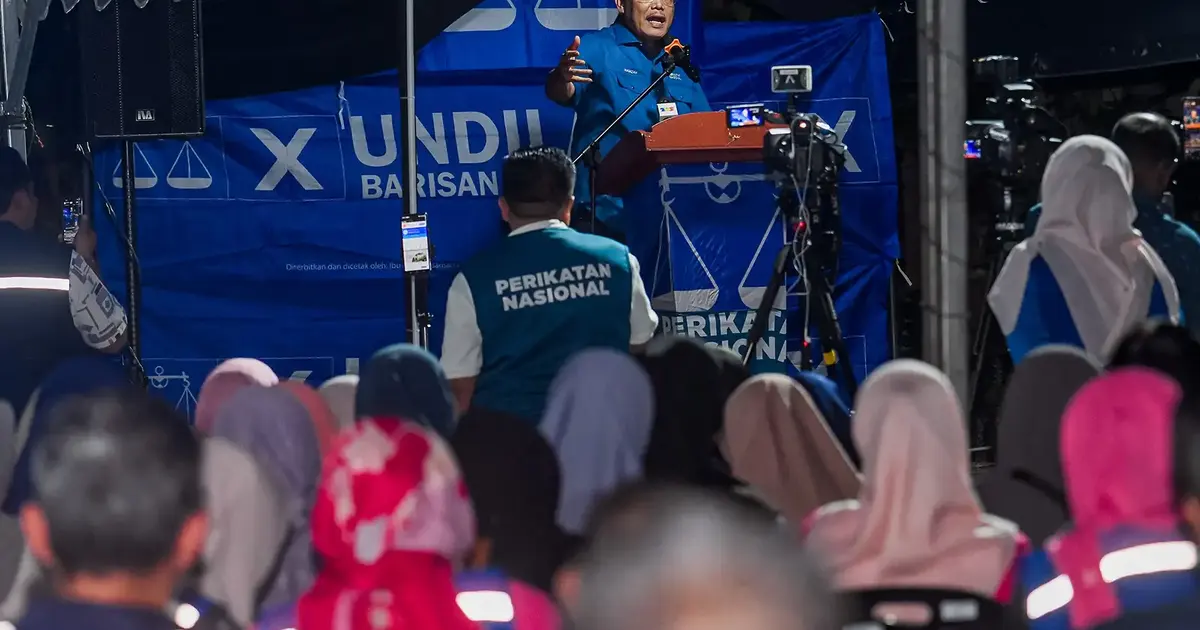
The Perikatan Nasional bloc has proposed a significant rebranding initiative for its electoral partnership with Barisan Nasional, suggesting the combined force be marketed as 'Perikatan Barisan Nasional' in their push toward the Negeri Sembilan state election scheduled for August 1. The proposal signals an effort to create a cohesive public identity for the coalition while navigating the complex dynamics of power-sharing arrangements that underpins their competitive bid.
According to Wawasan party president Hamzah, who holds a senior role in PN's leadership hierarchy, the two major political blocs have already reached understanding on the question of state administration. Under the agreed framework, should the joint coalition secure victory at the ballot box on August 1, the Barisan Nasional component will assume the role of forming and leading the Negeri Sembilan state government. This represents a pragmatic division of responsibilities that reflects PN's willingness to make concessions in exchange for electoral cooperation in this particular state battleground.
The naming proposal itself carries symbolic weight beyond mere branding. By combining both acronyms into a single composite term, the coalition seeks to project unified strength to voters while acknowledging the distinct identities and organisational structures of both PN and BN. This approach represents a middle ground between complete organisational merger—which would be administratively complex and politically contentious—and maintaining entirely separate campaign identities that might confuse voters or dilute messaging effectiveness.
Negeri Sembilan holds particular strategic significance for both coalitions. The state government controls important economic and administrative levers within the central belt of Peninsular Malaysia, making control of the state executive branch a valuable prize in Malaysia's fragmented multi-coalition political landscape. For Barisan Nasional, a state government provides a visible platform from which to demonstrate governance competence and rebuild voter confidence following the 2022 general elections. For Perikatan Nasional, the electoral alliance represents an attempt to broaden its political reach beyond its core support base.
The power-sharing arrangement reflects broader negotiations happening across multiple state-level contests. These discussions reveal how Malaysian political coalitions now operate through fluid, issue-specific alliances rather than permanent mergers. The PN-BN arrangement in Negeri Sembilan differs from their relationship in other states, where competition rather than cooperation defines their interaction. This flexibility enables both blocs to pursue strategic partnerships when mutually beneficial while maintaining organisational independence and avoiding complications from merged structures.
Hamzah's public articulation of these terms serves an important signalling function. By announcing the agreement publicly through a senior party figure, PN communicates to both its internal membership and external stakeholders that negotiations have reached substantive conclusion. This transparency, even when details remain subject to further refinement, helps manage expectations and demonstrates serious intent rather than theoretical positioning. The announcement also provides Barisan Nasional with legitimacy to proceed with planning for state government administration, essential for developing detailed policy platforms and candidate selection strategies.
For Malaysian voters in Negeri Sembilan, the announcement indicates that both coalitions expect a competitive contest. The willingness of both sides to negotiate detailed power-sharing arrangements suggests neither coalition confidently predicts overwhelming victory, making the August 1 election genuinely competitive. Voters in the state will thus face meaningful choices with real implications for state administration, rather than predetermined outcomes.
The Southeast Asian context adds another dimension to this coalition-building exercise. Malaysia's complex ethnic composition and constitutional framework require governing coalitions to maintain broad representation across different communities and regions. The PN-BN partnership in Negeri Sembilan demonstrates how this requirement plays out in practice, with both sides needing to balance their particular support bases while crafting inclusive governance narratives that appeal across demographic lines.
Looking forward, the success or failure of the PN-BN arrangement in Negeri Sembilan may establish precedents for future inter-coalition cooperation elsewhere. If the partnership proves harmonious and electorally effective, other states may see similar arrangements. Conversely, if tensions emerge during the campaign or post-election negotiations, both coalitions may become more cautious about future cooperation. The Negeri Sembilan experiment thus carries implications extending well beyond that state's borders and August's election outcome.

