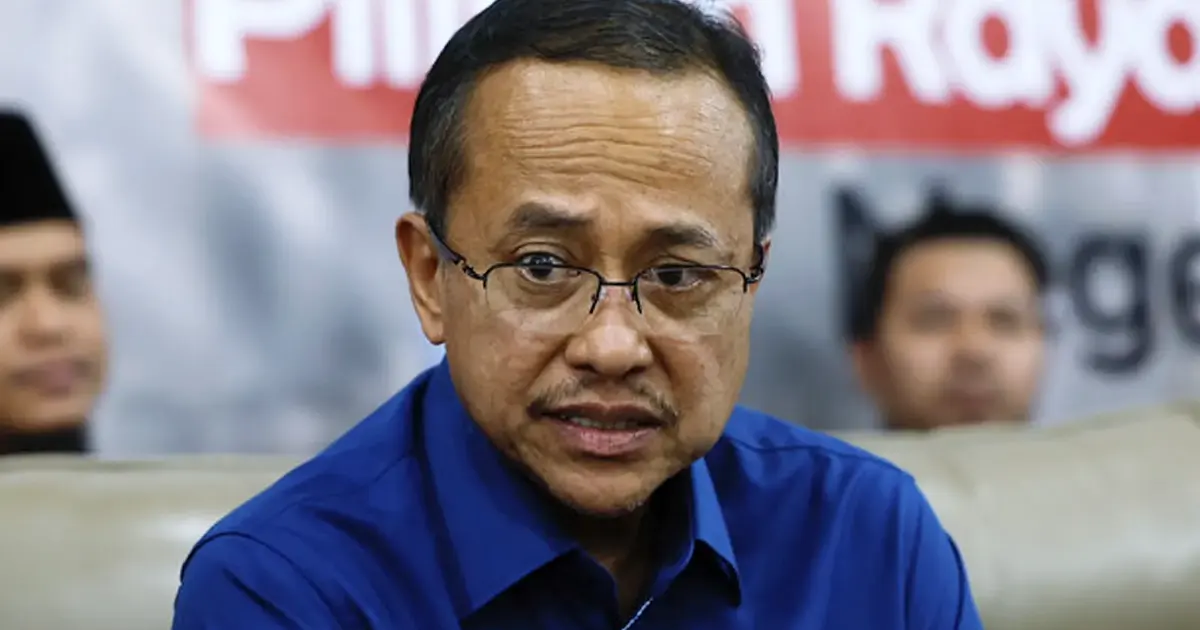
Perikatan Nasional coalition chairman Samsuri has moved to allay public concerns about potential voter confusion, asserting that despite both PAS and Bersatu utilising the PN logo in electoral contests, there are clear distinctions between which seats each party will pursue. The assurance comes as Malaysia's political landscape continues to navigate the complexities of multi-party coalitions and shared branding in an increasingly competitive electoral environment.
The question of identical logos across multiple parties within the same coalition touches on a recurring tension in Malaysian politics, where umbrella organisations seek to project unified identity while member parties maintain distinct political profiles and constituencies. Samsuri's statement reflects an attempt to reconcile these competing interests by emphasising that voters will encounter no practical ambiguity at the polling booth, since each party operates in geographically separated electoral divisions.
PAS, which has established itself as the dominant Islamist political force in Malaysia with particular strength across the northern and eastern states, will concentrate its campaign efforts on constituencies where it holds competitive advantage or existing representation. Conversely, Bersatu, the newer entrant to the PN coalition and the personal political vehicle of former Prime Minister Muhyiddin Yassin, will field candidates in different electoral territories where it perceives viable pathways to victory or aims to expand its footprint.
This territorial division represents a practical mechanism for avoiding direct competition between coalition members, a problem that could otherwise undermine PN's collective bargaining power and electoral efficiency. Malaysian political coalitions have historically struggled when constituent parties contest identical seats, leading to vote splitting and tactical difficulties that benefit opposition forces. By maintaining this separation of electoral battlegrounds, PN seeks to present a united front while allowing each member organisation to optimise its campaign strategy according to local political dynamics and historical performance.
The logo-sharing arrangement itself reflects deeper institutional realities within PN. As a coalition rather than a merged party structure, using a unified symbol serves important symbolic and organisational purposes, helping voters identify which candidates represent the broader PN movement and facilitating coordinated messaging across multiple party organisations. For smaller or newer parties like Bersatu, benefiting from the PN brand carries strategic advantages in areas where the coalition brand has established credibility with voters.
However, critics might argue that such arrangements risk creating genuine confusion among sections of the electorate, particularly in rural constituencies where political literacy and exposure to campaign materials may be limited. The assumption that voters will reliably distinguish between PAS and Bersatu candidates despite encountering identical logos relies heavily on voter education and the effectiveness of individual candidate campaigns in communicating party identity. Any failure in this communication could theoretically result in unintended outcomes where voters supporting one party inadvertently cast ballots for another within the coalition framework.
Samsuri's assurance also reflects PN's broader confidence in its internal coordination mechanisms and the clarity of its electoral strategy. The coalition has invested considerable effort in constructing detailed seat-sharing arrangements and delineating campaign territories, expecting these internal understandings to translate into effective execution on the ground. This level of institutional coordination distinguishes PN from more loosely organised political fronts, suggesting a level of professionalism in managing multi-party electoral campaigns.
From the perspective of Malaysian voters and democratic participation, the PN coalition's approach raises important questions about ballot clarity and voter agency. Elections function most effectively when voters can easily identify which party receives their vote and when campaign messaging unambiguously conveys party identity. While the geographic separation of constituencies provides practical clarity, the shared logo creates an additional layer of complexity that voters must navigate.
For regional observers monitoring Malaysian politics, PN's logo-sharing arrangement illustrates the evolving sophistication of coalition management in Southeast Asian democracies. As political coalitions become increasingly common across the region, mechanisms for balancing unified branding with constituent party distinctiveness will likely become more refined. PN's approach may serve as a model—or cautionary example—for other coalitions navigating similar challenges.
Looking forward, Samsuri's statement signals PN's determination to maintain coalition unity and project stability to voters and international observers alike. The coalition's ability to prevent internal conflicts over campaign territory and branding will substantially influence its electoral prospects. Any perception of internal disunity or confusion could erode voter confidence, particularly among undecided constituencies that form the battleground in Malaysian elections.
Ultimately, whether voters experience genuine confusion will depend on the effectiveness of ground-level campaign execution and voter education initiatives undertaken by PAS, Bersatu, and PN's central coordination bodies. The coming electoral cycle will provide empirical evidence regarding whether this logo-sharing arrangement functions as smoothly as Samsuri suggests or whether voters encounter the practical difficulties that critics anticipate.

