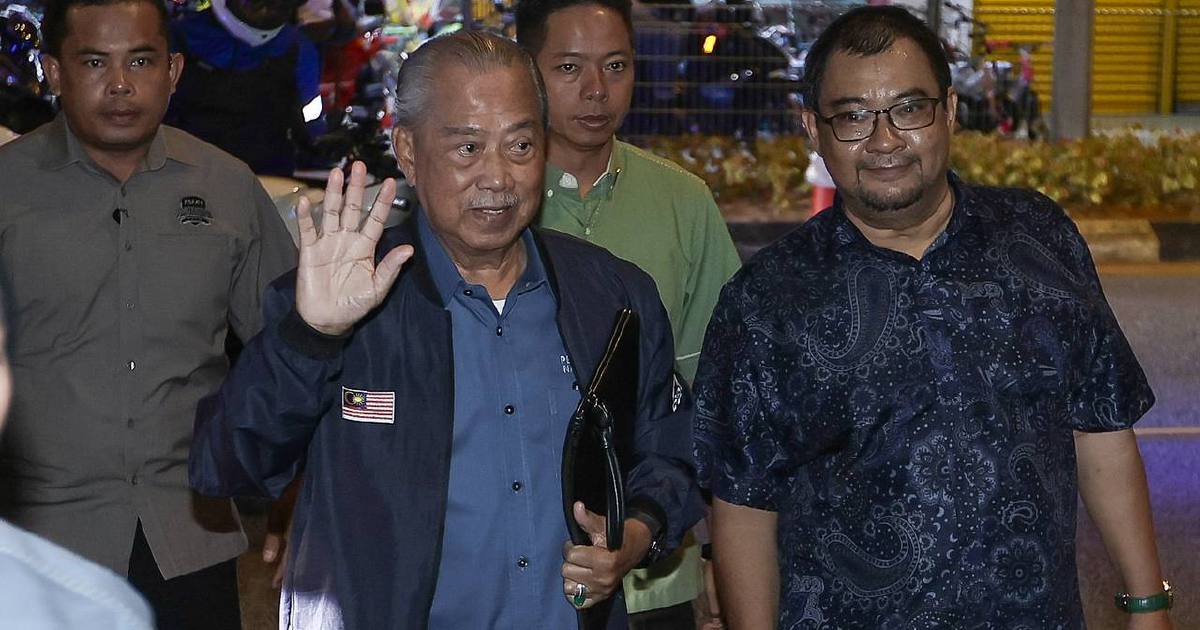
The Perikatan Nasional convened an emergency Supreme Council session in Kuala Lumpur on Tuesday evening, with party leadership directing their attention toward broader coalition-level issues rather than addressing the immediate status of Bersatu within the opposition bloc. The timing and scope of the gathering suggested mounting pressure on the coalition to clarify its strategic direction, yet the deliberate avoidance of the Bersatu question indicates persistent internal sensitivities that the leadership appears unwilling to confront publicly at this juncture.
While the meeting itself touched upon potential expansion of the coalition's membership and various organisational matters, the elephant in the room remained unaddressed. The decision to shelve discussion of Bersatu's position represents a calculated move that reflects the delicate political balance within PN, where divergent interests among component parties continue to create friction despite their ostensible commitment to opposition unity. For Malaysian political observers, this reluctance to engage directly with the issue signals that consensus remains elusive even among senior party figures.
Bersatu's relationship with Perikatan Nasional has long been complicated by questions of leadership hierarchy, resource allocation, and the party's shifting political alliances. Since its establishment, Bersatu has occupied an unusual position within the opposition bloc, maintaining ambiguous connections across different political configurations while simultaneously serving as a focal point for factional tensions. The fact that an emergency meeting was called without placing this matter on the formal agenda suggests that addressing it head-on would likely generate conflict that leadership currently wishes to avoid.
The omission carries substantial implications for PN's coherence and messaging. Opposition coalitions function most effectively when member parties enjoy clarity regarding their roles, responsibilities, and standing within the larger structure. By postponing substantive discussion of Bersatu's membership status, PN risks projecting an image of indecision precisely when political fortunes in Malaysia increasingly depend upon unified alternatives to the ruling coalition. For regional observers tracking Malaysian politics, this development underscores the challenges facing opposition groups in Asia that attempt to maintain unity across competing leadership philosophies and organisational interests.
The focus on prospective new membership suggests that PN leadership may be pursuing expansion as a strategy to strengthen its overall political weight without directly resolving internal disputes. Bringing additional parties into the fold could theoretically rebalance power dynamics within the coalition and create new frameworks for discussion. However, such an approach risks introducing additional complications rather than resolving existing ones, particularly if new members arrive with their own expectations regarding influence and resource distribution.
Bersatu's own political journey has been marked by transitions that complicate its standing within any coalition structure. The party's founders and leading figures bring histories that span multiple previous alliances, and this background creates layers of complexity that cannot be easily addressed through procedural mechanisms alone. The Supreme Council's decision to avoid the topic suggests that deeper resolution may require negotiations occurring outside formal council sessions, potentially indicating that behind-the-scenes discussions are ongoing between interested parties.
For Malaysian voters attempting to understand opposition alternatives, this ambiguity presents challenges. Electoral choices depend partly on understanding how potential governing coalitions would be structured and which parties would wield significant influence. When coalition leadership postpones clarification of a member party's status, voters inherit additional uncertainty. This uncertainty becomes particularly consequential in a political environment where multiple coalitions are competing for support and public confidence in opposition viability remains contested terrain.
The broader context of Malaysian politics underscores why PN's approach warrants scrutiny. Coalition politics in the country have repeatedly demonstrated that unresolved internal tensions can rapidly destabilise arrangements that appeared stable. The phenomenon of component parties shifting allegiances, attempting to secure more advantageous positions, or threatening to withdraw unless demands are met has become almost routine. In this environment, deliberately avoiding discussion of a sensitive matter may provide short-term relief from contentious debate but risks accumulating grievances that eventually explode into open conflict.
Regional dynamics also influence how PN's internal management is perceived. Southeast Asian opposition movements increasingly face scrutiny regarding their capacity to govern cohesively should they achieve power. International observers and domestic audiences alike assess whether opposition coalitions possess sufficient internal discipline and clarity of purpose to function as credible alternatives to incumbent governments. A coalition that cannot clearly articulate the membership status of one of its component parties invites questions about its organisational capacity and strategic clarity more broadly.
The weeks ahead will likely reveal whether PN's decision to defer this discussion represents a temporary tactical retreat or a more fundamental avoidance of necessary structural reckoning. Additional meetings may address the matter, or further developments within component parties could force the issue back onto formal agendas. The political pressure to clarify these arrangements will probably intensify rather than diminish, particularly if PN seeks to consolidate voter support through clearer positioning prior to any future electoral contest.
For Malaysian political analysts tracking opposition developments, Tuesday's Supreme Council meeting exemplifies the ongoing complexities that prevent PN from achieving the kind of unified, coherent identity that might substantially challenge the ruling coalition's dominance. While the meeting itself addressed coalition matters and expansion possibilities, its most significant feature may have been what remained unspoken—a reminder that opposition unity in Malaysia continues to founder on questions of internal hierarchy and equitable power distribution that leadership appears unable or unwilling to resolve transparently.