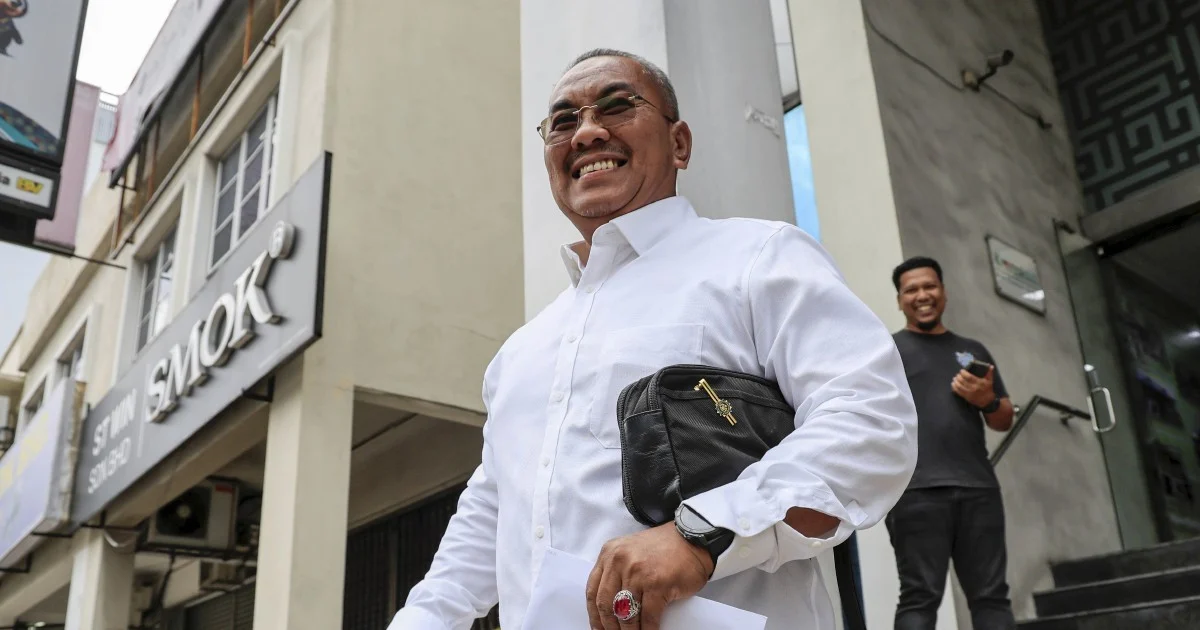
Perikatan Nasional has successfully concluded its internal seat negotiations ahead of the Johor state election, marking a significant milestone in the coalition's preparations for polling day. Datuk Seri Sanusi Md Nor, serving as the coalition's election director, delivered the announcement in Kuala Lumpur, confirming that all outstanding disputes over contested seats have been resolved. The resolution of 34 overlapping constituencies represents a critical breakthrough that removes a major source of potential friction among PN's component parties and demonstrates the coalition's ability to manage internal disagreements through structured dialogue.
The process of allocating seats within a multi-party coalition invariably generates tension, as each component party seeks to maximize its own political footprint while contributing to the broader electoral strategy. In Johor, where PN has positioned itself as a significant challenger to the incumbent Barisan Nasional, the coordination of candidate selection and seat distribution becomes particularly consequential. The 34 overlapping seats that required negotiation suggest the extent of initial competition for constituencies that multiple PN parties considered viable territory for their own candidates. Such overlaps are common when coalitions bring together parties with different geographical strongholds and organizational networks, each believing certain seats fall within their natural sphere of influence.
The successful conclusion of these negotiations underscores PN's internal cohesion at a moment when electoral competition in Johor presents genuine opportunities. The state has historically been a Barisan stronghold, but recent political shifts have created openings for opposition coalitions. PN's ability to present a unified front without public acrimony over seat allocations strengthens its positioning for the campaign phase. Voters typically respond negatively to visible coalition infighting, viewing it as a sign of disorganization and fractious leadership. By resolving these matters behind closed doors and announcing a settled position, PN avoids broadcasting internal divisions that could undermine its credibility.
For Malaysian observers accustomed to coalition dynamics at the federal level, the smooth conclusion of PN's Johor seat talks offers useful perspective on how different political arrangements manage competing interests. The Pakatan Harapan coalition has faced public disputes over seat allocations in various state elections, with negotiations sometimes extending into the campaign period itself. PN's apparent ability to wrap up these discussions more decisively suggests either more centralized decision-making authority within the coalition structure, greater flexibility among component parties regarding seat assignments, or both. Understanding these internal processes matters because they reveal how coalitions actually function when tested by electoral logistics.
The implications for Johor's political landscape are substantial. With seat allocations settled, PN can now focus messaging and campaign resources on contesting the state government itself rather than managing internal disputes. Component parties can campaign with confidence that their candidates are confirmed and can build local organizations without uncertainty about last-minute changes. The state's voters will benefit from earlier clarity about who is actually standing in their constituencies, enabling more informed electoral choices. Campaign effectiveness typically improves when coalitions have resolved logistical questions well in advance, allowing candidates to begin grassroots work and media engagement sooner.
For regional political observers, Johor represents a significant test case within Malaysia's broader electoral dynamics. The state accounts for a substantial block of parliamentary seats and holds considerable symbolic importance as the birthplace of the Federal Constitution and the current position of the Johor monarchy. How PN performs in the state election will signal broader trends about opposition consolidation and voter appetite for change in different regions. A strong PN showing would suggest the coalition has successfully differentiated itself from other opposition formations and built sustainable organizational capacity in a major state. Conversely, a disappointing result would raise questions about whether the coalition's internal unity masks deeper structural weaknesses.
The announcement by Sanusi also reflects the growing sophistication of PN's electoral operations. Beyond simply dividing seats, successful coalitions must manage expectations, communicate decisions persuasively to their respective bases, and maintain morale among candidates who may have been disappointed in the allocation process. Someone did not get their preferred seat, or preferred seat for a particular candidate, yet the announcement suggests this was managed without generating public discord. This requires strong institutional mechanisms within the coalition and sufficient buy-in from component parties regarding the overall strategic vision and credibility of the negotiation process itself.
Looking ahead, PN's ability to maintain this unity through the campaign period will be equally important as the initial seat settlement. Coalition dynamics often break down not during negotiations but when the campaign begins and component parties perceive that others are receiving disproportionate media attention, campaign resources, or voter enthusiasm. Sanusi's role as election director will extend beyond announcing deals to actively managing ongoing coordination among parties, handling disputes that arise during campaigning, and ensuring that the agreed allocations remain stable even if some candidates perform better or worse than anticipated in preliminary polling.
The timing of this announcement is strategically significant. By settling seats well in advance of official campaigning, PN enables component parties to conduct candidate selection processes, vet potential representatives for governance readiness, and begin community engagement in their respective constituencies. This contrasts with rushed arrangements made closer to polling dates, which can result in suboptimal candidate selection or insufficient preparation. It also demonstrates to Johor voters that PN has taken the election seriously enough to conduct disciplined internal processes rather than engaging in last-minute improvisation.
For Malaysia's broader political development, the successful conclusion of PN's Johor seat negotiations contributes to a gradual normalization of coalition politics in the country. Historically, Malaysian coalitions have been dominated by single parties (Barisan Nasional before 2018, then Pakatan Harapan) with smaller partners playing subordinate roles. PN, by contrast, comprises multiple parties with more balanced power-sharing arrangements, at least theoretically. How effectively PN manages the practical challenges of multi-party coordination offers lessons applicable to future coalition arrangements and reflects the evolving maturity of Malaysian political institutions in accommodating diverse political forces within unified electoral structures.