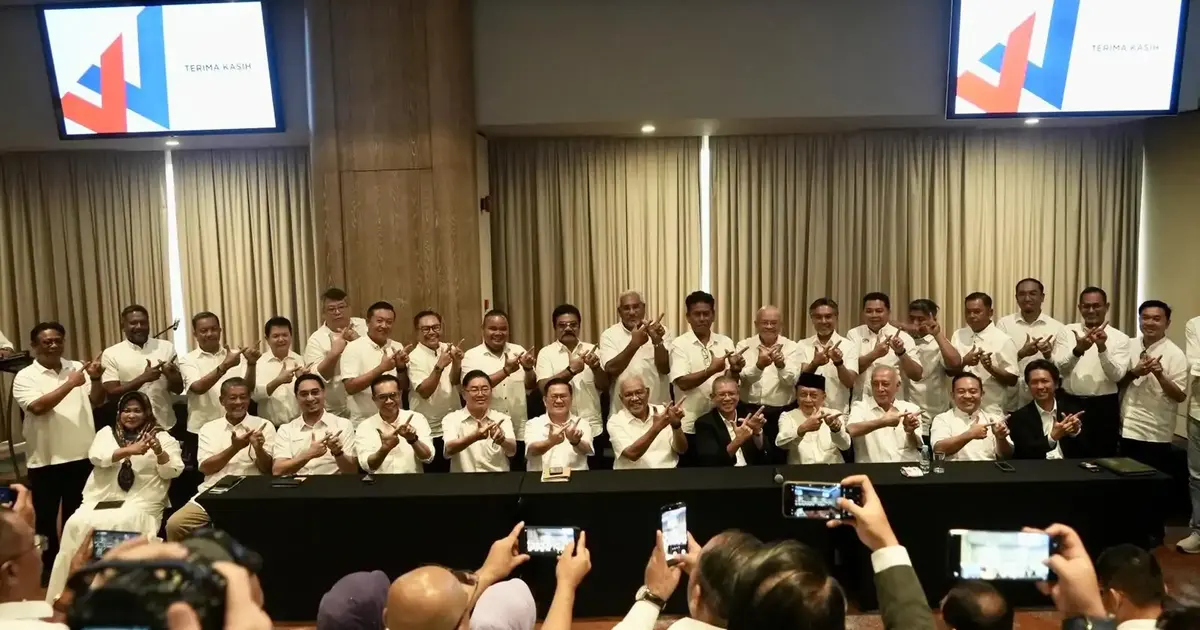
Perikatan Nasional's decision to admit Wawasan into its ranks has been formally settled through a democratic voting process at the coalition's highest decision-making body, according to PN election director Sanusi. The clarification comes as the coalition works to manage internal tensions following the recruitment of the newly formed party, which has sparked opposition from within its own ranks, most notably from Bersatu, a founding member of the Perikatan alliance.
The Supreme Council of Perikatan Nasional convened to deliberate on Wawasan's application for membership, with the issue decided by majority vote among council members present. This procedural foundation underscores the coalition's commitment to collective decision-making, though it simultaneously highlights the varying positions held by constituent parties on the strategic direction of the alliance. The voting mechanism ensures that no single party, regardless of its historical importance or size, can unilaterally veto coalition decisions, a principle that has become increasingly significant as Perikatan navigates a complex political landscape.
Bersatu's objections to Wawasan's admission have been formally acknowledged and recorded by the coalition leadership. The party's concerns appear rooted in broader strategic considerations about coalition composition, electoral coordination, and the distribution of influence within Perikatan's power structure. By accepting Wawasan, the coalition expands its membership base but potentially complicates internal dynamics, particularly in constituencies where multiple PN members might compete for voter support. Sanusi's statement that objections are "noted" represents a diplomatic recognition of Bersatu's position while simultaneously affirming that such reservations do not override the collective decision of the majority.
Wawasan's entry into Perikatan Nasional represents a significant development in Malaysia's coalition politics. The party's recruitment suggests that the PN alliance sees value in expanding its reach and incorporating new political actors into its fold, even if this creates friction with existing members. This expansion strategy reflects a broader competitive dynamic in which coalitions seek to strengthen their electoral position ahead of potential polls, though the timing and circumstances of such recruitment can generate internal discord.
The reliance on majority voting at the Supreme Council level demonstrates how Perikatan operates as a coalition of distinct entities rather than a monolithic political force. Unlike situations where decisions might be made by consensus or by a dominant single party, this voting mechanism requires broader agreement across member parties. However, it also means that minority positions, such as Bersatu's opposition, may be overridden despite their substantive merit or the dissenting party's seniority within the alliance. The tension between respecting individual party autonomy and maintaining coalition cohesion remains an ongoing challenge for Perikatan's leadership.
For Malaysian political observers and regional analysts, the Wawasan admission illuminates the fragility and pragmatism inherent in coalition politics. Perikatan comprises parties with sometimes divergent interests and ideologies united primarily by their opposition to competing political blocs. When such coalitions make decisions that favour expansion over internal harmony, they risk exacerbating existing fault lines. The fact that a founder member like Bersatu felt compelled to formally object suggests that concerns about the coalition's strategic direction run deeper than mere procedural disagreement.
The implications for electoral strategy are substantial. If Wawasan operates as an independent entity within Perikatan, seat-sharing arrangements and campaign coordination become more complex. Voters in certain constituencies might face competition between multiple PN-affiliated candidates, potentially fragmenting anti-establishment votes and benefiting opposition parties. Conversely, if Wawasan's entry allows Perikatan to penetrate new demographic or geographic areas, the coalition's overall competitive advantage could strengthen. The actual outcome will depend heavily on how effectively the coalition coordinates its campaign efforts despite internal disagreement.
Bersatu's willingness to voice objections publicly, combined with the coalition's decision to proceed anyway, suggests a relationship undergoing gradual recalibration. As a former ally of Prime Minister Anwar Ibrahim and now a member of the opposition coalition, Bersatu has already navigated significant political transitions. The Wawasan issue may represent another inflection point in the party's trajectory within Perikatan, potentially influencing its long-term commitment to the alliance. Should such tensions accumulate, they could eventually destabilise the coalition's internal equilibrium.
The Supreme Council's majority vote on Wawasan reflects procedural legitimacy but leaves unresolved the underlying question of whether Perikatan's expansion strategy serves its long-term electoral and political interests. Sanusi's public confirmation of the voting process suggests that PN leadership believes transparency about decision-making mechanisms will help manage internal dissent. By framing the outcome as a formal democratic process rather than an arbitrary imposition by dominant parties, the coalition attempts to preserve institutional credibility even when individual members disagree with specific outcomes.
Regional observers should note that this episode exemplifies broader challenges facing multi-party coalitions across Southeast Asia. Building and maintaining coalition discipline while respecting member autonomy requires constant negotiation, and decisions that satisfy some partners inevitably disappoint others. The Malaysian political context, with its complex ethnic and religious considerations alongside ideological differences, amplifies these tensions. How Perikatan manages such internal friction will significantly influence its viability as a genuine political alternative to the current government and to competing opposition coalitions seeking to challenge the ruling administration.