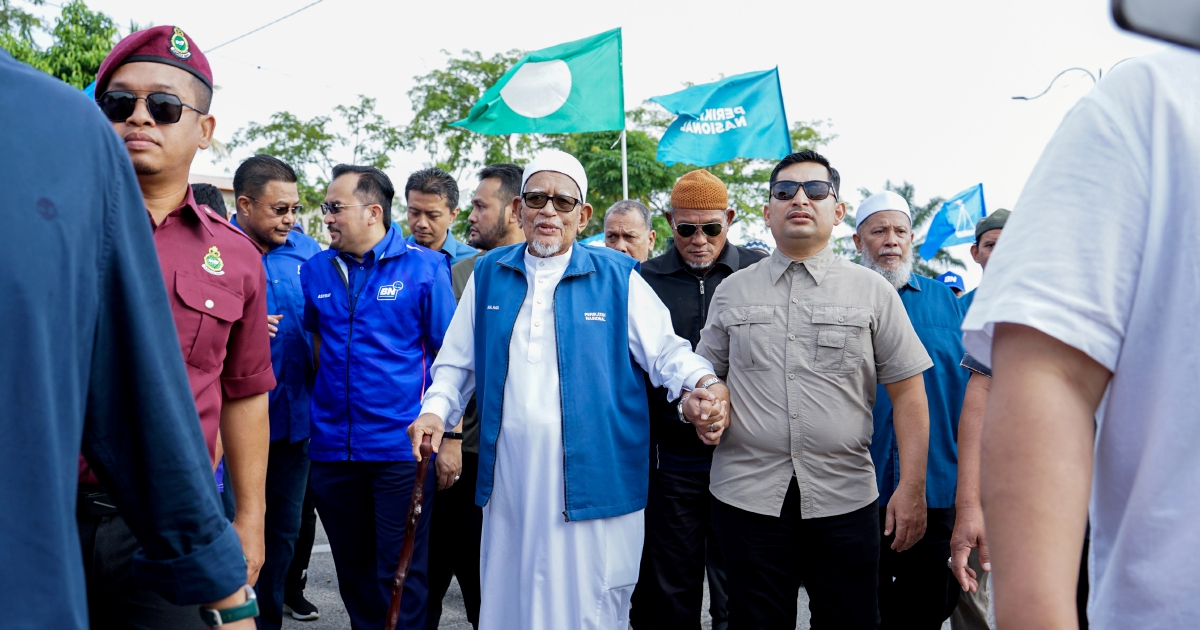
The two major political coalitions vying for power in Malaysia are engaged in substantive discussions over how to divide electoral constituencies for the upcoming Melaka state election, with PAS president Tan Sri Abdul Hadi Awang confirming the ongoing negotiations from his base in Marang.
The seat allocation process represents a critical phase in coalition politics, where partner parties must balance their electoral ambitions against the need for unified opposition to rival factions. For Perikatan Nasional, which currently governs several states and holds substantial federal influence, the distribution of Melaka seats will significantly impact its parliamentary strength and leverage within the broader political landscape. Similarly, Barisan Nasional, the traditional ruling coalition still formidable in peninsular politics, views the Melaka election as an opportunity to reassert dominance in a state where its control has been contested in recent electoral cycles.
Melaka holds particular significance in Malaysian politics beyond its modest geographic size. As the birthplace of Malay-Muslim civilization and a symbolically important state, electoral outcomes here often carry weight in national discourse and coalition building. The state has been a testing ground for various power arrangements between opposing coalitions, and the upcoming poll will further clarify the balance of forces between PN and BN as Malaysia approaches its next general election cycle.
Hadi's statement indicates that discussions have progressed beyond preliminary soundings and entered more concrete territory. The timing of these negotiations reflects the urgency both coalitions face in preparing their electoral machinery for what analysts view as a consequential state election. PAS, as the dominant Islamist party in PN, typically seeks to maximize seats in areas with strong Muslim constituencies, a strategy that frequently creates both opportunities and tensions in coalition dynamics.
Barisan Nasional's participation in these talks suggests willingness to engage in tactical cooperation with PN on state-level elections, even as the two coalitions remain competitors at the federal level. This reflects the pragmatic reality of Malaysian politics, where alliances remain fluid and context-dependent, varying between state and national contests. Such flexibility enables both sides to contest elections effectively while preserving relationships for potential future collaboration.
The negotiation process itself typically involves detailed analysis of demographic data, historical voting patterns, and organizational capabilities within each constituency. Parties assess which seats they can realistically win, which remain hopeless prospects, and which are genuinely competitive and might be traded away to coalition partners in exchange for stronger positions elsewhere. These calculations often extend beyond crude mathematics to include considerations of party morale, member expectations, and the political cost of seemingly unfavorable seat allocations.
For Malaysian voters observing these developments, the seat-sharing outcomes will determine the actual choice offered in each constituency. While official state elections are still formal processes requiring nominations and campaigns, the real political outcomes are frequently determined during these pre-election negotiations between coalition leaders. This underscores the extent to which coalition politics, rather than direct voter choice across all seats, shapes Malaysia's electoral outcomes.
The involvement of both major coalitions suggests neither is entirely confident of sweeping all or most Melaka seats independently. This indicates genuine competitiveness and reflects the state's status as a genuine three-way or multi-way contest involving various political factions and regional interests. The complexity of these negotiations increases when multiple parties within each coalition have competing claims to specific constituencies or demographic groups.
Regional observers view Melaka elections as important barometers of coalition health and public sentiment. PN's internal cohesion, particularly between PAS and other coalition members with different ideological orientations, has periodically come under strain, and state-level elections provide opportunities to either reinforce or expose these fractures. Similarly, BN's ability to reassemble diverse parties under coherent leadership remains contested, making state polls crucial tests of viability.
The outcome of these negotiations will likely be announced through formal statements from both coalition leaderships once final agreements are reached. Such announcements typically occur relatively close to the official nomination period to maintain campaign momentum and prevent losing negotiated advantages to rival defections. Both coalitions recognize that premature disclosure could trigger demands from other party factions or coalition members seeking improvements to their own allocations.
Beyond the immediate electoral implications, these seat negotiations contribute to the broader reconfiguration of Malaysian politics as coalitions adapt to shifting voter preferences, internal party dynamics, and leadership transitions. Each state election provides experience and lessons that shape strategies for subsequent contests, creating an evolving political landscape that rewards flexibility and punishes rigidity. The Melaka negotiations thus represent not merely a tactical exercise but an important moment in Malaysia's ongoing coalition realignment.

