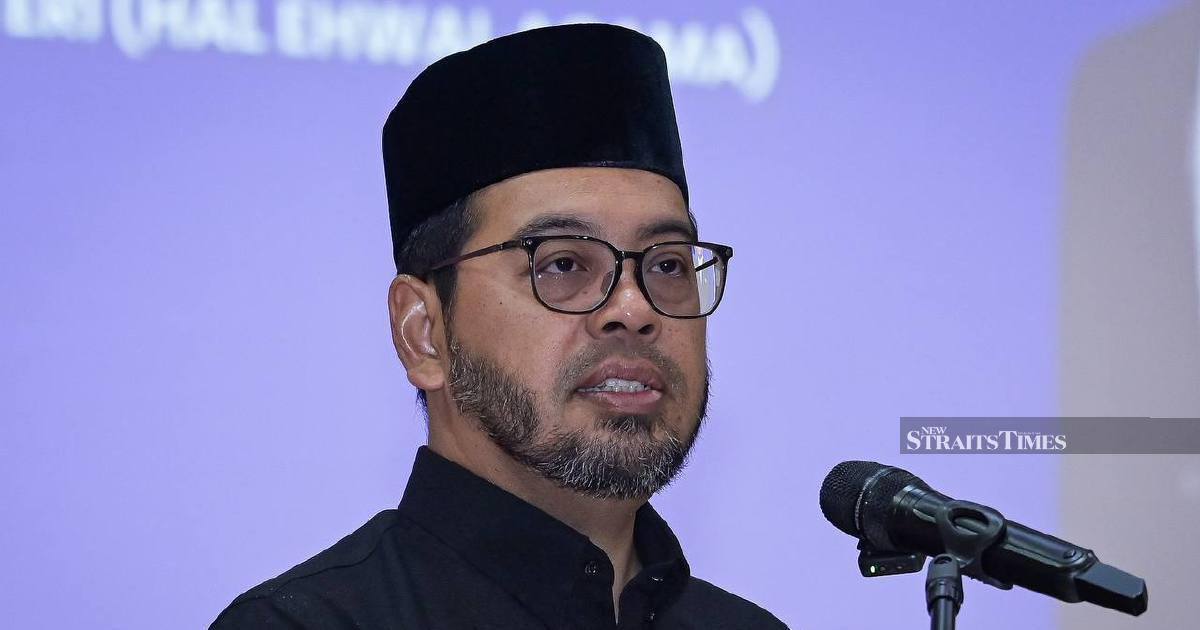
The Prime Minister's Department (Religious Affairs) has publicly aligned itself with His Majesty Sultan Ibrahim, King of Malaysia, in demanding a rigorous and uncompromising investigation into the discoveries made by the Royal Commission of Inquiry investigating Lembaga Tabung Haji (TH). This declaration from the department carries significant weight, signalling governmental commitment to addressing whatever systemic issues or irregularities the RCI may have uncovered at the Islamic pilgrimage savings institution.
The RCI's examination of Tabung Haji represents a watershed moment for one of Malaysia's most important Islamic financial institutions, which manages savings and loans for over two million pilgrims preparing for the hajj to Mecca. The institution's governance structures and financial operations have long drawn scrutiny from stakeholders concerned about accountability and proper stewardship of Muslim depositors' funds. The royal decree for thoroughness underscores the gravity with which the monarchy views these matters and sets a clear expectation that no stone should be left unturned during the investigative process.
The explicit backing from the Prime Minister's Department is not merely ceremonial acknowledgment. By formally endorsing the King's directive, the religious affairs portfolio signals that the government machinery will facilitate, rather than obstruct, the investigation's progress. This positioning is crucial in Malaysian governance, where royal directives carry profound constitutional and moral authority. When a government department subordinate to the Prime Minister publicly commits to implementing the King's will without equivocation, it establishes a legal and ethical framework within which investigative bodies must operate.
Transparency has emerged as the cornerstone of this investigative mandate. TH, as a statutory body managing religious funds, operates under heightened public scrutiny given its role in facilitating one of Islam's five pillars. Any perception of opacity or selective disclosure could undermine public confidence in Islamic institutions generally and damage TH's reputation among the millions of Malaysians who entrust their hajj savings to the organisation. The department's commitment to transparency suggests that findings will likely be communicated to stakeholders and the public in comprehensible, timely fashion rather than shelved or compartmentalised.
The phrase "without compromise" carries particular weight in this context. It suggests that investigative findings should not be diluted by political considerations, administrative convenience, or concerns about institutional embarrassment. This language indicates that whether the RCI's conclusions point to minor procedural lapses or more serious breaches of fiduciary duty, those conclusions will be taken seriously and acted upon decisively. For Malaysian citizens and the international Islamic finance community, this unqualified commitment provides assurance that outcomes will be determined by evidence rather than expediency.
Tabung Haji's governance has faced periodic questions over the years, particularly regarding investment decisions, fund management practices, and the adequacy of internal controls. The RCI process itself represents acknowledgment that conventional oversight mechanisms warranted escalation to a higher investigative authority. By now explicitly endorsing thorough investigation, the government implicitly accepts that previous governance frameworks may have been inadequate and that remedial measures may be necessary. This represents a significant institutional humility, particularly important given TH's prominence in Malaysian Islamic institutional life.
The timing of this departmental endorsement is strategically significant for regional confidence in Malaysian governance. Southeast Asia's Islamic finance sector looks to Malaysia as a model and leader. Any perception that serious investigative findings might be downplayed or suppressed could ripple across the region, affecting investor confidence in Islamic institutions across the ASEAN bloc. By publicly committing to rigorous investigation, the Prime Minister's Department reinforces Malaysia's reputation for institutional integrity and demonstrates that religious institutions remain subject to the same accountability standards as secular bodies.
Implementing this mandate will require coordination across multiple government agencies and between civilian and royal oversight structures. The RCI's eventual findings may implicate individuals or decision-making processes spanning years or even decades of TH operations. The Prime Minister's Department's explicit commitment will presumably translate into administrative support—providing investigators with necessary resources, ensuring swift processing of official records, and facilitating access to relevant documentation. This operational commitment is as important as the rhetorical endorsement.
The implications for TH itself are profound. Management will understand that findings cannot be successfully contested through political pressure or administrative manoeuvres. Stakeholders—particularly the millions of Malaysians with funds deposited at TH—should anticipate that any identified deficiencies will be publicly addressed and corrected. This creates pressure for institutional reform and modernisation, potentially positioning TH as a more robustly governed entity emerging from the investigative process. Conversely, if investigations exonerate current practices, that validation will strengthen TH's credibility.
For Malaysian civil society and parliamentary opposition, the departmental statement also establishes a benchmark against which future implementation should be measured. If investigative findings are ultimately suppressed, downplayed, or inadequately acted upon, the Prime Minister's Department will have created a public record against which such failures can be contrasted. This creates reputational incentive for the government to follow through on its stated commitment, binding the administration to a standard of conduct established by the monarchy and publicly embraced by the religious affairs portfolio.

