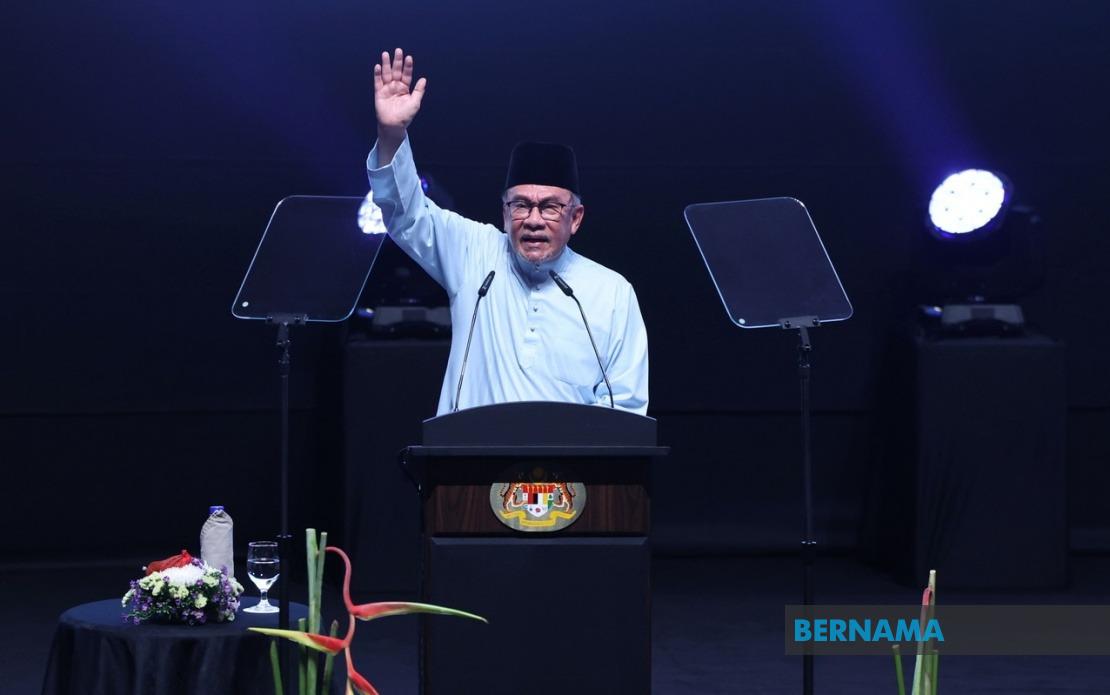
The Ministry of National Unity announced on Thursday that this year's National Day Prime Minister's Address Ceremony will take place at the Putrajaya International Convention Centre (PICC) starting at 2 pm, marking a significant change from the originally planned venue in the heart of Kuala Lumpur. The shift represents a practical response to environmental and health considerations that have prompted organisers to prioritise the wellbeing of attendees and members of the public who would gather for the nation's most significant civic celebration.
The relocation decision emerges from mounting air quality challenges gripping several regions across the peninsula. The Malaysian Meteorological Department projected that hazy conditions would intensify in Sabah beginning late August, while more serious haze concentrations were forecast to affect Johor, Melaka, Negeri Sembilan, Selangor, Kuala Lumpur and Putrajaya through to the final day of August. Under these circumstances, shifting the ceremony away from Dataran Merdeka—the historic square that has traditionally hosted such major state events—allows event planners to manage crowd sizes more effectively and provide better indoor facilities for the substantial numbers expected to witness the proceedings.
The Ministry of National Unity underscored that the timing and venue adjustments reflected deliberate consideration of multiple factors beyond weather patterns alone. Ensuring the safety, health and comfort of guests and members of the general public formed the primary considerations in making this determination. Additionally, organisers sought to guarantee that the ceremony itself would proceed without logistical complications or operational disruptions, reflecting the importance attached to delivering a well-coordinated national event. The PICC venue, with its modern amenities and climate-controlled environment, offers distinct advantages in delivering these objectives.
National Day ceremonies carry profound symbolic weight within Malaysia's political and social calendar. Beyond the ceremonial aspects, the Prime Minister's address provides the government with an influential platform to articulate its vision, reinforce national unity messaging, and communicate its policy priorities to the entire nation. For the MADANI administration, this year's address represents an opportunity to reflect substantively on the government's aspirations and hopes, whilst reinforcing the importance of national independence, strengthening patriotism among citizens, and nurturing deeper connections of responsibility and affection toward the country. These themes resonate particularly in contemporary Malaysian society, where unity and cohesion remain central to political discourse.
The Ministry's statement explicitly characterised the ceremony as an important occasion for reflecting on the government's leadership direction and its commitment to fomenting the spirit of independence. The MADANI government's emphasis on these values signals continuity with Malaysia's postcolonial narrative whilst positioning the administration's contemporary agenda within that broader historical context. For Malaysian audiences, such framing connects current governance initiatives to the enduring principles that have guided the nation since independence, lending legitimacy and historical resonance to present-day policies and programmes.
Organisers have extended an invitation to all Malaysians to participate in the celebration, positioning National Day not merely as a government event but as a collective national observance. The messaging emphasises the opportunity to foster mutual understanding, respect and acceptance of diversity—themes that carry particular salience in a multicultural society navigating questions of communal harmony and social cohesion. By inviting the broader public to engage with these values, the government attempts to frame National Day as a unifying occasion that transcends partisan political divisions and speaks to shared aspirations for national progress, harmony and prosperity.
The decision to move the ceremony also reflects increasing governmental responsiveness to environmental conditions and public health concerns. The haze phenomenon, driven largely by transboundary pollution originating from neighbouring regions, has emerged as a recurring challenge affecting multiple Southeast Asian nations during certain seasons. Malaysia's experience with haze episodes, particularly during periods of agricultural burning in Indonesia, has elevated awareness among policymakers regarding air quality impacts on public gatherings and outdoor events. This year's relocation demonstrates that even high-profile state ceremonies must adapt to environmental realities, a pragmatic approach that acknowledges the limits of symbolic or ceremonial considerations when confronted with genuine health and safety imperatives.
The choice of the Putrajaya International Convention Centre as the alternative venue carries its own significance. Putrajaya, Malaysia's purpose-built federal administrative capital, has increasingly hosted major national events and governmental ceremonies. The relocation reinforces Putrajaya's role as a ceremonial and administrative hub whilst subtly shifting the geographic centre of the National Day celebration away from Kuala Lumpur, the traditional heart of such observances. This geographical shift, though prompted by environmental necessity, may carry unintended implications for how different regions within Malaysia perceive their relationship to national ceremonial practices and political symbolism.
From a Southeast Asian perspective, Malaysia's approach to managing the National Day ceremony amid environmental constraints offers instructive lessons. Regional nations frequently contend with similar air quality challenges during certain seasons, yet major ceremonial events continue largely unchanged. Malaysia's proactive adjustment suggests a model where environmental considerations and public health explicitly factor into high-level event planning, potentially influencing how neighbouring governments approach similar situations. The precedent established here may encourage other nations to similarly prioritise participant wellbeing over rigid adherence to traditional venues and timings.
The 2 pm start time represents an additional practical consideration that extends beyond simple scheduling. This timing avoids both the early morning hours when logistics and attendance might prove challenging, as well as late afternoon periods when haze concentrations typically intensify. The afternoon slot also allows for coordinated media coverage and public engagement throughout Malaysia's timezone, ensuring that the Prime Minister's address reaches audiences at a time conducive to attention and reflection.
Looking forward, the National Day 2026 ceremony demonstrates how contemporary governance must balance tradition with pragmatism. Malaysia's founding principles and national identity remain constant, yet their expression and celebration must necessarily adapt to present-day circumstances. The relocation and rescheduling of the Prime Minister's address ceremony—whilst seemingly logistical matters—ultimately reflect broader governmental priorities regarding public welfare, operational excellence, and the evolution of how national symbols and ceremonies function in the modern Malaysian context.

