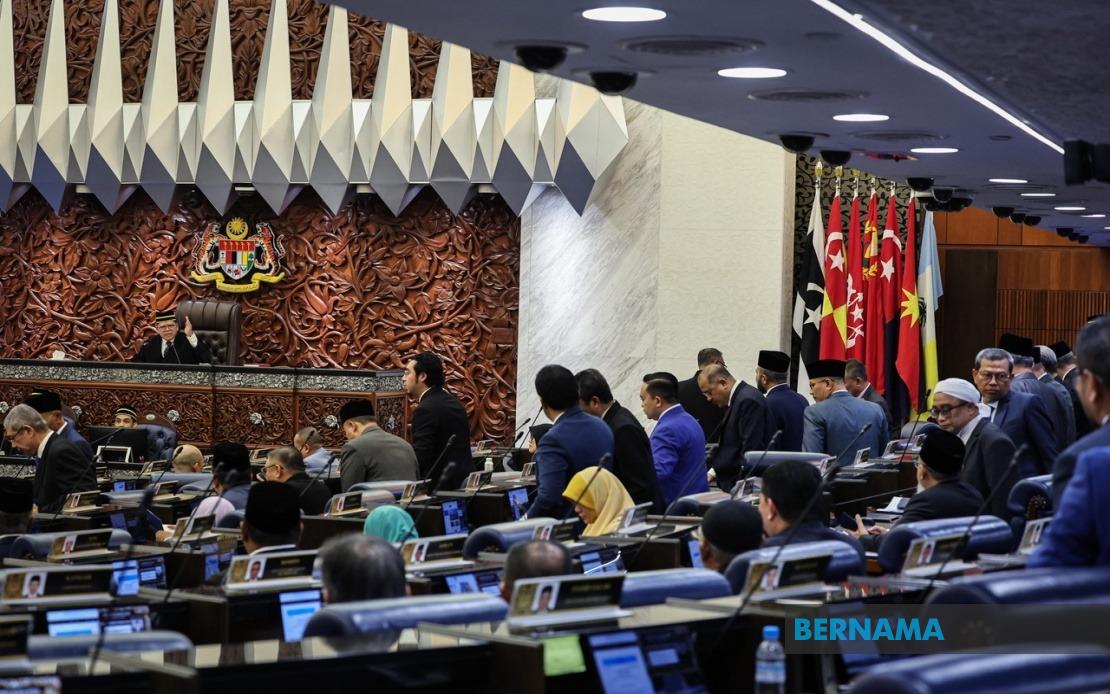
The Prime Minister's non-attendance at a special sitting of the Dewan Rakyat should not serve as justification for parliamentarians to disengage from critical discussions affecting the financial interests of Malaysian Muslims, according to Tengku Datuk Seri Zafrul Tengku Abdul Aziz, Senior Political Adviser to the Prime Minister. His remarks came in response to a number of opposition lawmakers who chose to leave the chamber during proceedings focused on the Royal Commission of Inquiry report concerning Lembaga Tabung Haji, signalling their dissatisfaction with the government's handling of matters central to the fund's operations and governance.
The special parliamentary sitting convened specifically to examine and debate a comprehensive 211-page report into the management and operations of Tabung Haji spanning the period from 2014 to 2020. This report, released publicly on July 29 following government approval, represents one of the most significant reviews of the institution in recent years. Minister in the Prime Minister's Department (Religious Affairs) Dr Zulkifli Hasan tabled the document, setting the stage for what was intended as a thorough parliamentary examination of the fund's stewardship and financial administration during a critical period marked by significant challenges and controversies.
Tengku Zafrul's intervention through social media underscores the government's perspective that the Tabung Haji matter transcends partisan politics and individual absences from parliamentary chambers. He articulated that the substance of the debate centres on the accumulated savings of ordinary Muslims rather than on the political standing of any single executive figure. This framing attempts to elevate the discussion beyond typical government-opposition dynamics, positioning it instead as a matter of national and religious significance that demands the serious attention of all elected representatives regardless of their ideological leanings.
Several prominent opposition figures, including Perikatan Nasional leader Hamzah Zainudin who serves as Opposition Leader, chose to exit the Dewan Rakyat chamber rather than participate. Their action was joined by other PN MPs including party chief whip Datuk Seri Takiyuddin Hassan and party chairman Datuk Seri Dr Samsuri Mokhtar. The coordinated departure signals a deliberate political stance, suggesting that opposition representatives viewed their abstention as a meaningful form of protest, though the specific grievances underlying their decision remained somewhat opaque in initial public statements.
Tengku Zafrul's critique directly challenged what he characterised as a troubling disengagement from parliamentary duty. His statement questioned the logic underpinning the walkout, positing that absence of the head of government should not translate into absence of parliamentary scrutiny or participation. He advocated for a more robust and principled approach to opposition work, wherein lawmakers scrutinise government performance through rigorous questioning, factual rebuttal, and substantive debate rather than through performative boycotts or withdrawals from deliberation.
The adviser's rhetoric implicitly endorsed a vision of parliamentary discourse in which disagreement is expressed through argument rather than absence, and in which criticisms are levelled with evidence and logical force rather than through gestures of withdrawal. This perspective reflects a wider tension within Malaysian politics regarding the appropriate modes of opposition engagement and the balance between principled boycotts and constructive participation in legislative processes. Tengku Zafrul characterised the walkout as appearing to communicate indifference toward the Tabung Haji matter, a charge that potentially stings opposition MPs who prioritise the fund's performance and the protection of Muslim savings as core concerns.
Tabung Haji occupies a distinctive position within Malaysia's financial landscape and religious economy. The institution manages the pilgrimage savings of Malaysian Muslims while simultaneously functioning as a significant investment vehicle for Islamic funds and economic development initiatives. Given these dual roles, governance failures or mismanagement carry implications extending far beyond individual account holders to encompass broader questions of trust in religiously-mandated financial institutions. The RCI report's focus on the 2014-2020 period captures a span marked by heightened scrutiny of Tabung Haji's investment decisions and internal controls, culminating in calls for comprehensive institutional reform.
For Malaysian readers and policymakers, the Tabung Haji debate carries considerable weight because the fund represents a trusted repository for religious savings and a crucial mechanism for facilitating the Muslim pilgrimage obligation. Any examination of its governance directly affects millions of account holders and their families' financial security. The Royal Commission's investigation into this period reflects broader concerns about institutional accountability and the fiduciary obligations owed to ordinary citizens who have entrusted their resources to government-linked entities. The resulting report and parliamentary debate therefore represent opportunities to assess whether remedial measures are adequate and whether systemic weaknesses have been addressed.
Tengku Zafrul's intervention also illuminates the government's strategy for defending its management of the Tabung Haji controversy and its response to the RCI findings. By repositioning the debate as a matter of collective national concern rather than partisan combat, the administration seeks to frame cooperation with the inquiry process and engagement with its recommendations as expressions of shared commitment to Muslim and Malay economic interests. This rhetorical approach attempts to isolate the opposition from the moral high ground of concern for Tabung Haji's integrity and accountability, suggesting instead that opposition disengagement represents a betrayal of those constituencies most affected by the fund's performance.
The tension between the government and opposition parties regarding Tabung Haji reflects deeper disagreements about institutional reform, ministerial accountability, and the pace of remedial action. Opposition MPs who walked out may harbour concerns that the RCI report and parliamentary debate, conducted under government control and without the Prime Minister's participation, might inadequately address systemic problems or deflect responsibility from senior officials. Their withdrawal, then, might represent a refusal to lend legitimacy to processes perceived as insufficient or performative in character, even as critics acknowledge the importance of the fund itself.
Looking ahead, the Tabung Haji issue will likely remain a focal point in Malaysian political discourse, particularly as implementation of RCI recommendations proceeds and their effectiveness becomes apparent. The parliamentary debate and subsequent policy responses will signal to account holders and the broader public whether institutional reform constitutes genuine restructuring or merely cosmetic adjustment. For opposition parties, the challenge involves articulating substantive alternatives to government policies while demonstrating commitment to Tabung Haji's integrity through mechanisms other than parliamentary walkouts.

