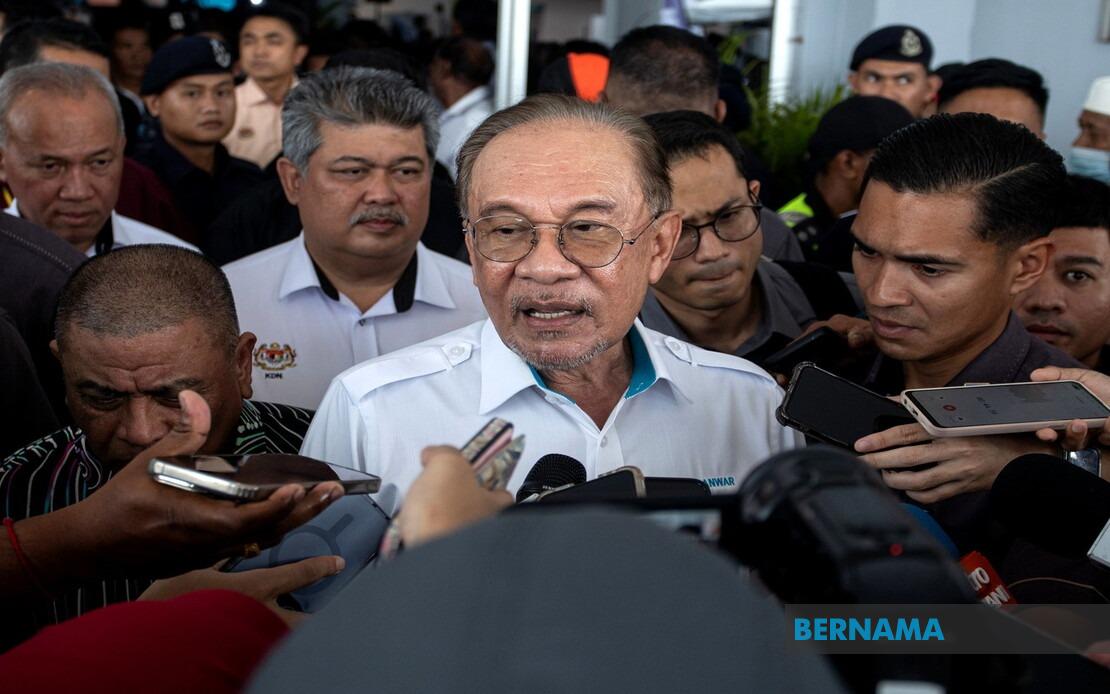
Prime Minister Datuk Seri Anwar Ibrahim has issued a firm directive to government officials to observe strict discipline and refrain from launching attacks on the Federal Government whilst campaigning in ongoing state elections, cautioning that doing so would undermine the country's political landscape. Making the statement in Ipoh after attending a MADANI KITA community engagement programme, Anwar underscored that individuals serving in ministerial, deputy ministerial, and senior agency positions remain bound by codes of conduct that supersede their campaign activities.
The Prime Minister's admonition comes at a particularly sensitive moment in Malaysia's electoral calendar, where multiple state-level contests have created a complex political environment. His remarks recognise an inherent tension within Malaysia's federal system: coalition partners at the national level often find themselves competing directly against one another in state-level elections, a phenomenon that has accelerated tensions within the ruling Unity Government framework.
Anwar emphasised that whilst party members are entitled to contest state elections and campaign vigorously on state-specific issues, this freedom carries conditions for those holding official positions. He articulated a clear distinction between legitimate state-level political competition and what he characterised as inappropriate attacks on the federal administration. The Prime Minister stressed that those unwilling to abide by these expectations should voluntarily relinquish their government positions rather than create internal contradictions through public criticism.
This directive reflects broader concerns about maintaining governmental coherence and public service efficiency. For Malaysian observers accustomed to more fractious coalition politics, Anwar's emphasis on preserving federal-level unity whilst permitting state-level competition represents an attempt to navigate a delicate balancing act. The approach seeks to prevent the kind of internal bleeding that has historically undermined ruling coalitions in Southeast Asia, where state-level electoral contests have sometimes metastasised into existential challenges for national governments.
Anwar confirmed that he had personally discussed these expectations with his two deputy prime ministers, Datuk Seri Dr Ahmad Zahid Hamidi and Datuk Seri Fadillah Yusof, indicating that the matter constitutes a priority agenda item at the highest levels of government. This escalation to the deputy premiership level underscores the seriousness with which the administration treats potential breaches of coalition discipline. The involvement of both deputies also suggests that concerns about discipline extend across multiple political parties within the Unity Government alliance.
In his capacity as chairman of Pakatan Harapan, Anwar has also directed coalition partners to preserve cordial relations at both federal and state governmental levels. This dual-track approach attempts to compartmentalise political competition, confining it to electoral contests whilst maintaining institutional cooperation in service delivery and administration. The rationale is pragmatic: fractious coalition relationships at the federal level inevitably compromise governmental effectiveness and erode public confidence in institutions.
The Prime Minister articulated the fundamental principle underlying his intervention: that Unity Government partners remain committed to ensuring that federal-state relationships grow increasingly robust and harmonious. This commitment to relationship-building stands in marked contrast to the adversarial posturing that sometimes characterises Malaysian state and federal politics. By emphasising the primacy of effective service delivery to citizens, Anwar sought to reframe coalition discipline not as authoritarian constraint but as necessary prerequisite for government functionality.
For Malaysian readers, Anwar's statement carries particular significance given the historical fragility of ruling coalitions in Malaysian politics. The Unity Government itself represents a compromise formation designed to prevent political instability following the 2022 elections, and its maintenance remains contingent upon managing internal differences. State elections, by their nature, activate localistic political identities and can create incentives for politicians to position themselves against their federal-level allies in pursuit of state-level advantage.
The broader context involves Understanding Malaysia's peculiar constitutional architecture, wherein state governments exercise genuine autonomous authority over domains including land, local government, and certain regulatory matters. This constitutional federalism creates legitimate grounds for state-level political competition even amongst coalition partners. Anwar's intervention seeks to prevent this constitutional pluralism from degenerating into organisational chaos within the federal government.
The emphasis on voluntary resignation for those unwilling to accept these constraints represents a significant assertion of executive authority. Unlike authoritarian systems where compliance is imposed through punitive mechanisms, Anwar's approach offers officials an honourable exit: those disagreeing with coalition discipline may withdraw rather than face dismissal. This framing potentially preempts accusations of heavy-handedness whilst simultaneously demonstrating that consequences attach to non-compliance.
Looking forward, this directive establishes parameters for how Malaysia's elite will navigate the intersection of state electoral politics and federal governmental operations. The success of this approach will depend substantially on whether individual politicians, particularly those with ministerial status, genuinely observe the boundaries Anwar has articulated. Violations of these expectations could precipitate the first serious test of Unity Government cohesion, with implications extending well beyond individual state contests to encompass the entire trajectory of Malaysian coalition politics.

