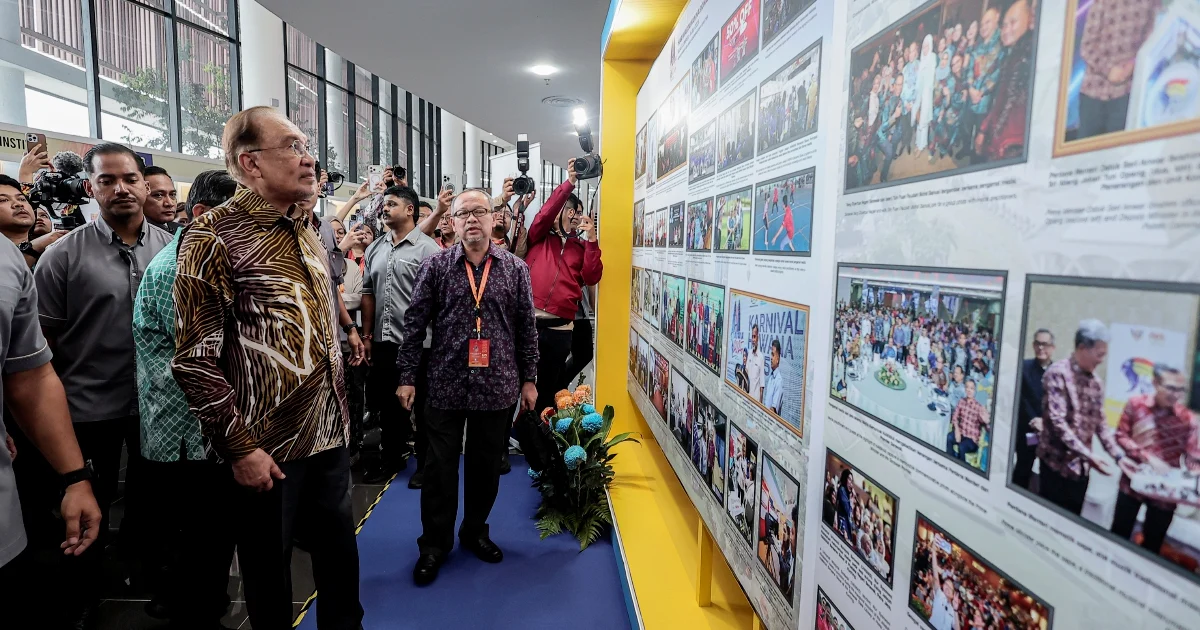
Prime Minister Datuk Seri Anwar Ibrahim has announced a RM1 million government allocation to Tabung Kasih@Hawana 2026, underscoring the administration's determination to strengthen support mechanisms for journalists while advancing the broader agenda of media industry transformation. Speaking at the initiative's launch in Permatang Pauh, Anwar emphasised that this investment reflects the government's ongoing commitment to creating a sustainable ecosystem for media practitioners operating across Malaysia.
The Tabung Kasih@Hawana 2026 initiative represents a structured welfare programme designed to address the financial vulnerabilities faced by journalists in an era of industry disruption. The scheme aims to provide financial assistance, educational support, and social protection to media professionals, acknowledging the sector's transition from traditional revenue models to digital platforms. By designating RM1 million specifically for this fund, the government signals recognition of journalism's critical role in democratic discourse and informed public debate, even as the industry grapples with declining advertising revenues and changing consumer behaviour.
Hawana 2026, the broader initiative encompassing this welfare fund, functions as a comprehensive framework for reimagining Malaysia's media landscape. The programme brings together stakeholders including government agencies, media organisations, professional bodies, and civil society to collaboratively chart a path forward for an industry under considerable pressure. The inclusion of journalist welfare as a central pillar demonstrates acknowledgment that sustainable media requires investing in the human capital that produces journalism, rather than solely focusing on technological or infrastructure upgrades.
For Malaysian newsrooms already contending with budget pressures and staffing constraints, the welfare fund offers tangible relief mechanisms. The allocation can support schemes providing health insurance, emergency financial assistance, professional development opportunities, and pension support—benefits that many independent and smaller news organisations struggle to provide their staff. This becomes increasingly significant as Malaysia's media landscape continues fragmenting, with journalists often moving between different employment arrangements, from full-time positions to freelance and gig-based work.
The Prime Minister's announcement carries broader implications for how Southeast Asia's governments approach media policy during digital transformation. While some regional governments have adopted adversarial stances toward independent journalism, Malaysia's decision to invest in journalist welfare suggests a different calculus—one recognising that a profession unable to sustain itself will eventually lose credibility and capability. This approach potentially creates space for more vibrant, independent reporting across the region, though implementation details will determine whether the fund meaningfully improves working conditions or serves primarily symbolic purposes.
Hawana 2026's emphasis on media industry transformation extends beyond welfare considerations to encompass digital capability-building, business model innovation, and audience engagement strategies. The government's involvement signals commitment to facilitating this transition rather than leaving it entirely to market forces. For Malaysian journalists and media organisations, this creates opportunities for training programmes, technology adoption support, and collaborative initiatives that individual newsrooms might struggle to fund independently. Such support proves particularly valuable for regional and community news operations that serve important watchdog functions but operate with minimal resources.
The announcement also reflects international trends toward recognising journalism as essential infrastructure requiring targeted policy support. In various democracies worldwide, governments have begun allocating resources to journalism sustainability—whether through tax incentives, direct funding mechanisms, or support for industry-wide initiatives. Malaysia's approach aligns with this global recognition that market forces alone have failed to sustain quality journalism capable of holding power to account and serving public information needs.
However, the effectiveness of such welfare initiatives ultimately depends on transparent governance and professional autonomy protections. Journalists must receive support without editorial interference or expectation of favourable coverage in return. The Tabung Kasih@Hawana 2026 programme's credibility will hinge on whether participating media organisations maintain independent editorial standards and whether government support translates into genuine improvements in journalists' working conditions rather than creating quid pro quo arrangements.
The RM1 million allocation, while meaningful, requires contextualisation within Malaysia's broader media landscape. Estimates suggest the country's journalism workforce spans several thousand professionals across multiple platforms and organisations. While the welfare fund cannot address all sector challenges, it establishes foundational support that smaller and independent operations particularly need. Combined with the broader Hawana 2026 framework, the government appears positioning Malaysia as a region willing to actively participate in media industry transformation rather than passively allowing further deterioration.
Moving forward, success metrics for this initiative will include measuring how extensively journalists access welfare support, whether professional development opportunities translate into improved coverage quality, and whether media organisations can sustain more stable employment arrangements. The government's continued engagement through Hawana 2026 will also prove essential—initial funding commitments often require consistent renewal and expansion to achieve meaningful systemic change. For Malaysian readers and media consumers, investments in journalist welfare ultimately serve self-interest by enabling professionals to invest time in thorough research, verification, and contextualised reporting rather than simply churning out content to meet survival needs.
%22%2F%3E%3C%2Fpattern%3E%3C%2Fdefs%3E%3Crect%20width%3D%22100%25%22%20height%3D%22100%25%22%20fill%3D%22url(%23ph1o3zeg)%22%2F%3E%3Crect%20width%3D%22100%25%22%20height%3D%22100%25%22%20fill%3D%22url(%23ph1o3zep)%22%2F%3E%3Ctext%20x%3D%2250%25%22%20y%3D%2250%25%22%20text-anchor%3D%22middle%22%20dominant-baseline%3D%22central%22%20fill%3D%22rgba(255%2C255%2C255%2C0.95)%22%20font-family%3D%22Georgia%2C%20'Times%20New%20Roman'%2C%20serif%22%20font-weight%3D%22700%22%20font-size%3D%22170%22%20letter-spacing%3D%22-0.02em%22%3ENational%3C%2Ftext%3E%3C%2Fsvg%3E)
%22%2F%3E%3C%2Fpattern%3E%3C%2Fdefs%3E%3Crect%20width%3D%22100%25%22%20height%3D%22100%25%22%20fill%3D%22url(%23ph4gh41g)%22%2F%3E%3Crect%20width%3D%22100%25%22%20height%3D%22100%25%22%20fill%3D%22url(%23ph4gh41p)%22%2F%3E%3Ctext%20x%3D%2250%25%22%20y%3D%2250%25%22%20text-anchor%3D%22middle%22%20dominant-baseline%3D%22central%22%20fill%3D%22rgba(255%2C255%2C255%2C0.95)%22%20font-family%3D%22Georgia%2C%20'Times%20New%20Roman'%2C%20serif%22%20font-weight%3D%22700%22%20font-size%3D%22170%22%20letter-spacing%3D%22-0.02em%22%3EMalaysia%3C%2Ftext%3E%3C%2Fsvg%3E)
%22%2F%3E%3C%2Fpattern%3E%3C%2Fdefs%3E%3Crect%20width%3D%22100%25%22%20height%3D%22100%25%22%20fill%3D%22url(%23ph4a2eeg)%22%2F%3E%3Crect%20width%3D%22100%25%22%20height%3D%22100%25%22%20fill%3D%22url(%23ph4a2eep)%22%2F%3E%3Ctext%20x%3D%2250%25%22%20y%3D%2250%25%22%20text-anchor%3D%22middle%22%20dominant-baseline%3D%22central%22%20fill%3D%22rgba(255%2C255%2C255%2C0.95)%22%20font-family%3D%22Georgia%2C%20'Times%20New%20Roman'%2C%20serif%22%20font-weight%3D%22700%22%20font-size%3D%22136%22%20letter-spacing%3D%22-0.02em%22%3EGovernment%3C%2Ftext%3E%3C%2Fsvg%3E)