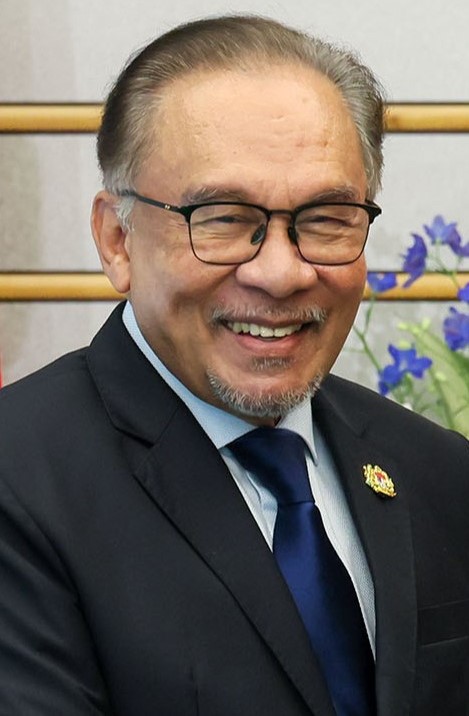
Prime Minister Datuk Seri Anwar Ibrahim is making a return trip to Johor today to oversee two community-focused events in Segamat, marking his second visit to the state within the span of just three days. The scheduling reflects the government's intensified campaign efforts in the lead-up to the forthcoming Johor state election, with the Prime Minister demonstrating a hands-on approach to voter engagement in the southern peninsula's most politically significant state.
Segamat, situated approximately 200 kilometres south of Johor Bahru, has become a focal point for the ruling coalition's outreach strategy. Anwar's presence in the district comes merely days after he unveiled the complete slate of Pakatan Harapan candidates for the state polls in Bukit Gambir, Tangkak on Monday. This concentrated deployment of prime ministerial attention underscores the coalition's determination to mobilize support across diverse constituencies as the election machinery accelerates toward polling day.
The centrepiece of today's itinerary is the officiation of the MADANI KITA programme at Dataran Segamat at 5 pm. This initiative, partnered with the area's Rukun Tetangga community associations, represents a deliberate shift toward grassroots engagement and neighbourhood-level politics. The programme framework aims to reinvigorate the traditional concept of close-knit community bonds while simultaneously establishing a direct channel through which the government can disseminate its policy objectives and development initiatives to ordinary citizens.
At its core, MADANI KITA functions as a platform designed to catalyse interfaith and interethnic harmony at the neighbourhood level, addressing one of Malaysia's enduring political imperatives. By conducting the launch through local KRT structures—established community organisations that cut across demographic lines—the government is attempting to position itself as a guardian of social cohesion and communal welfare. This strategy carries particular weight in Johor, where electoral dynamics have historically hinged on the ability of competing coalitions to demonstrate competence in managing diverse constituencies.
Following the formal launch, Anwar will participate in the "Jom! Makan Durian" community gathering at the Yayasan Bazaar site in Segamat at 6.30 pm. This event, deliberately pitched in a more relaxed and informal atmosphere than the preceding official ceremony, represents a calculated effort to humanize the political machinery and present the Prime Minister in accessible, non-partisan settings. The choice to centre the engagement around a quintessentially Malaysian culinary experience—durian consumption—signals an attempt to ground elite political communication within everyday cultural practices that resonate across communal and class boundaries.
These visits occur within a compressed electoral calendar that has concentrated the campaign period. The Election Commission has designated June 27 as nomination day, with early voting scheduled for July 7 and the general polling day fixed for July 11. This timeline leaves Pakatan Harapan approximately two weeks to consolidate its messaging and mobilize voter turnout across all 56 state seats. The abbreviated campaign window has necessitated more frequent prime ministerial interventions and a relentless schedule of public appearances.
The broader political context cannot be overlooked. Pakatan Harapan has committed to fielding a unified candidate roster across all contested seats, with the portfolio divided as follows: 20 candidates from Anwar's own party, PKR; 19 from Amanah; and 17 from DAP. This distribution reflects the coalition's internal power dynamics while attempting to present a unified front against opposition forces. The Segamat visits form part of a wider coordinated campaign to translate the announced candidacy into electoral victory.
For Malaysian observers and regional analysts tracking Southeast Asian political developments, these events illuminate the evolving nature of Malaysian electoral campaigns. The integration of community-level engagement programmes with high-level political messaging suggests an attempt to bridge the traditional gap between parliamentary politics and grassroots mobilization. Such strategies have become increasingly important as political parties compete for relevance in an environment where voter engagement has grown more fragmented and attention spans have shortened.
The MADANI KITA framework also carries symbolic weight within the broader political narrative that Pakatan Harapan has constructed since returning to government. The invocation of "MADANI"—a term referencing prosperity and flourishing derived from Islamic scholarly traditions—alongside "KITA" (meaning "we" or "us" in Malay) suggests an attempt to position the coalition's vision as simultaneously progressive, inclusive, and rooted in local cultural and religious values. This messaging seeks to occupy the political centre while defending against accusations that the ruling coalition has strayed from commitments to community welfare and social solidarity.
Segamat itself represents a microcosm of broader challenges facing Johor's political economy. The district encompasses both urban commercial centres and rural agricultural hinterlands, making it a barometer for measuring whether Pakatan Harapan's policy platforms resonate across the spectrum of socioeconomic circumstances that characterize contemporary Malaysian society. The two-event approach—one formal and one informal—suggests recognition that different voter segments respond to distinct communicative registers and venues.
As the Johor state election approaches its critical phase, the frequency and intensity of prime ministerial visits will likely increase further. The government's investment of Anwar's personal political capital in these district-level engagements reflects both confidence in the coalition's electoral prospects and recognition that margins in key constituencies remain competitive. Whether community-centred programmes such as MADANI KITA will translate into meaningful electoral dividends remains uncertain, but their proliferation indicates that Pakatan Harapan views such grassroots initiatives as central to its electoral strategy.