%22%2F%3E%3C%2Fpattern%3E%3C%2Fdefs%3E%3Crect%20width%3D%22100%25%22%20height%3D%22100%25%22%20fill%3D%22url(%23ph3t36hg)%22%2F%3E%3Crect%20width%3D%22100%25%22%20height%3D%22100%25%22%20fill%3D%22url(%23ph3t36hp)%22%2F%3E%3Ctext%20x%3D%2250%25%22%20y%3D%2250%25%22%20text-anchor%3D%22middle%22%20dominant-baseline%3D%22central%22%20fill%3D%22rgba(255%2C255%2C255%2C0.95)%22%20font-family%3D%22Georgia%2C%20'Times%20New%20Roman'%2C%20serif%22%20font-weight%3D%22700%22%20font-size%3D%22320%22%20letter-spacing%3D%22-0.02em%22%3EPM%3C%2Ftext%3E%3C%2Fsvg%3E)
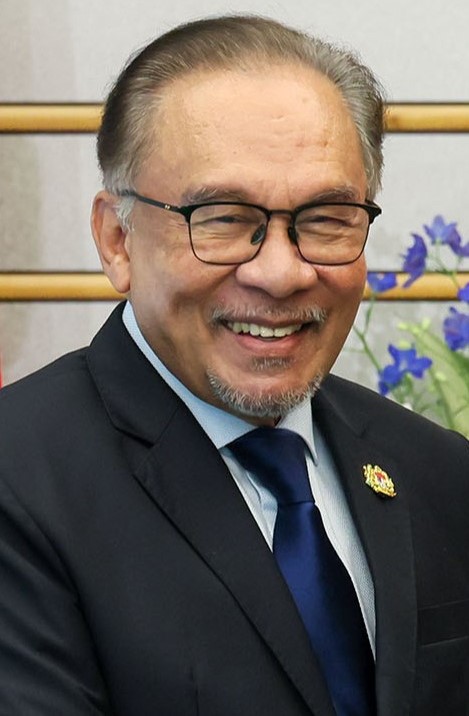
Prime Minister Datuk Seri Anwar Ibrahim has issued a firm call for the upcoming Johor state election to remain a purely political contest, emphasizing that the royal institution must be kept separate from electoral activities. Speaking in Tangkak on June 23, Anwar stressed the importance of understanding and respecting institutional boundaries, signalling a cautious approach to an election that carries significance for both the state and the broader political landscape of Malaysia.
The Prime Minister's intervention comes at a delicate moment in Malaysian politics, where questions about the proper role of constitutional monarchies in electoral processes remain a subject of ongoing constitutional interpretation. By explicitly stating that all stakeholders should "know our limits," Anwar appears to be addressing concerns that the royal institution could become entangled in campaign messaging or be used to influence electoral outcomes. This represents a broader commitment to constitutional propriety that resonates with democratic principles Malaysia continues to navigate.
Johor holds particular significance within the Malaysian federation, both as one of the most populous states and as a traditional stronghold with deep historical connections to the monarchy. The timing of Anwar's statement suggests awareness that Johor elections have historically attracted considerable national attention, with implications extending beyond state-level governance. His emphasis on institutional separation reflects an understanding that maintaining clear boundaries between the monarchy and electoral politics strengthens rather than weakens the constitutional order.
The context of Anwar's remarks becomes clearer when considering Malaysia's constitutional framework, which vests considerable ceremonial and symbolic authority in the states' respective rulers while limiting their direct political involvement in day-to-day governance. The tension between respect for the institution and the imperatives of democratic competition has occasionally surfaced during previous elections, prompting continued reminders about appropriate conduct from political leaders. Anwar's statement serves as a public reinforcement of these norms.
For political parties contesting the Johor election, the Prime Minister's message carries implicit guidance about campaign conduct. Parties must navigate their appeals to voters while ensuring that campaign rhetoric and activities do not inappropriately invoke royal endorsement or suggest that the institution aligns with particular political outcomes. This distinction, while subtle, bears substantial implications for how campaigns unfold and how voters perceive the relationship between political competition and constitutional institutions.
The emphasis on institutional boundaries also reflects growing international scrutiny of how democracies manage relations between hereditary institutions and electoral processes. Malaysia, as a constitutional monarchy with a unique system of rotating royal headship, maintains distinct arrangements that require careful stewardship. Anwar's intervention demonstrates government recognition that public statements from senior political leaders can set important expectations about how institutions will be treated during competitive periods.
For Johor specifically, the election represents an opportunity to demonstrate that Malaysia's political system can accommodate vigorous electoral competition without destabilizing constitutional relationships. The state has experienced changes in political fortunes over recent years, and the upcoming contest will reflect broader shifts in voter sentiment and political coalition dynamics. Keeping the royal institution properly separated from this competition allows the election to function as a genuine expression of democratic choice rather than a contest inflected by institutional considerations.
Anwar's statement also carries implications for how federal-level governance relates to state elections in Malaysia. As Prime Minister, his comments carry considerable weight in signalling government expectations about propriety and constitutional conduct. By placing emphasis on respecting limits rather than encouraging particular outcomes, he positions the federal government as a guardian of constitutional norms rather than as a partisan actor in state-level contests. This approach contrasts with historical periods when federal authorities sometimes became more overtly involved in state electoral processes.
The broader message about institutional consciousness extends to opposition parties as well. By establishing clear expectations about respecting boundaries, Anwar creates a standard that applies across the political spectrum. Parties seeking to challenge government candidates in Johor cannot claim that their opponents have unfair access to royal endorsement if all participants operate within the same constraints about institutional separation. This creates a more level playing field than scenarios where some actors might attempt to leverage institutional relationships for electoral advantage.
For Malaysian voters in Johor, the Prime Minister's statement provides assurance that the upcoming election will be decided on conventional political grounds—the performance records of candidates, policy platforms, and the track records of competing parties. Rather than being influenced by signals about royal preferences or involvement, voters can focus on substantive considerations that define democratic choice. This clarity strengthens the legitimacy of electoral outcomes by ensuring they reflect genuine popular preferences.
Looking forward, Anwar's intervention establishes a precedent that may prove valuable for future elections across Malaysian states. By publicly emphasizing the importance of institutional boundaries during the Johor campaign, he creates expectations that other political leaders and parties will respect similar standards. This norm-setting function represents an important contribution to Malaysia's ongoing development as a stable constitutional democracy that respects both the institution of the monarchy and the imperatives of electoral competition.
The statement ultimately reflects a sophisticated understanding of how constitutional systems function most effectively. Strong institutions, including the monarchy, depend partly on their ability to remain above partisan competition. Conversely, democratic elections require freedom from external institutional pressure or predetermined outcomes. By calling for clear separation between these spheres during the Johor election, Anwar articulates a vision of Malaysian constitutionalism where both elements—respect for royal institutions and genuine democratic choice—can coexist.