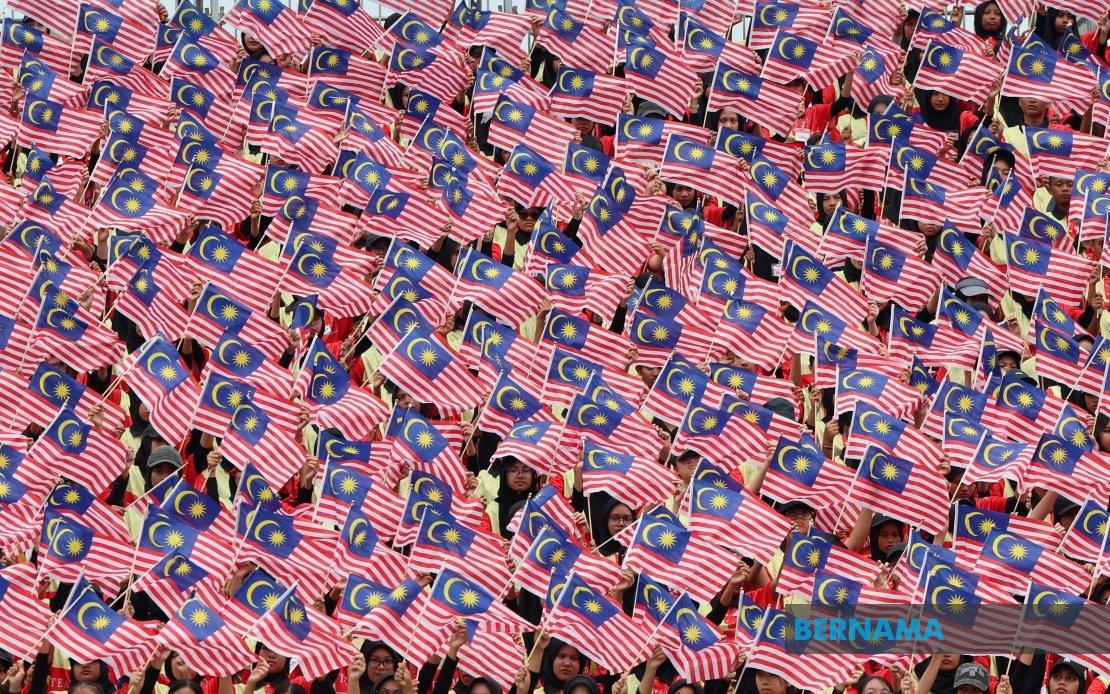
Prime Minister Datuk Seri Anwar Ibrahim will officiate the launch of the 2026 National Month and Fly the Jalur Gemilang Campaign on July 19 at the Sultan Azlan Shah Institute of Health Training (ILKKM SAS) in Tanjung Rambutan, Ipoh. The event, held to mark the nation's preparations for National Day and Malaysia Day 2026, is anticipated to attract approximately 3,000 participants from various segments of society, including members of the MADANI Community, trainees, and institute staff.
According to Anita Amri, Principal Assistant Secretary of the Perak State Government Corporate Division, the gathering represents a significant milestone in the official countdown to Malaysia's dual celebrations next year. The choice of Ipoh as the launch venue underscores the government's commitment to engaging communities across the nation's regions, rather than concentrating such initiatives solely in the federal capital. This decentralised approach reflects the broader MADANI philosophy of inclusive national participation and shared ownership of patriotic endeavours.
While the ceremony itself will be restricted to registered attendees due to venue capacity constraints, state authorities have ensured widespread accessibility through multiple broadcast platforms. The live transmission will be available across Radio Televisyen Malaysia (RTM) and Malaysian National News Agency (Bernama) television channels, supplemented by the official Facebook accounts maintained by the Ministry of Communications and the Department of Information Malaysia (JAPEN). This multi-platform strategy acknowledges that meaningful participation in national celebrations extends beyond physical presence, enabling Malaysians nationwide to witness and engage with the proceedings remotely.
Central to the campaign is the "1 Rumah 1 Jalur Gemilang" initiative, designed to encourage household-level display of the national flag as a tangible expression of patriotic commitment. Anita emphasised that patriotism transcends symbolic gestures, instead functioning as a unifying force that binds communities together through shared values and collective pride. The campaign explicitly calls upon citizens to treat the Jalur Gemilang with appropriate reverence, stipulating that flags must be maintained in pristine condition and discouraging the display of worn, faded, or damaged banners that might diminish the dignity of the national symbol.
The emphasis on flag maintenance reflects a broader philosophy about how nations express their self-respect and standing. When citizens display their national colours in good condition, they signal to both domestic and international audiences that the nation takes its own symbols and values seriously. Conversely, allowing national flags to deteriorate sends unintended messages about civic indifference or institutional neglect. By framing flag maintenance as a personal responsibility rather than merely an official directive, authorities have attempted to reframe patriotism as a grassroots commitment rather than a top-down mandate.
Anita further encouraged citizens to leverage personal networks and social media platforms as mechanisms for amplifying the patriotic message. By encouraging family members, friends, and neighbours to participate in flag-flying activities, the campaign seeks to create concentric circles of engagement radiating outward from individual households. This peer-to-peer approach recognises that social influence often operates most powerfully within trusted personal relationships rather than through government announcements alone. Digital sharing amplifies this effect, enabling individual expressions of patriotism to reach exponentially wider audiences and potentially inspire similar commitments among distant communities.
The thematic framework underpinning the 2026 celebrations has been titled "Malaysia MADANI: Kesejahteraan Dinikmati" (Malaysia MADANI: Shared Prosperity), according to Communications Minister Datuk Seri Fahmi Fadzil. This title encapsulates the administration's policy orientation toward equitable development and inclusive growth. The Malaysia MADANI branding, having been introduced in recent years as the government's overarching narrative framework, will continue as the official logo for celebrations through 2026. This continuity provides thematic coherence across multiple years of national commemoration, allowing the government to build cumulative momentum around its development philosophy rather than reinventing messaging annually.
The actual National Day celebrations scheduled for August 31, 2026, will take place at Dataran Putrajaya on a notably modest scale compared to some previous years. This deliberate scaling-back represents a shift in approach toward celebrating national occasions with restraint and fiscal responsibility. Rather than interpreting diminished pageantry as reduced significance, officials have characterised the streamlined celebrations as maintaining a lively atmosphere whilst exercising budgetary prudence. For Malaysia and other developing nations grappling with competing fiscal priorities, this recalibration of ceremonial expenditure signals that patriotic commitment need not require lavish public spending.
The establishment of the Merdeka360 Portal as a centralised information repository addresses a practical challenge in coordinating dispersed celebrations across a geographically fragmented nation. By consolidating various details, schedules, and promotional materials on a single official platform, the Ministry of Communications and JAPEN have created a one-stop resource for citizens seeking accurate information about the 2026 commemorations. This digital infrastructure proves particularly valuable in Malaysia's context, where misinformation and fragmented official messaging can undermine public understanding of government initiatives. A unified portal enhances transparency whilst reducing confusion arising from contradictory information across multiple sources.
For Malaysian readers, these preparations underscore how national identity continues to be actively constructed and reinforced through coordinated government campaigns and public participation. The campaign's emphasis on decentralised participation, household-level engagement, and peer-to-peer messaging reflects evolving understandings of patriotism as a collective endeavour rather than a state monopoly. As Malaysia approaches 2026, the government is essentially inviting citizens to become custodians and propagators of national pride within their immediate spheres, transforming abstract notions of patriotism into concrete household practices that accumulate into a visible national expression across the country.
The broader implication for Southeast Asia lies in how established democracies manage national commemoration during periods of political transition and evolving citizen engagement. Malaysia's approach of scaling back ceremonial expenditure whilst increasing grassroots participation opportunities may offer instructive models for regional counterparts seeking to balance patriotic expression with fiscal responsibility. By framing the Jalur Gemilang campaign as a shared responsibility rather than a government mandate, Malaysian authorities have attempted to sidestep the perception that flag-flying represents coerced patriotism, instead positioning it as voluntary individual expression.

