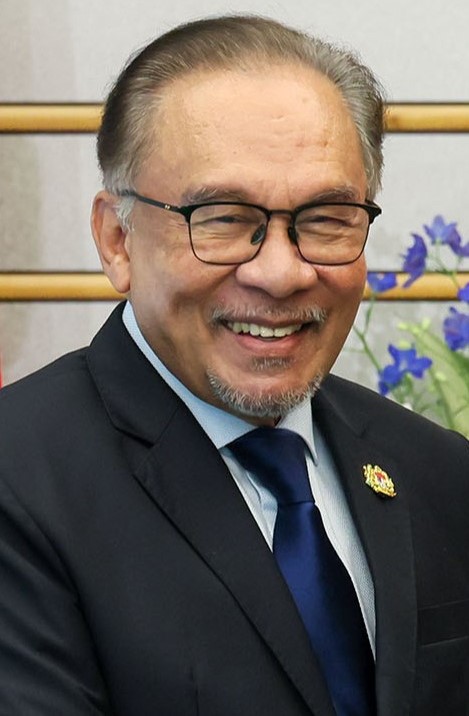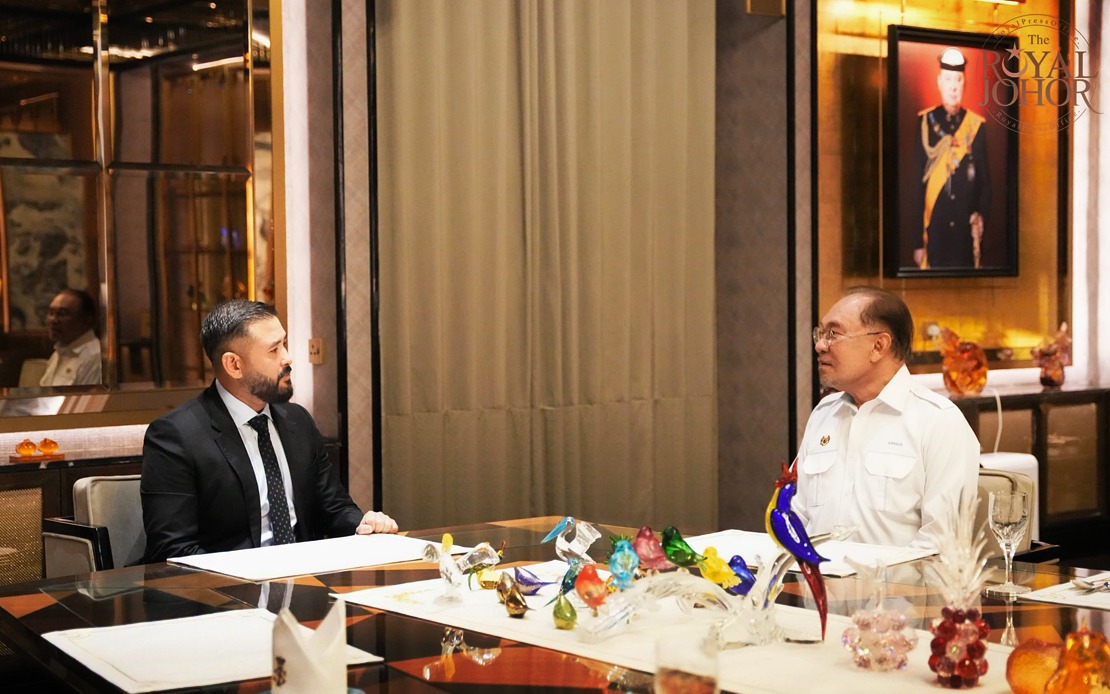
Prime Minister Datuk Seri Anwar Ibrahim has expressed his appreciation to the Regent of Johor, Tunku Mahkota Ismail, for extending a gesture of friendship during their recent meeting in Kuala Lumpur. The audience between the two leaders has become the focus of Anwar's remarks on maintaining appropriate boundaries between the monarchy and electoral politics, particularly as Pakatan Harapan announced its candidates for the 16th Johor state election at an event in Tangkak on June 22.
Speaking at the Padang Bukit Gambir Extreme Park, Anwar seized the opportunity to send a broader message to the nation's political establishment. He critiqued what he characterised as shallow and unprincipled campaign tactics, noting that certain political actors resort to invoking the names of the King and royal rulers without genuine foundation or respect for the institution's constitutional role. His comments represent a subtle but pointed rebuke of opposition strategies that may attempt to leverage monarchical authority or sentiment for partisan gain.
The Prime Minister articulated a philosophical position on the relationship between elected government and the constitutional monarchy. He stressed that Pakatan Harapan, as the party leading the federal government, remains committed to cultivating robust relations with Malaysia's royal households and views the solicitation and consideration of their counsel as integral to good governance. This stance reflects a carefully calibrated approach designed to demonstrate respect for constitutional conventions whilst simultaneously asserting the government's legitimacy and independence in policymaking.
During his engagement with Tunku Mahkota Ismail, Anwar utilised the occasion to brief the Johor Regent on federal development initiatives and policy achievements benefiting Johor's residents. Such consultations underscore a practice whereby senior government officials maintain ongoing dialogue with state rulers, a mechanism embedded in Malaysia's constitutional framework. The discussion of tangible projects and their implementation signals to Johor's population that the federal government remains attentive to local concerns and amenable to royal input on regional matters.
Anwar's broader reflections on his interactions with Malaysia's various sultans reveal a governing philosophy predicated on respectful engagement across ideological and administrative divides. He described a pattern wherein the government maintains open channels with the Sultan of Johor, His Majesty Sultan Ibrahim, King of Malaysia, and other state rulers, characterised by the free exchange of perspectives, occasional disagreement, and a commitment to hearing counsel even when positions diverge. This framing domesticates constitutional tension, presenting disagreement between elected government and monarchy as a normal feature of consultative governance rather than institutional conflict.
The presence of senior Pakatan Harapan figures—including DAP secretary-general Anthony Loke Siew Fook and Amanah president Datuk Seri Mohamad Sabu—at the candidate announcement event underscores the coalition's investment in the Johor state election as a significant electoral contest. The timing and location of Anwar's comments, delivered during this high-profile gathering, ensured that his message regarding the proper treatment of royal institutions would resonate within PH's organisational machinery and reach the broader electorate.
For Malaysian readers navigating the country's complex constitutional landscape, Anwar's remarks carry particular significance. Malaysia's system vests substantial formal authority in the monarchy, particularly at state level through rulers' assent to legislation and formal gubernatorial functions. The tension between electoral competition and respect for royal prerogative has periodically surfaced in Malaysian politics, generating concern among constitutionalists and senior figures who fear that partisan polarisation might erode the monarchy's standing as a unifying national institution. Anwar's intervention positions his government as the custodian of constitutional propriety in this regard.
The underlying context involves the competitive dynamics within Johor state politics and the broader national electoral landscape. Johor, as Malaysia's second-largest state and historically significant as a Barisan Nasional stronghold, represents contested electoral terrain where Pakatan Harapan seeks to consolidate and expand support. The state's ruler, as a major institutional player in state governance, commands significant cultural authority and constitutional influence. By publicly acknowledging his deference to the Regent and positioning this relationship as harmonious, Anwar attempts to neutralise any narrative suggesting government disrespect for royal authority—a particularly potent concern in Johor given the sultanate's prominence.
From a Southeast Asian perspective, Anwar's emphasis on consultative governance with constitutional monarchies reflects regional patterns observable across Thailand, Cambodia, and the broader Indochinese realm, where elected governments navigate complex relationships with royal institutions. Malaysia's particular variant involves a decentralised monarchy with substantial state-level authority, requiring elected federal governments to cultivate multiple royal relationships simultaneously. This dimension of Anwar's commentary illuminates how Malaysian leaders manage federalism's complexities by maintaining distinct but coordinated engagement with various sultans.
The distinction Anwar draws between legitimate consultation and illegitimate politicisation of the monarchy carries implications for electoral discourse standards and constitutional culture. By framing opposition tactics as debasing the royal institution through careless invocation of monarchical authority, he elevates the conversation beyond mere partisan advantage to questions of institutional integrity and national unity. This rhetorical move attempts to occupy the constitutional high ground, positioning Pakatan Harapan as the responsible steward of Malaysia's governmental conventions.
Looking forward, the Johor state election will test whether Anwar's message regarding respectful engagement with royal authority resonates with voters and shapes campaign conduct. The explicit articulation of government commitment to consulting rulers and accepting their counsel—whilst maintaining governmental independence—establishes a template for civil-military and elected-hereditary relations that could influence broader regional governance patterns. For constituencies concerned about democratic accountability and constitutional balance, Anwar's framework offers a model emphasising both respect for tradition and legitimate electoral competition.