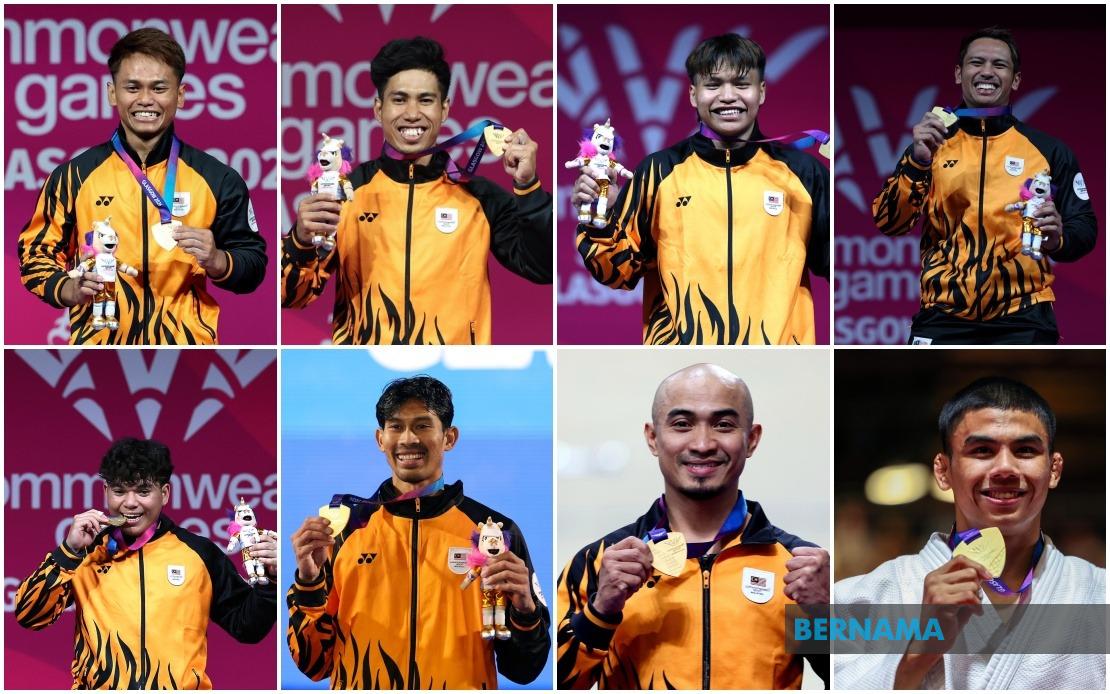
Prime Minister Datuk Seri Anwar Ibrahim has publicly commended Malaysia's entire sports delegation for their unwavering commitment and impressive displays during the 2026 Glasgow Commonwealth Games, marking a significant moment of national pride in the Commonwealth sporting calendar. Through a social media statement released this evening, the premier acknowledged the collective effort that brought the Malaysian contingent to a respectable tenth-place finish on the medals table with a combined haul of 16 medals across various disciplines.
The prime minister's recognition extended beyond the athletes themselves, encompassing the multifaceted support system that enabled their participation. He specifically acknowledged the coaching staff, administrative personnel, and auxiliary workers whose behind-the-scenes contributions proved instrumental in preparing and sustaining the team throughout the competition in Scotland. This inclusive acknowledgment reflects the modern understanding that sporting success relies not merely on individual talent but on a coordinated ecosystem of professionals working in tandem toward shared objectives.
Anwar's commendation also highlighted the spiritual and emotional sustenance provided by the Malaysian public, recognising the prayers and well-wishes offered by citizens back home. This framing situates the Glasgow campaign within a broader narrative of collective national endeavour, where public support functions as an intangible yet meaningful resource. The emphasis on public prayers underscores Malaysia's cultural values while simultaneously reinforcing the idea that athletes represent something beyond themselves—they embody aspirations held across the entire nation.
Malaysia's tenth-place standing at the Glasgow Commonwealth Games represents a noteworthy achievement within the context of a multi-sport international competition featuring dozens of nations. The 16-medal tally, comprising various colours across different sporting disciplines, demonstrates the breadth of Malaysian excellence across athletics, aquatics, badminton, and other established Commonwealth sporting traditions. For Malaysian sports administration and development programmes, this outcome provides both affirmation of existing strategies and benchmarks against which future Games performances can be measured.
The Commonwealth Games remain among the most significant multi-sport events on the global calendar, second only to the Olympic Games in scope and prestige. For emerging and developing sporting nations like Malaysia, these competitions offer crucial platforms for talent exposure, international ranking advancement, and the building of momentum toward Olympic qualification. The Glasgow Games, held at a time when many athletes are refocusing efforts toward the 2028 Los Angeles Olympics, carry particular strategic importance for Malaysian sports planning.
Malaysia's consistent participation in Commonwealth Games reflects the nation's deep historical ties to the Commonwealth community, dating back to its independence in 1957. The Games have served as regular showcases for Malaysian sporting talent across generations, fostering rivalry and mutual respect with other Commonwealth nations while maintaining the competitive spirit that defines elite sports. The Glasgow campaign continues this tradition of meaningful engagement with a sporting family that spans multiple continents and cultures.
From a regional perspective, Malaysia's performance at Glasgow carries implications for Southeast Asian sports standing within broader Commonwealth rankings. Malaysia typically ranks among the region's leading performers at these Games, competing directly with Australia and New Zealand for medal supremacy. The tenth-place finish provides context for understanding Malaysia's competitive position relative to other Asian Commonwealth nations such as India and Singapore, and offers insights into emerging sporting nations challenging traditional powerhouses.
The prime minister's timely acknowledgment serves a practical governmental function beyond ceremonial gesture. Public recognition of sporting achievement helps sustain long-term investment in grassroots development, elite training facilities, and athlete support systems. When political leadership visibly celebrates sporting success, it reinforces the priority accorded to athletics within national developmental agendas and strengthens public enthusiasm for future campaigns. This psychological and institutional support proves crucial for maintaining athlete motivation and retaining coaching talent within Malaysia's sporting infrastructure.
Looking forward, the Glasgow performance establishes baseline expectations and momentum-building blocks for upcoming international competitions. The identified strengths evident in the medal-winning disciplines will likely inform resource allocation decisions for the next competitive cycle, while unexpected underperformances will prompt review of training methodologies and talent identification processes. Coaching staff will leverage Glasgow data to refine preparation strategies and identify emerging athletes capable of delivering higher medal counts in subsequent Games.
The statement also implicitly acknowledges the financial investments and bureaucratic coordination required to support international sporting delegations. Transporting, housing, and sustaining a contingent in a foreign location demands significant governmental and sporting organisation resources. By publicly recognising these efforts, Anwar validates the expenditure while signalling that such investments remain justified and worthwhile, provided they yield creditable international performances.
Malaysia's Commonwealth Games legacy extends beyond medals and rankings into the inspirational impact athletes exert on younger generations. When a prime minister publicly celebrates sporting achievement, particularly through accessible social media channels, that message reaches beyond traditional sports communities into schools, universities, and youth organisations nationwide. Young Malaysians witness their national leaders valuing athletic pursuits, potentially influencing their own sporting aspirations and career choices in coming years.

