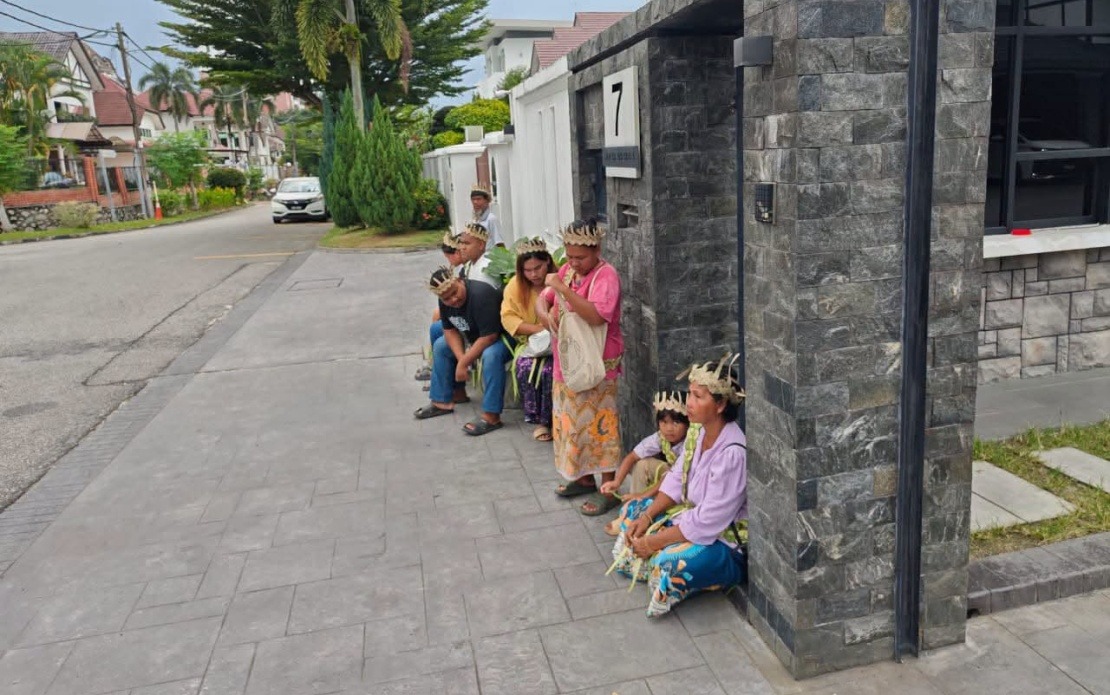
Prime Minister Datuk Seri Anwar Ibrahim has committed to raising the longstanding land dispute affecting the Orang Asli community of Kampung Sungai Cot in Maran, Pahang directly with the state government. The pledge came after Anwar engaged in telephone conversations with representatives from the indigenous settlement who had visited his residence on the afternoon of July 17.
The matter touches on a sensitive issue that has long plagued Malaysia's indigenous populations—the struggle to secure legal recognition and protection of traditional territorial claims. For the Orang Asli community in Kampung Sungai Cot, the land dispute represents not merely a property disagreement but a fundamental question of cultural preservation and livelihood security. The Prime Minister's direct intervention signals an acknowledgement that the issue warrants attention at the highest levels of government, potentially opening pathways toward resolution that transcend local bureaucratic constraints.
During his conversations with the community representatives, Anwar learned of multiple grievances weighing on the village. Beyond the core land dispute itself, three residents had faced detention by police, a development that compounded tensions within the settlement. The Prime Minister subsequently noted with relief that those who had been detained were subsequently released by authorities, suggesting some degree of responsiveness to his enquiries or broader pressure on the matter. However, the fact that detentions occurred at all underscores the adversarial nature of the conflict and the vulnerability of indigenous communities when disputes escalate.
The Orang Asli have historically occupied a precarious position within Malaysia's federal framework, despite constitutional acknowledgement of their special status. Land remains their most contested asset, with numerous communities facing overlapping claims from government agencies, private developers, and external parties. Kampung Sungai Cot's experience reflects this broader pattern. The community's decision to take their grievances to the Prime Minister's office indicates exhaustion with existing channels and a calculated gamble that executive intervention might unlock progress where lower administrative levels have stalled.
Anwar's public commitment to engaging Pahang's state government carries both symbolic and practical weight. While federal authority supersedes state jurisdiction on certain matters, land administration in Malaysia remains primarily a state responsibility under the Federal Constitution. This structural reality means that meaningful progress requires genuine cooperation between federal and state authorities. By announcing his intention to raise the matter, Anwar has created a measure of public accountability that may pressure Pahang officials to engage constructively rather than deflect or delay.
The Prime Minister further counselled all stakeholders against weaponising the issue for political advantage or public manipulation. This caveat appears directed at multiple audiences—potentially cautioning the community against inflammatory rhetoric, state officials against defensive posturing, and wider political actors against opportunistic intervention. Indigenous land disputes, particularly in states with competitive electoral dynamics, can become flashpoints for partisan manoeuvrings that obscure genuine resolution efforts. Anwar's admonition for a fair, legally grounded solution reflects an administrative preference for depoliticised problem-solving, though whether such neutrality can be maintained remains uncertain.
The timing of this intervention occurs within broader shifts in how Malaysian leadership addresses indigenous affairs. Recent years have witnessed increased visibility for Orang Asli concerns, partly through advocacy amplified by civil society organisations and partly through electoral calculations recognising indigenous voting blocs. The Prime Minister's relatively prompt engagement with Kampung Sungai Cot's representatives aligns with this trajectory, though it remains to be seen whether responsiveness translates into substantive outcomes for communities facing entrenched disputes.
For Malaysian observers, the case illuminates persistent tensions between formal legal frameworks and ground realities affecting marginalised populations. The Orang Asli possess constitutional protections theoretically safeguarding their rights, yet enforcement mechanisms remain weak and political will inconsistent. A successful resolution in Kampung Sungai Cot could establish precedent-setting approaches applicable across other disputed territories, potentially benefiting numerous communities navigating similar struggles. Conversely, failure to achieve breakthrough would reinforce perceptions of indigenous grievances as perpetually deferred or ignored.
The involvement of three detained residents adds a law-and-order dimension complicating the narrative. Land disputes occasionally escalate toward confrontation or trespass allegations when communities attempt physically to assert claims. Police interventions risk characterising indigenous land activism as criminal conduct rather than rights assertion, a framing that fundamentally undermines resolution prospects. The fact that detainees were released suggests possible recognition of their actions as civil rather than criminal matters, though clarification of the charges and circumstances remains absent from public statements.
As Anwar engages Pahang authorities, several procedural questions will likely emerge: what legal mechanisms exist for reviewing historical land allocations affecting Kampung Sungai Cot; whether compensation remains viable if land cannot be returned; and how compensation is calculated respecting both economic valuation and cultural significance. These technical matters require sustained engagement from multiple government agencies possessing overlapping responsibilities, from land offices to legal departments to ministers overseeing indigenous affairs. Success requires coordination seldom demonstrated in Malaysian bureaucracies.
The resolution pathway Anwar envisions—one characterised as fair, prudent, and lawful—implicitly acknowledges existing injustices while prioritising legal propriety over revolutionary redistribution. This moderate framing may satisfy administrative requirements but requires demonstrating tangible benefits to communities that have endured prolonged displacement or uncertainty. The weeks and months ahead will reveal whether Pahang's state government matches the federal leadership's apparent commitment to meaningful dialogue or whether entrenched positions prevent substantive movement.

