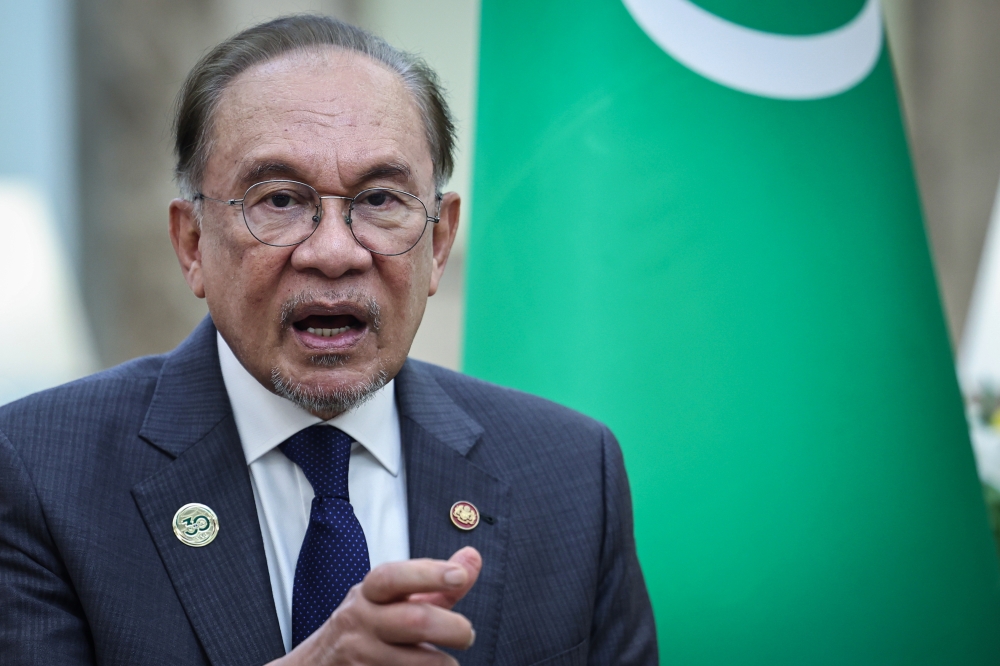
Prime Minister Datuk Seri Anwar Ibrahim has expressed profound grief over the passing of John L. Esposito, one of the world's most influential scholars of Islam and Muslim-majority societies. The Georgetown University professor, whose work shaped global perceptions of Islamic civilisation for more than four decades, represents a figure whose intellectual contributions have resonated deeply within policy circles across the Muslim world, including Malaysia.
Esposito's scholarly legacy extends far beyond academic circles. Through his prolific writing and institutional leadership, particularly as founding director of the Georgetown University Center for Muslim-Christian Understanding, he championed a vision of interfaith engagement grounded in rigorous scholarship rather than polemics. For many in the Muslim world grappling with how to articulate their faith's values to Western audiences during periods of heightened geopolitical tension, Esposito's work provided intellectual scaffolding and diplomatic language that neither diluted Islamic teachings nor perpetuated distorting stereotypes.
The timing of Anwar's tribute carries particular significance given Malaysia's positioning within regional and global Muslim discourse. As a moderate Muslim-majority democracy navigating complex relationships with Western nations whilst maintaining Islamic principles, Malaysia has long benefited from scholars like Esposito who demonstrate that robust Islamic identity and constructive engagement with the broader international community are compatible rather than contradictory positions. Esposito's frameworks have informed countless policy discussions in Muslim-majority countries attempting to articulate their interests without resorting to confrontational rhetoric.
Esposito's academic credentials were formidable. He authored, co-authored, and edited more than fifty books on Islamic civilisation, law, politics, and contemporary Muslim movements. His work on political Islam was particularly influential, offering nuanced analysis that rejected simplistic binaries between "moderate" and "radical" Islam whilst acknowledging genuine theological and strategic differences within Muslim communities. For Malaysian policymakers and intellectuals, such scholarship provided invaluable reference points when developing national approaches to religious pluralism and democratic governance.
Beyond textbooks and academic papers, Esposito functioned as a crucial bridge-builder in moments of acute international tension. During periods when anti-Muslim sentiment surged in Western countries, his clear voice articulating Islamic history and contemporary Muslim aspirations provided counterweight to inflammatory rhetoric. He was frequently consulted by Western governments seeking to understand Muslim perspectives, and simultaneously respected within Muslim-majority nations for his intellectual honesty and refusal to subordinate scholarly integrity to political expediency.
The Georgetown University Center he founded became an institution committed to advancing serious scholarship on Muslim societies whilst fostering genuine dialogue across religious and civilizational boundaries. This model of interfaith engagement—rooted in historical understanding and mutual respect rather than superficial platitudes—has influenced how numerous universities and research institutions structure their own religious studies programmes. Malaysian universities and think-tanks have drawn inspiration from similar approaches to developing Islamic studies curricula that engage seriously with both Islamic tradition and contemporary global realities.
Anwar's recognition of Esposito as "a true friend to the Muslim world" reflects understanding that genuine friendship means offering honest intellectual partnership rather than uncritical validation. Esposito never shied from critiquing problematic practices within Muslim-majority countries, nor did he hesitate to challenge Western policymakers on their inconsistencies regarding religious freedom and minority rights. This balanced approach—simultaneously critical and sympathetic—defined his scholarly integrity and enhanced his credibility across ideological divides.
The scholar's passing arrives at a moment when such bridge-building voices are arguably in shorter supply. Contemporary geopolitical polarisation, intensified religious polarisation within Muslim communities themselves, and the proliferation of social media echo chambers have made reasoned interfaith dialogue increasingly difficult. Esposito's career demonstrated that sustained intellectual engagement, patient explanation, and commitment to historical accuracy could move the needle on how major civilisations understood one another.
For Malaysia specifically, Esposito's work has provided intellectual resources for articulating the nation's model of Islamic governance and interfaith coexistence to international audiences. As Malaysia seeks to position itself as a voice for moderate Islam within global forums, the intellectual foundations Esposito helped construct remain relevant. His scholarship offers templates for how Muslim-majority democracies can authentically express Islamic values whilst respecting religious pluralism and maintaining democratic institutions.
The loss of such scholars is particularly acute because their authority derives not from political position but from decades of credible scholarship and consistent engagement with diverse audiences. Replacing such intellectual figures requires cultivating new generations of scholars equally committed to rigorous analysis, intercultural understanding, and the uncomfortable work of explaining nuance in an age of slogans. Anwar's tribute implicitly acknowledges that Esposito's passing removes a significant voice from contemporary debates about Islam, democracy, and global coexistence—conversations in which Malaysia has genuine interests and contributions to make.

