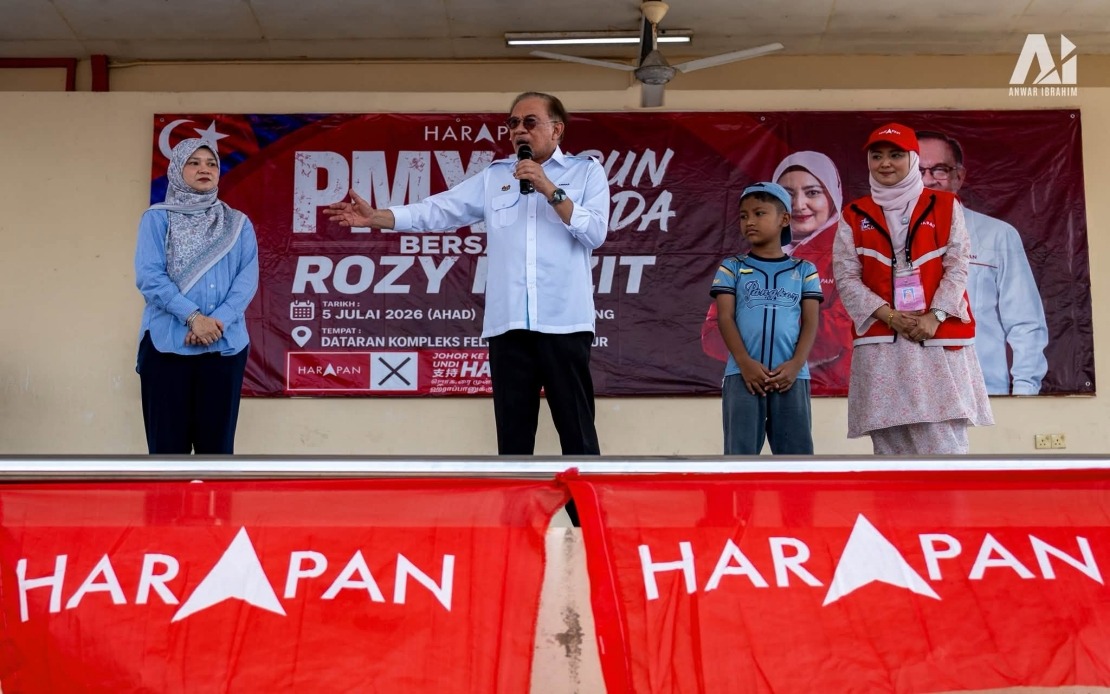
Prime Minister Datuk Seri Anwar Ibrahim has recounted a touching encounter with nine-year-old Muhammad Afif Ikhwan that left a lasting impression on him during a recent visit to Felda Palong Timur in Segamat, Johor. The boy's determination to see the nation's leader, despite the challenging circumstances, prompted Anwar to reflect on the importance of human connection even amid the demands of high office. The incident underscores how personal moments can resonate deeply with Malaysia's top political leader, revealing a softer side to his public persona.
The child's journey to the event was itself remarkable. His grandmother, 58-year-old Rosimah Mohammad from Kampung Pudu in Segamat, made the decision to ride a motorcycle through the tracks of an oil palm plantation to give her grandson the opportunity to see Anwar in person. This extraordinary effort by an elderly woman navigating difficult terrain illustrates the lengths family members will go to fulfill the dreams of younger generations, a sentiment that clearly resonated with the Prime Minister when he learned the full story.
During the Felda Palong Timur programme, the boy managed to push through the crowd and extend his hand toward Anwar, who reciprocated the gesture by shaking his hand before bringing him onto the stage. What might have been a fleeting moment in an otherwise busy public schedule became something far more significant to everyone involved. The simplicity of the interaction—a handshake and brief stage appearance—belied its emotional weight and the genuine joy it brought to the young boy.
Reflecting on the encounter in a Facebook post, Anwar emphasized that the apparent simplicity of a child's wish masked its true magnitude. He acknowledged that Rosimah's willingness to undertake such a challenging journey through plantation terrain demonstrated the power of a grandson's dream and a grandmother's devotion. For Anwar, this moment served as a poignant reminder that even modest aspirations can profoundly move those around us and inspire acts of remarkable dedication.
The Prime Minister used the incident as a platform to articulate a broader philosophy about governance and leadership. Regardless of how consumed political leaders become with managing national affairs and addressing complex challenges, Anwar suggested, they must maintain their capacity for empathy and their commitment to recognizing the humanity in ordinary citizens. In Malaysia's context, where the relationship between government and rural constituents remains crucial, such gestures hold particular significance.
Anwar's decision to follow up on the encounter demonstrated his commitment to converting sentiment into action. He arranged for an associate to visit Muhammad Afif and presented the boy with a bicycle, transforming a chance meeting into a tangible gesture of goodwill. This follow-through suggests that the Prime Minister does not view such interactions as mere public relations opportunities but as genuine human connections worthy of sustained attention.
The story also reflects broader themes relevant to Malaysian society, particularly regarding rural communities and the role of public figures in their lives. Felda settlements like Palong Timur represent a specific demographic and economic sector that has historically been central to Malaysia's development narrative. When a nine-year-old from such a community expends effort to see the Prime Minister, it speaks to the lingering respect for national leadership in these areas, even as the country navigates contemporary political divisions.
For Muhammad Afif, the experience represents something beyond a mere celebrity encounter. The interaction with the nation's leader, the stage appearance, and the subsequent gift of a bicycle constitute a formative memory that Anwar hoped would inspire the boy toward future achievement. The Prime Minister explicitly expressed his wish that this moment would motivate the child to excel in his studies and eventually contribute meaningfully to his family, community, and nation.
The grandmother's role in this narrative deserves particular attention. Rosimah Mohammad's decision to navigate challenging terrain on a motorcycle exemplifies a form of sacrifice and determination that connects to deep-rooted Malaysian values of family loyalty and intergenerational support. Her actions transformed what might have been an impossible dream for her grandson into lived reality, demonstrating how family members often serve as the true architects of opportunity for younger generations.
Anwar's public reflection on this encounter also signals something about his political positioning and personal brand. By emphasizing compassion, humanity, and the importance of personal connection, he crafts a narrative that contrasts with purely technocratic governance. For a Prime Minister navigating significant domestic and regional challenges, taking time to acknowledge and celebrate such moments suggests a conscious effort to maintain emotional authenticity and demonstrate that high office has not diminished his capacity for empathy.
The bicycle gift carries symbolic weight beyond its material value. In rural Malaysian contexts, such a gift represents mobility, opportunity, and access to broader worlds. For a nine-year-old in a plantation community, a bicycle can literally expand the geographical and social horizons available to him, making it a particularly thoughtful present that extends far beyond ceremonial gesture.
This incident, while seemingly modest in the grand scheme of national politics, illustrates how grassroots human moments can define political narratives and shape public perception of leadership. In an era marked by political polarization and institutional skepticism, stories of genuine human connection between leaders and citizens offer a counternarrative that many Malaysians find meaningful and inspiring.

