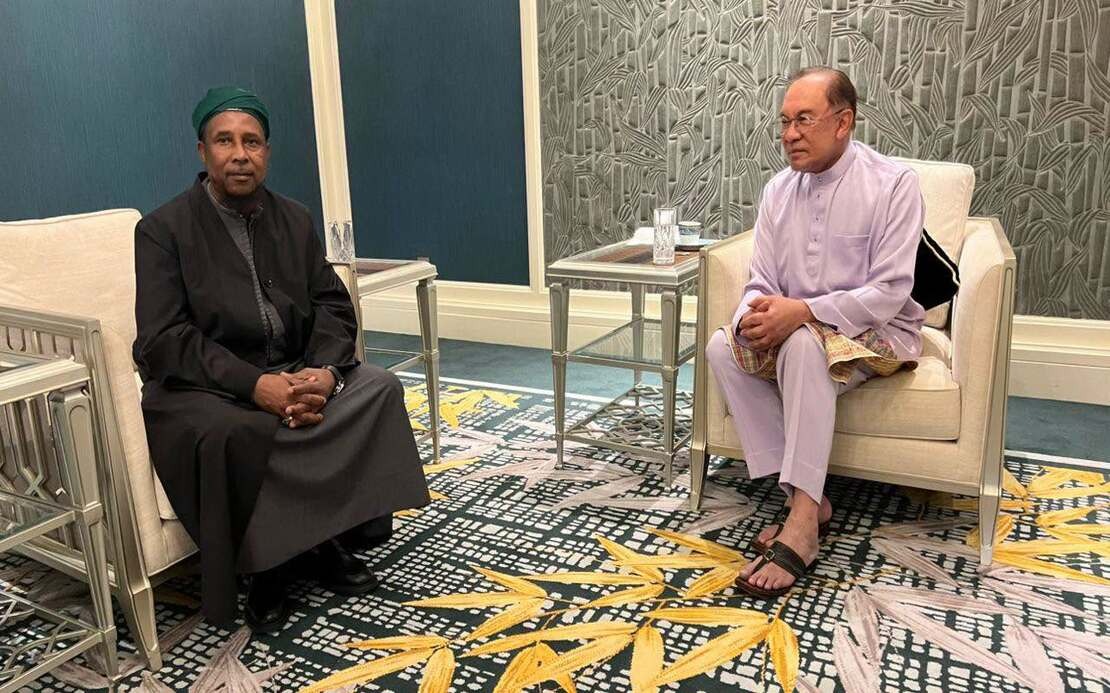
Prime Minister Datuk Seri Anwar Ibrahim marked the occasion of Ashura with a farewell audience to Gambian Islamic scholar Sheikh Muhammad Haydara Al-Jilani on June 26, concluding the religious figure's month-long engagement across Malaysia. The timing of the visit held particular spiritual significance, as it coincided with a Friday observance of Ashura, a day of considerable importance in the Islamic calendar commemorating historical events of profound religious meaning.
Sheikh Muhammad Haydara Al-Jilani's sojourn in Malaysia represented a sustained effort in dakwah outreach, encompassing numerous religious gatherings and knowledge-dissemination sessions conducted at multiple venues throughout the country. The scholar's itinerary reflected a comprehensive approach to Islamic education and spiritual development, bringing together communities for programmes centred on dhikr, the remembrance of God, alongside formal knowledge-sharing initiatives that encouraged dialogue and understanding among diverse audiences.
During their meeting, Prime Minister Anwar utilised the occasion to request that the visiting scholar offer supplications for Malaysia's continued prosperity, national peace, and the collective welfare of all Malaysians. This gesture underscored the government's commitment to drawing on international Islamic scholarly expertise while seeking spiritual blessings for the nation's trajectory. The Prime Minister emphasised hopes that Malaysia would remain recipients of divine mercy, blessings, and protection as the country navigates its complex political and social landscape.
For Malaysia, the visit represents an example of the nation's established role as a hub for Islamic learning and international religious exchange within Southeast Asia. The country has long attracted scholars and religious figures from across the Muslim world, positioning Kuala Lumpur as a centre where Islamic discourse intersects with modernity and multicultural governance. Such engagements reflect broader efforts to promote interfaith understanding and position Malaysia as a bridge between Islamic scholarship and contemporary development.
The Gambian scholar's month-long presence in Malaysia demonstrates the sustained interest among international Islamic figures in engaging with Malaysian audiences and religious institutions. Gambia, though geographically distant, maintains strong Islamic traditions and educational institutions, making Sheikh Muhammad Haydara Al-Jilani's journey part of broader networks connecting West African and Southeast Asian Islamic communities. These connections have historically facilitated the exchange of theological perspectives and educational methodologies across continents.
The programmes conducted by the visiting scholar likely appealed to Malaysian Muslims seeking deeper spiritual grounding amid rapid social change and modernisation pressures. Dhikr gatherings in particular hold significant appeal for those pursuing contemplative Islamic practice, offering spaces for collective remembrance and communal spiritual reinforcement. Such initiatives complement Malaysia's existing Islamic educational infrastructure while introducing alternative pedagogical approaches rooted in West African Islamic traditions.
From a diplomatic perspective, the Prime Minister's personal engagement with the scholar signals Malaysia's continued investment in soft diplomacy through Islamic partnerships and cultural exchange. These interactions, though sometimes overlooked in mainstream media coverage, constitute important elements of Malaysia's foreign relations strategy, particularly regarding strengthening ties with African nations and demonstrating Malaysia's centrality within global Islamic networks.
The Day of Ashura aspect of this farewell meeting carries additional resonance for Malaysian Islamic communities, as it provided an opportunity to contextualise national aspirations within the broader Islamic calendar and spiritual framework. By explicitly linking the scholar's departure to this significant religious date, the Prime Minister connected Malaysia's contemporary governance concerns with deeper spiritual dimensions of Islamic practice and belief.
The success and scope of Sheikh Muhammad Haydara Al-Jilani's Malaysian visit likely reflects careful coordination between government entities, Islamic institutions, and community organisations nationwide. The distribution of programmes across multiple locations suggests a deliberate strategy to ensure broad geographical reach, preventing concentration of activities in major urban centres and instead extending Islamic scholarly engagement to diverse communities throughout the peninsula and possibly East Malaysia.
As such engagements become increasingly common in Malaysia's international relations, they reflect evolving approaches to cultural diplomacy that prioritise knowledge exchange and spiritual enrichment alongside traditional political considerations. The Prime Minister's participation in bidding farewell to the visiting scholar demonstrates that senior government officials recognise the symbolic and substantive importance of supporting international Islamic educational initiatives, thereby legitimising such efforts within Malaysia's broader development and governance agenda.

