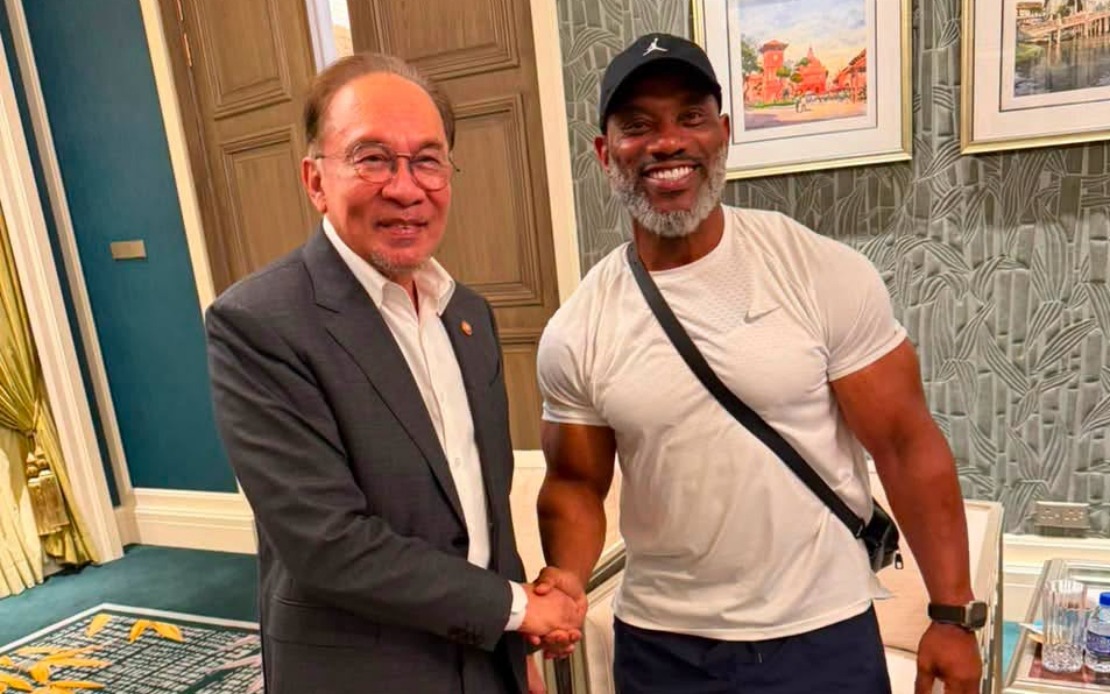
Prime Minister Datuk Seri Anwar Ibrahim expressed his enthusiasm after a recent encounter with Dexter Jackson, one of the sport's most decorated champions, drawing attention to the intersection of politics and global sporting achievement. The meeting, which took place in Kuala Lumpur on July 1, was documented through a Facebook post that featured a photograph of Anwar and Jackson shaking hands, accompanied by the Prime Minister's reflective commentary on the experience.
Jackson's credentials in professional bodybuilding are formidable. The 56-year-old American athlete captured the Mr Olympia title in 2008 and again claimed the Masters Mr Olympia championship in 2012, marking his dominance across different age categories in the sport. More remarkably, Jackson holds an unmatched record in Arnold Classic competitions, having secured victory in that prestigious tournament on nine separate occasions. These achievements underscore his longevity and competitive excellence in a sport that demands years of disciplined training and meticulous nutrition.
The significance of such diplomatic and cultural exchanges extends beyond mere celebrity encounters. When political leaders engage with international figures from non-traditional spheres, it sends symbolic messages about openness to diverse communities and interests. For Malaysia, which hosts numerous international sporting events and aspires to enhance its global sporting credentials, such interactions reinforce the nation's position as a welcoming destination for world-class athletes and sporting personalities.
Anwar's public response to the meeting carried a personable tone that humanises political leadership. In his Facebook post, he wrote that meeting Jackson left him inspired, adding with apparent levity that perhaps the time had come for him to return to regular gym sessions. This candid remark resonated with audiences familiar with the physical demands of political office and the general challenge of maintaining fitness amid demanding schedules. By sharing the encounter openly on social media, Anwar demonstrated an understanding of contemporary communication strategies and the value of personal connection in political messaging.
Dexter Jackson's presence in Malaysia, whether for a sporting event, promotional engagement, or speaking appearance, speaks to the growing internationalisation of bodybuilding as a mainstream sport. Once considered a niche pursuit, bodybuilding has expanded significantly in terms of audience, media coverage, and commercial sponsorship. Athletes like Jackson have transcended the sport itself to become cultural ambassadors, appearing at international events and engaging with political and business leaders worldwide. This elevation of the sport reflects broader trends in how athletic achievement is recognised across different cultures and societies.
The timing of such high-profile meetings often coincides with international sporting events or conferences that attract global personalities. Malaysia, as an increasingly prominent host nation for regional and international competitions, naturally draws athletes of Jackson's stature. These encounters provide opportunities for genuine exchange and for political figures to demonstrate appreciation for athletic excellence and the dedication required to achieve world-class status in competitive fields.
From a public relations perspective, Anwar's engagement with Jackson illustrates how political leaders can effectively utilise social media platforms to appear relatable and multi-dimensional. The lighthearted gym comment was neither dismissive nor overly informal, striking a balance that conveyed genuine interest while maintaining appropriate gravitas. This approach has become standard practice among contemporary political figures seeking to maintain public engagement and demonstrate accessibility beyond formal state functions.
The broader context of Malaysia's sporting ambitions cannot be overlooked. The nation has made significant investments in developing sporting infrastructure and hosting international competitions across various disciplines. From badminton to motorsports to emerging athletic pursuits, Malaysia positions itself as a venue for global sporting excellence. Encounters between political leadership and internationally renowned athletes reinforce this positioning and signal to the world that Malaysia takes sporting achievement seriously at the highest levels.
Jackson's legacy in bodybuilding extends beyond individual titles and awards. He has mentored younger athletes, maintained a presence in the sport through commentary and appearances, and built a personal brand that transcends competitive bodybuilding. At 56, his continued relevance in a sport often dominated by younger competitors speaks to his lasting impact and enduring recognition. Politicians and public figures who engage with such legendary athletes benefit from association with discipline, perseverance, and achievement across multiple decades.
The cultural significance of bodybuilding in different regions varies considerably. In Southeast Asia and particularly in Malaysia, bodybuilding has cultivated a dedicated and growing following. Meeting international champions and sharing such encounters publicly helps legitimise the sport within mainstream social consciousness and encourages broader participation among younger demographics interested in fitness and athletic competition. When national leaders acknowledge and engage with sporting figures, they implicitly validate these pursuits as worthy of respect and celebration.
Looking forward, such diplomatic and cultural engagements are likely to remain important components of Malaysia's international relations strategy. As soft power increasingly encompasses cultural, sporting, and entertainment dimensions, political leaders who can authentically engage across diverse fields enhance their nations' global image. Anwar's spontaneous reaction to meeting Dexter Jackson exemplified this broader trend while maintaining the human element that makes political leadership relatable to ordinary citizens who themselves aspire to fitness and health objectives.

