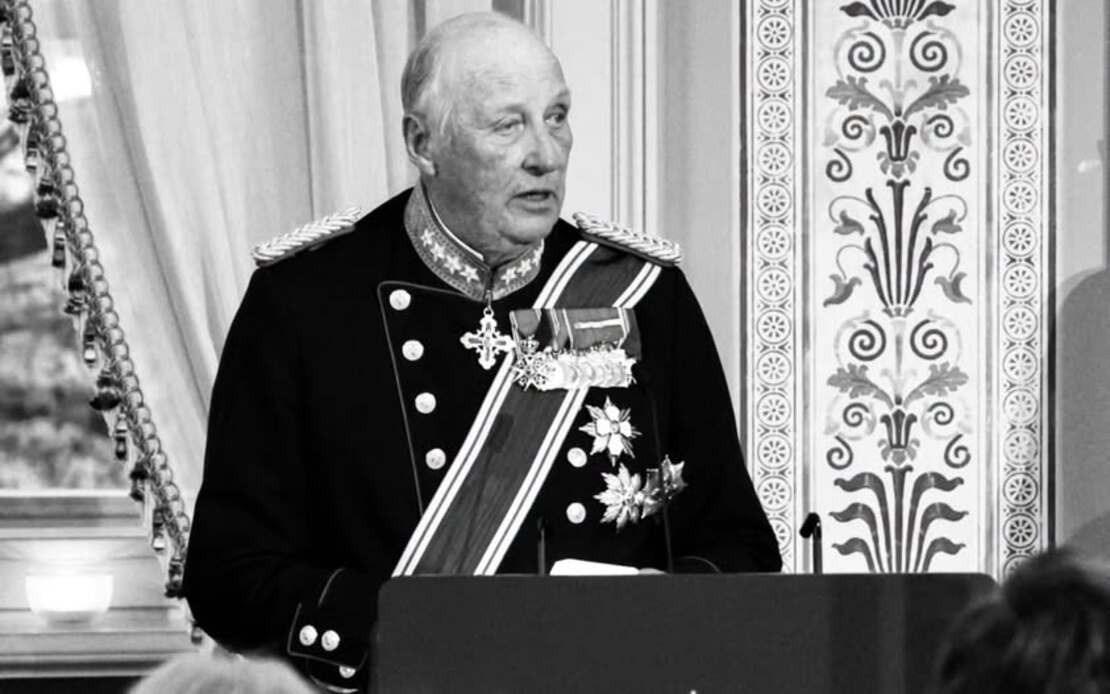
Prime Minister Datuk Seri Anwar Ibrahim has conveyed the Malaysian government's sympathies to Norway following the passing of King Harald V, offering tribute to a monarch whose 52-year reign left an indelible mark on Scandinavian politics and society. The Swedish-born king, who ruled Norway from 1991 until his death, succumbed at the National Hospital in Oslo on Friday at the age of 89, ending a reign characterised by modernisation, democratic reform, and a distinctive personal touch to constitutional monarchy in Northern Europe.
In his statement released via social media on Thursday, Anwar highlighted the late sovereign's legacy as a unifying figure whose understanding of contemporary nationhood transcended ethnic and religious boundaries. The Prime Minister drew particular attention to King Harald's vocal advocacy for immigrant communities within Norway, noting the monarch's explicit acknowledgement that Norwegians of Afghan, Pakistani, Polish, and other foreign descent represented legitimate members of the Norwegian nation rather than peripheral or subordinate populations. This framing represented a significant departure from traditional nationalist narratives that often confined national identity to ethnic or historical bloodlines, instead embracing a pluralistic conception of belonging.
The Malaysian premier's selection of this particular aspect of King Harald's legacy carries layered significance for regional audiences. Southeast Asia, like Europe, continues to navigate tensions between cultural nationalism and inclusive governance. Malaysia's own pluralistic society, comprising Malays, Chinese, Indians, and numerous indigenous communities, faces ongoing questions about national identity and belonging. By highlighting King Harald's explicit inclusion of immigrant and minority populations, Anwar implicitly positioned Malaysia within a broader global conversation about how multinational states articulate their civic values and accommodate diverse populations within a coherent national framework.
Anwar further emphasised King Harald's fidelity to constitutional obligations and the weight of royal duty, characterising these commitments as integral to the late monarch's enduring influence. This emphasis assumes particular resonance given Malaysia's own constitutional monarchy framework and the periodic debates surrounding the precise scope and responsibilities of the Yang di-Pertuan Agong and state rulers. The Prime Minister's invocation of King Harald's steadfast adherence to his oath suggested an implicit commentary on the importance of institutional stability and the monarchy's grounding in democratic constitutional structures rather than personal whim or political expediency.
King Harald's death followed a hospitalisation beginning August 17, during which he received cortisone treatment for hemolytic anemia, a blood disorder affecting red blood cell survival. The hospitalisation represented one of the few extended health episodes during a remarkably active and visible reign. Unlike some European monarchs who maintained formal distance from public life, King Harald distinguished himself through hands-on engagement with Norwegian society, from participating in skiing and environmental conservation initiatives to hosting interfaith dialogues addressing immigration and integration challenges.
The timing of Anwar's condolence message underscores Malaysia's diplomatic engagement with Nordic nations, reflecting broader strategic partnerships beyond traditional Asia-Pacific alignments. Norway, despite its Arctic location, maintains substantial economic and political influence through its sovereign wealth fund, environmental stewardship initiatives, and historical role in international conflict resolution and humanitarian diplomacy. Malaysian governments have long cultivated relationships with Nordic democracies as exemplars of transparent governance, institutional integrity, and progressive social policies, even where specific policy orientations diverge from Malaysian approaches.
The late king's reign witnessed Norway's evolution from a relatively homogeneous society into an increasingly diverse one, a transformation requiring sustained leadership and national conversation. King Harald's willingness to publicly articulate inclusive definitions of Norwegian identity during periods of rising European populism and immigration-scepticism demonstrated conscious political leadership rather than mere ceremonial acceptance. This stands in contrast to some European monarchs who maintained calculated neutrality on contentious social questions, suggesting that institutional authority could be deployed actively to shape national self-understanding and civic values.
For Malaysian observers, King Harald's approach to immigrant integration and minority inclusion presented instructive parallels and contrasts. Where Norway's minority populations arrived primarily through post-1970s immigration and labour migration, Malaysia's ethnic diversity emerged from colonial-era settlement patterns codified in constitutional arrangements. Nonetheless, both nations grapple with questions of how to reconcile historical constitutional settlements with evolving demographic realities and inclusive contemporary values. The late king's public messaging that immigrant Norwegians possessed legitimate claims to national belonging addressed directly the identity anxieties that sometimes constrain integration policy discussions in multiethnic democracies.
Anwar's decision to reference King Harald's understanding of national dignity and the sources of national strength reflects substantive engagement with the late monarch's legacy rather than formulaic diplomatic acknowledgement. The emphasis on dignity accorded to all people as foundational to national strength invokes a philosophical conception of statehood grounded in universal recognition and equal respect rather than ethnic predominance or hierarchical social ordering. This philosophical framework, whether consciously intended or contextually resonant, aligns with progressive interpretations of constitutional nationalism and multicultural democracy that have gained increasing currency in international governance discourse.
The condolence message also signals Malaysia's continuing participation in the normative frameworks and diplomatic courtesies that structure relations among diverse global nations. The formal, respectful tone and substantive engagement with King Harald's legacy demonstrate that Malaysian diplomacy maintains committed relationships with distant democratic societies despite geographical, cultural, and religious differences. Such diplomatic practice reinforces the principle that international relations transcend civilisational or religious fault lines, instead operating within shared frameworks of sovereign equality and mutual respect.
King Harald's successor, Crown Prince Haakon, now assumes the Norwegian throne, inheriting a constitutional role shaped substantially by his father's particular interpretation of modern monarchy. Haakon's accession marks a generational transition in Nordic leadership while maintaining institutional continuity. For Malaysian observers, the succession represents an opportunity to observe how contemporary young monarchs navigate similar tensions between tradition and modernity, constitutional constraint and personal agency, and cultural particularity and inclusive pluralism that characterise modern constitutional monarchies throughout the Commonwealth and beyond.

