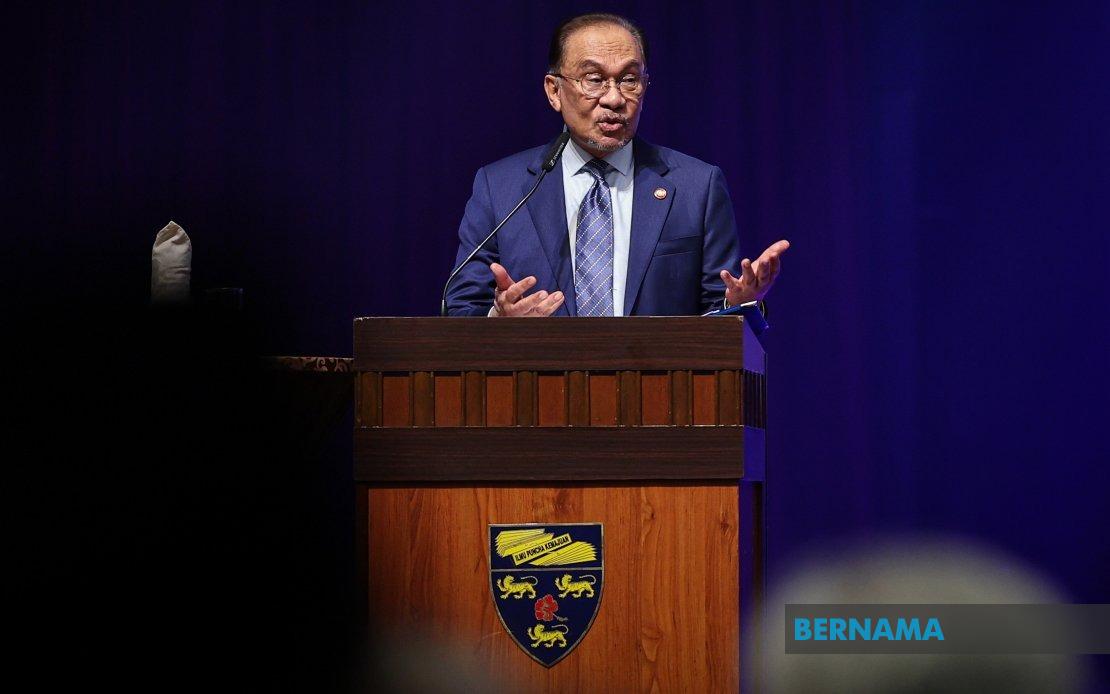
Prime Minister Datuk Seri Anwar Ibrahim has responded to the plight of Rosli Abdullah, a gravedigger in Kuala Terengganu who has endured three years of mouth cancer, by providing financial support to help ease his medical burden. The RM2,000 contribution was handed over on July 9 by Azhar Abd Hamid, deputy director of the Terengganu Federal Development Department's Implementation Coordination Unit at the Prime Minister's Department, during a presentation at the Flat Batas Baru surau in the state capital.
Rosli's medical condition has deteriorated markedly in recent months, rendering him unable to perform even basic daily functions. For the past month, he has been unable to speak due to severe swelling affecting his mouth and right cheek, a direct consequence of his advancing malignancy. The situation has become so critical that he has been unable to consume solid food for two weeks, surviving instead on fluids administered through a feeding tube—a stark indicator of how profoundly the disease has compromised his ability to sustain himself.
The gravedigger's medical journey has been arduous and ongoing. He previously underwent two surgical interventions, yet the cancer has returned with renewed vigour, necessitating further immediate surgical intervention. The Sultanah Nur Zahirah Hospital has escalated his case to the Universiti Sains Malaysia Hospital in Kubang Kerian, Kelantan, indicating that his condition requires specialist care beyond the capacity of the state facility. This referral underscores the complexity and severity of his illness.
Rosli's social circumstances compound his health crisis. For more than three decades, he has resided at the Flat Batas Baru surau, where he worked as a gravedigger and also performed cleaning duties to contribute to the mosque's upkeep. However, his deteriorating physical state has rendered him incapable of maintaining any employment. Living as a bachelor with no family support network, he now depends almost entirely on the goodwill and charity of the surau's management for his survival.
According to Azhar, the decision to provide the immediate cash assistance was coupled with administrative action to address the gaps in Rosli's access to social safety nets. Officials discovered that despite his obvious need, Rosli had not been registered with e-Kasih, Malaysia's electronic cash assistance system managed by the Social Welfare Department. A formal assessment indicated that he clearly meets the eligibility criteria for this programme, and authorities have committed to registering him immediately to unlock ongoing welfare support.
The surau's leadership has also mobilised community support through a dedicated donation fund established to cover Rosli's escalating medical and surgical expenses. Mohd Radzali Mohamad, the deputy chairman of Flat Batas Baru surau, revealed that despite these grassroots fundraising efforts, the collected amount remains insufficient to cover the full scope of his anticipated treatment costs. The surau community recognises that substantial resources will be required to see Rosli through his surgical procedures and recovery.
This intervention highlights a broader challenge within Malaysia's social welfare ecosystem: vulnerable individuals can fall through administrative cracks despite their evident entitlement to support. Rosli's case demonstrates how someone could work and contribute to their community for decades while remaining unregistered in targeted assistance programmes. The fact that a community institution needed to flag his situation to government attention suggests that current identification and outreach mechanisms may not adequately capture all those in genuine distress.
For Terengganu residents and the broader Malaysian public, Rosli's situation reflects the harsh realities faced by low-income workers in sectors like grave maintenance—occupations that are essential to community functioning but often poorly remunerated and lacking comprehensive employment protections. When catastrophic illness strikes someone in such precarious circumstances, the absence of adequate insurance or occupational safety nets can rapidly spiral into a humanitarian crisis.
The Prime Minister's direct involvement in providing assistance also signals heightened attention to cases of hardship brought to government notice through community channels. While the RM2,000 donation addresses immediate needs, the commitment to register Rosli in e-Kasih represents a more systemic attempt to ensure he receives sustained support. This dual approach—emergency financial relief combined with formal inclusion in welfare programmes—represents the kind of targeted intervention that could serve as a model for addressing similar cases of vulnerable citizens.
Looking ahead, Rosli faces critical months ahead as he undergoes further surgical treatment. His recovery will depend not only on the quality of medical care he receives at the Universiti Sains Malaysia Hospital but also on adequate nutritional support, post-operative care, and financial stability during his rehabilitation period. The combination of immediate government assistance and e-Kasih registration should provide a more stable foundation than his previous reliance on informal community charity alone.

